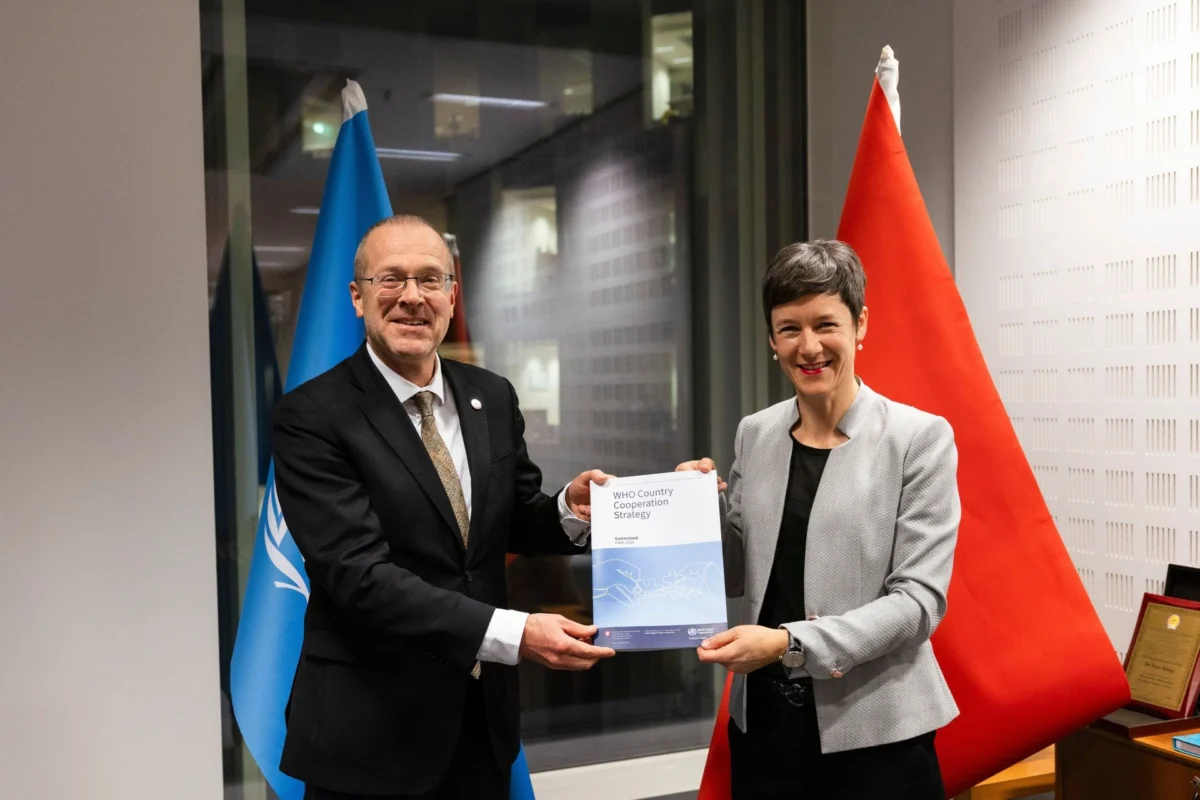
The World Health Organization (WHO) and the Government of Switzerland have officially cemented their long-standing partnership by renewing their joint cooperation strategy for the 2024–2028 period. The formal signing ceremony took place on March 4, 2025, at the WHO Regional Office for Europe in Copenhagen, Denmark. This renewed framework builds on a pioneering relationship established more than a decade ago, setting a collaborative agenda designed to tackle contemporary public health challenges, bolster health systems, and reinforce global health security.
The agreement was marked by the presence of key leadership figures from both institutions. Dr. Hans Henri P. Kluge, WHO Regional Director for Europe, met with Barbara Schedler, Ambassador for Global Health at the Swiss Federal Office of Public Health, to finalize the strategy document. The roadmap outlines targeted priorities for mutual cooperation, reflecting shared strategic values between a premier international health body and one of its most steadfast member states.
Historical Context and Evolution of the Partnership
Switzerland’s relationship with the WHO holds a unique place in the architecture of international health diplomacy. In 2013, Switzerland made history by becoming the first high-income country within the WHO European Region to pilot a formal country cooperation strategy. Prior to this innovation, such strategic frameworks were primarily deployed in low- and middle-income nations requiring substantial developmental assistance.
By introducing a cooperation strategy tailored to a highly developed nation with an advanced domestic health infrastructure, Switzerland and the WHO redefined the parameters of multilateral engagement. The pilot model recognized that high-income nations face complex, systemic public health challenges—such as aging populations, non-communicable disease burdens, health workforce shortages, and the cross-border spread of pathogens—that benefit immensely from structured, collaborative alignment with normative global health guidance.
Over the subsequent decade, the partnership matured significantly. The initial framework enabled Switzerland to leverage WHO’s global normative reach while offering its own technical expertise, financial resources, and logistical capacities to support regional and global health initiatives. Recognizing the success of this collaboration, WHO and Swiss health authorities jointly initiated a comprehensive review in 2022 to update the framework, ensuring it addressed post-pandemic realities and emerging global health threats.
Chronology of the 2024–2028 Strategy Renewal
The pathway to the March 2025 signing ceremony involved a multi-year consultative process aligning Swiss national health priorities with the WHO’s Thirteenth General Programme of Work (GPW 13) and subsequent strategic goals:
- 2022: WHO and Swiss federal authorities agree to jointly evaluate the preceding cooperation framework and draft a renewed strategy reflecting post-COVID-19 priorities.
- 2023: Technical teams from the WHO Regional Office for Europe and the Swiss Federal Office of Public Health draft strategic pillars focusing on health security, digitalization, and universal health coverage.
- Throughout 2024: The provisional framework (designated for the 2024–2028 cycle) begins guiding operational coordination between Swiss institutions and WHO technical programs, even as final administrative steps for formal publication are organized.
- March 4, 2025: Dr. Hans Henri P. Kluge and Ambassador Barbara Schedler formally sign and unveil the WHO–Switzerland Country Cooperation Strategy 2024–2028 at the WHO Regional Office in Copenhagen.
Key Pillars of the Renewed Cooperation Strategy
The newly adopted cooperation strategy identifies several critical areas for collaborative action. Rather than focusing solely on domestic health service delivery within Switzerland, the framework adopts a dual-track approach: strengthening national public health systems while maximizing Switzerland’s contribution to global health governance and international security.
1. Global Health Security and Pandemic Preparedness
In the wake of global lessons learned from the COVID-19 pandemic, the strategy places immense emphasis on surveillance, early detection, and rapid response mechanisms. Switzerland, housing numerous international organizations, research institutes, and pharmaceutical innovators, plays a pivotal role in global health logistics. The renewed agreement strengthens collaboration on pathogen surveillance networks and supports ongoing international negotiations regarding pandemic prevention, preparedness, and response frameworks.

2. The Global BioHub System Integration
A vital component of the broader Swiss-WHO partnership is integration within the global BioHub system. Established to facilitate the rapid, safe, and transparent sharing of novel biological materials—including epidemic- and pandemic-prone pathogens—the BioHub system relies heavily on state-of-the-art laboratory infrastructure and biosecurity standards. Switzerland’s advanced scientific facilities and regulatory rigor provide a secure environment for housing and analyzing high-consequence pathogens, ensuring that global scientific and vaccine-development communities can access critical samples swiftly and equitably.
3. Digital Health and Data Innovation
As health systems modernize, the integration of digital tools, artificial intelligence, and robust health information systems has become paramount. The 2024–2028 strategy prioritizes digital health governance, secure health data exchange, and the ethical application of emerging technologies in clinical and public health settings. Switzerland’s robust technological sector and commitment to data privacy offer a strong foundation for developing scalable digital public health goods.
4. Workforce Resilience and Universal Health Coverage
Both parties recognize that resilient health systems depend entirely on a well-supported, adequately trained health and care workforce. The strategy outlines joint efforts to address professional burnout, workforce migration dynamics, and capacity building. Furthermore, it reinforces commitments to universal health coverage (UHC), ensuring that vulnerable populations maintain equitable access to quality healthcare services without financial hardship.
Official Perspectives and Diplomatic Reactions
During the signing ceremony in Copenhagen, leadership from both organizations emphasized the strategic necessity of multilateral cooperation in an era marked by geopolitical fragmentation and compounding ecological and biological crises.
Dr. Hans Henri P. Kluge underscored the value of Switzerland’s proactive stance as a high-income partner state. "Switzerland has consistently demonstrated that global health is not merely a matter of international aid, but a shared collective responsibility," Dr. Kluge stated. "By renewing this cooperation strategy through 2028, we are solidifying a partnership that harnesses Swiss innovation, scientific excellence, and diplomatic leadership to advance health for all across the European Region and beyond."
Ambassador Barbara Schedler highlighted Switzerland’s enduring commitment to the multilateral system and the normative authority of the WHO. "Our cooperation with the World Health Organization is a cornerstone of Swiss international health policy," Ambassador Schedler noted. "This updated strategy allows us to direct our technical and financial resources where they are most urgently needed, fostering resilient health systems, protecting populations from health emergencies, and upholding our shared vision of universal health security."
Fact-Based Analysis of Implications
The formalization of the WHO–Switzerland Cooperation Strategy carries several noteworthy implications for European and global public health governance:
- Benchmarking for High-Income Collaboration: By maintaining a dedicated country cooperation strategy for over a decade, Switzerland provides a replicable model for other high-income member states seeking to institutionalize their relationship with the WHO beyond voluntary financial contributions.
- Operationalizing Global Agreements: The strategy translates high-level global commitments—such as the International Health Regulations (IHR) and regional health policies—into concrete, actionable bilateral workplans with clear accountability metrics.
- Strengthening Multilateralism: At a time when global health institutions face intense scrutiny and resource competition, the enduring partnership between Geneva-based international entities and the Swiss federal government reinforces the stability and operational continuity of the international health architecture.
Broader Impact and Future Outlook
Looking ahead to 2028, the implementation of the strategy will be subject to periodic joint reviews between the WHO Regional Office for Europe and Swiss federal authorities. These evaluations will measure progress against defined benchmarks, ensuring flexibility to adapt to unforeseen public health emergencies or shifting geopolitical landscapes.
The partnership also reinforces Switzerland’s position as a neutral, trusted diplomatic bridge in global health negotiations. By aligning national public health priorities with international solidarity objectives, Switzerland and the WHO aim to set a high standard for collaborative governance, proving that targeted, strategic partnerships remain indispensable in safeguarding global health security for the years to come.