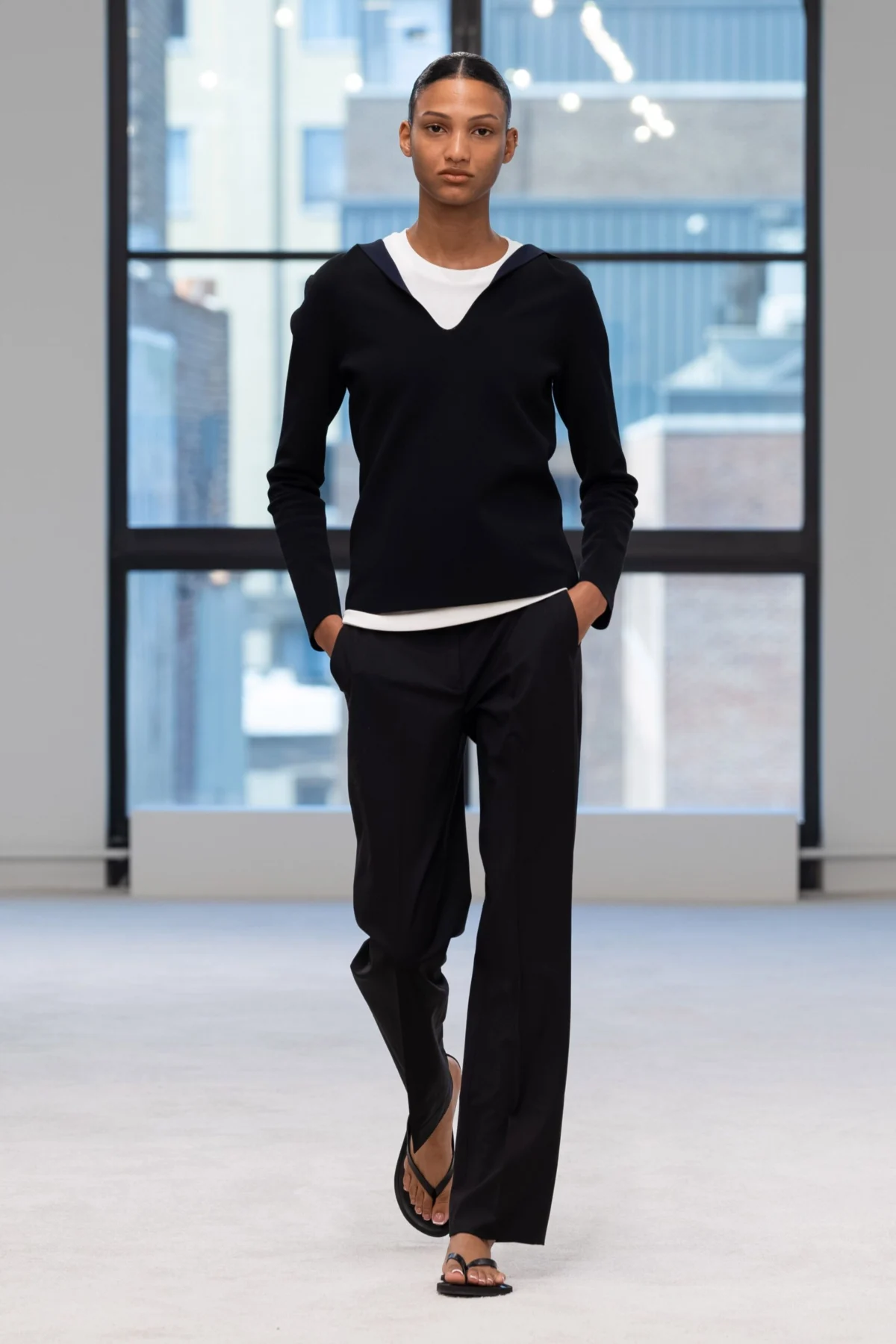
The contemporary fashion landscape finds itself increasingly preoccupied with the mechanics of desire, questioning whether personal taste remains a genuine expression of individuality or merely another metric to be optimized, commodified, and ultimately flattened by algorithmic curation. Into this ongoing cultural debate steps Dushane Noble, whose Spring 2027 collection for Theory seeks to dissect the complex relationship between social hierarchy, personal identity, and the relentless pursuit of aesthetic distinction. Staged within the brand’s newly converted studio space in the Meatpacking District, the presentation offered a sharp, thoughtfully calibrated meditation on what drives modern consumption. Rather than attempting to offer a definitive verdict on internet-era style discourse, Noble turned his focus toward the historical roots of aspirational dressing, examining how the architecture of status has shaped wardrobes across generations.
The intellectual foundation for the collection was drawn directly from W. David Marx’s sociological study, Status and Culture: How Our Desire For Social Rank Creates Taste, Identity, Art, Fashion And Constant Change. For Noble, the text served as a blueprint for understanding how the quiet engine of status-seeking invariably dictates what society deems cool, desirable, or aesthetically valuable. This inquiry naturally pulled the design team back to the 1980s—an era defined by an unbridled obsession with corporate power, visible affluence, and the codification of modern glamour. By revisiting the decade’s most potent sartorial symbols, Noble aimed to unpack the psychological underpinnings of power dressing and translate them into a vocabulary suited for the contemporary metropolitan wardrobe.
A Detailed Exploration of 1980s Silhouettes and Modern Adaptations
The runway presentation underscored a deep engagement with the signifiers of 1980s excess, filtered through the pragmatic lens that has long defined the Theory brand. Power shoulders, sharp architectural lines, and tailored skirt suits emerged as the undeniable focal points of the collection. However, rather than simply replicating historical costumes, Noble and his team deconstructed these elements to offer distinct stylistic dichotomies tailored to the multifaceted lives of modern consumers.
Among the standout pieces were dual interpretations of the classic gray double-breasted skirt suit. The first iteration leaned toward traditional conservatism, featuring a carefully proportioned knee-length skirt paired with a crisp banker shirt and layered beneath a functional nylon car coat. This look directly addressed the corporate uniform of the late-twentieth century while softening its rigidity through modern layering. In contrast, the second version embraced a bolder silhouette, pairing the structured double-breasted jacket with a daring miniskirt that shifted the aesthetic from boardroom compliance to after-hours command.
This juxtaposition of conservative tailoring and contemporary daring formed the conceptual backbone of the collection, illustrating how historical power dressing can be re-contextualized for a workforce that no longer adheres to rigid, uniform dress codes.
Balancing High-End Glamour with Urban Pragmatism
While the overarching objective of the Spring 2027 season was the reintroduction of unadulterated glamour, the practical realities of the Theory customer remained central to the design process. The typical Theory consumer is not a static mannequin or a passive observer of runway trends; she is an active, working professional navigating the physical and logistical demands of a major metropolitan city. Consequently, Noble was forced to grapple with a fundamental design paradox: how to create garments that project luxury and sophistication without sacrificing everyday comfort and wearability.
As Noble remarked during the preview, true glamour only serves the modern consumer if it can withstand the trials of an urban commute. This pragmatic requirement placed an extraordinary emphasis on fabric innovation and textile engineering. The star of the season was undoubtedly daytime taffeta—a material chosen specifically for its dramatic visual properties, including its high-sheen finish, crisp structural integrity, and architectural volume.
However, traditional 100% silk taffeta is notoriously delicate and ill-suited for the wear-and-tear of daily transit. To resolve this functional limitation, the design team engineered hybrid textiles, skillfully weaving nylon into the taffeta to enhance durability, flexibility, and overall versatility. This material innovation allowed the collection to maintain its high-fashion appearance while adapting to the practical demands of daily life.
The resulting garments successfully bridged the gap between extravagant runway statements and functional streetwear. Highlights included athletic-inspired basketball shorts rendered in luxurious fabrics and a slinky boatneck minidress that offered effortless transition from professional environments to social engagements. By stripping away the impractical exclusivity traditionally associated with high-end materials, Noble successfully translated elite aesthetics into an accessible, everyday format.
Democratizing Couture and the Pursuit of Everyday Luxury
Theory has built its global reputation on providing reliable, high-quality everyday wear for the professional wardrobe, and Noble maintained a firm commitment to this foundational ethos. Yet, within this framework, there was a palpable desire to inject a sense of extraordinary aspiration into the mundane rhythms of ordinary life. This ambition manifested in the meticulous application of couture-level tailoring techniques brought down to a commercial, accessible scale.
Among the most technically impressive pieces in the collection was a sculptural leather jacket engineered with an absolute minimum of seams, creating a sleek, streamlined finish that highlighted the natural grain and suppleness of the hide. Similarly, a voluminous denim cocoon jacket offered a subtle historical nod to the pioneering silhouette designs of Paul Poiret, proving that even workwear staples could be elevated through inventive cutting and proportion play.
By incorporating these high-craft techniques into a contemporary ready-to-wear lineup, Noble directly addressed a timeless consumer question: Who among us does not harbor a secret desire for the exclusivity and perfection of couture?
The Broader Economic and Cultural Implications
As the fashion industry continues to navigate shifting consumer behaviors, economic uncertainties, and the pervasive influence of digital algorithms, collections like Theory’s Spring 2027 offering provide valuable insight into the current mood of the market. The conscious pivot away from fleeting, internet-driven micro-trends toward durable, sociologically grounded design reflects a broader maturation among both designers and consumers.
The integration of sociological literature—such as W. David Marx’s work on status and culture—into the creative process demonstrates a growing demand for intellectual depth in contemporary fashion. Consumers are increasingly drawn to brands that acknowledge the deeper psychological motivations behind their purchasing habits. By analyzing the historical roots of yuppie culture and status-seeking, Theory has positioned its garments not merely as protective coverings, but as active participants in the ongoing discourse surrounding identity, social mobility, and personal taste.
Furthermore, the emphasis on fabric durability paired with high-fashion silhouettes speaks to a pragmatic shift in luxury consumption. In an era marked by heightened scrutiny over sustainability, utility, and cost-per-wear, garments that successfully merge aesthetic ambition with functional longevity are uniquely positioned to capture market share. By proving that taffeta can withstand a subway commute and that couture-inspired tailoring can be manufactured for daily urban life, Noble has outlined a viable commercial pathway for the future of contemporary ready-to-wear.
Looking Ahead to the Retail Launch
As the fashion calendar progresses toward the retail availability of the Spring 2027 collections, industry analysts will closely monitor how these conceptual themes translate at the point of sale. Theory’s strategic decision to ground high-concept sociological theories in accessible, highly wearable garments suggests a strong alignment with the needs of the modern metropolitan workforce.
By successfully marrying the ambitious power-dressing aesthetics of the 1980s with the material innovations required for twenty-first-century commuting, Dushane Noble has reaffirmed Theory’s status as a leader in intelligent, functional design. The collection stands as a testament to the fact that while the definition of taste may continue to evolve under the pressure of algorithms and social media discourse, the fundamental human desire for beauty, status, and self-expression remains entirely unchanged.