The automotive landscape of the mid-2000s was defined by a wave of retro-inspired design, giving rise to vehicles such as the Chrysler PT Cruiser, the Plymouth Prowler, and the modern Ford Thunderbird. Among the most mechanically ambitious and visually polarizing entries of that era was the Chevrolet SSR—a portmanteau of Super Sport Roadster. Conceived as a halo vehicle to showcase General Motors’ manufacturing flexibility, the SSR combined the body style of a 1940s-era pickup truck with a modern folding metal hardtop and rear-wheel-drive performance hardware.
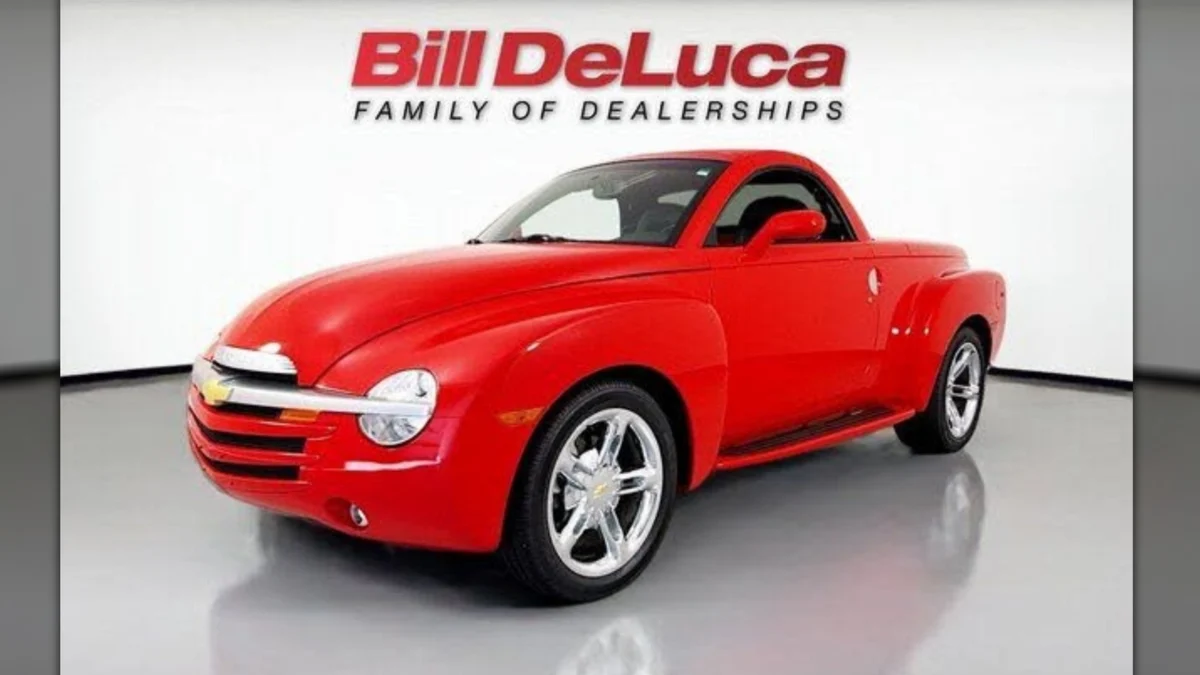
Though its production run was relatively brief and commercial success was modest at best, the vehicle has cultivated a dedicated enthusiast following in the decades since. The latest testament to this enduring niche appeal has emerged via a classified listing on CarGurus, featuring a 2005 Chevrolet SSR finished in Redline Red. With an odometer reading of under 4,350 miles and an asking price approaching $56,000, this particular example offers a compelling yet expensive window into a unique chapter of American automotive history.
Main Facts of the Listing
The vehicle in question is a two-owner, clean-title, accident-free 2005 Chevrolet SSR currently listed through the Massachusetts-based Bill DeLuca Family of Dealerships. According to dealership records and vehicle history reports, the previous owner acquired the truck in 2021 and parted ways with it after driving a mere 200 miles.
Priced at nearly $56,000, the truck commands a significant premium over typical market values for driver-grade examples. For context, comparable SSR models with higher mileage—such as a 20,000-mile unit that recently traded hands below the $40,000 threshold—frequently appear on the secondary market. However, this specific Redline Red variant distinguishes itself through its exceptionally low mileage, pristine cosmetic condition, and the presence of high-performance mechanical underpinnings introduced for the 2005 model year.
Beneath the retro-styled sheet metal lies a factory-installed 6.0-liter LS2 V8 engine, an overhead-valve powerplant belonging to the same engine family that powered the C6 Chevrolet Corvette. Paired with a six-speed manual transmission, the engine generates 390 horsepower and 405 pound-feet of torque. This configuration endows the heavy cruiser with genuine muscle-car performance, capable of accelerating from zero to 60 miles per hour in well under six seconds—a notable feat for a specialty vehicle weighing roughly 4,700 pounds.
Chronology and Production History
The genesis of the Chevrolet SSR can be traced back to the 2000 North American International Auto Show in Detroit, where GM debuted a concept vehicle designed by Wayne Cherry and Thomas Kearns. The overwhelmingly positive public reception prompted management to greenlight a production version, which made its commercial debut for the 2003 model year.
Production took place at GM’s specialized Craft Centre facility in Lansing, Michigan, a plant originally built to handle low-volume, high-complexity manufacturing.
- 2003 Model Year: The SSR launched with a 5.3-liter Vortec V8 engine producing 300 horsepower, mated to a four-speed automatic transmission. While visually striking, early models faced criticism from automotive journalists regarding sluggish performance, chassis cowl shake, and a soft ride that struggled to manage the vehicle’s substantial weight.
- 2004 Model Year: Production ramped up significantly, with the 2004 model year representing the peak volume period for the vehicle line. Minor trim adjustments were introduced, but the mechanical formula remained largely unchanged.
- 2005 Model Year: This proved to be a pivotal turning point for the SSR. General Motors addressed major consumer and critic feedback by replacing the original 5.3-liter engine with the significantly more powerful 6.0-liter LS2 V8. Furthermore, the introduction of a six-speed manual transmission option elevated the truck’s performance credentials. Alongside the powertrain overhaul, GM implemented substantial chassis reinforcements, revised suspension tuning, updated steering gear bearings, and improved retractable hardtop seals.
- 2006 Model Year: The final year of production saw a minor bump in LS2 output to 395 horsepower, but slowing demand and high production costs ultimately sealed the vehicle’s fate. GM shuttered the Lansing Craft Centre and discontinued the SSR line in mid-2006.
In total, approximately 24,000 units were manufactured during the vehicle’s brief four-year production run, with the 2004 and 2005 model years accounting for more than 17,000 of those total builds.
Supporting Data and Equipment Specifications
The CarGurus listing highlights a comprehensive suite of factory options equipped on this Redline Red example. The vehicle features the 1SB Preferred Equipment Package, the Sport Suspension Package, and the Driver Convenience Package. Creature comforts include cruise control, remote keyless entry, and an interior finished entirely in black with a color-matched center console and a Bose premium audio system.
Exterior touches further elevate the presentation. The retractable hardtop tonneau cover is painted to match the body, while the deep cargo bed is accented with functional wood strips, invoking the aesthetic of classic mid-century pickup trucks. Polished five-spoke alloy wheels and a satin-finished front chevron bar complete the exterior styling.
According to retrospective reviews from automotive publications such as MotorTrend, the engineering updates applied to the 2005 model year dramatically transformed the vehicle’s driving dynamics. Earlier models suffered from noticeable chassis flex when traversing uneven pavement, particularly with the hardtop stowed. The 2005 structural reinforcements yielded a noticeably more composed ride quality that was far less punishing on long journeys, bridging the gap between novelty cruiser and capable grand tourer.
Official Responses and Ownership Realities
While low-mileage collector vehicles often appeal to buyers seeking turnkey investments, industry experts caution that maintaining a vehicle like the Chevrolet SSR presents unique logistical challenges.
In an extensive buyers guide published by Hemmings, automotive specialist Mike Moro of Simple Engineering highlighted the reality of servicing a discontinued, low-volume specialty vehicle. "You can’t go to GM dealers anymore for help, because practically all of the people who were trained to work on these have retired or moved on—so there’s poor dealer support," Moro explained. Because the SSR relied on numerous proprietary components—particularly regarding its complex electro-hydraulic retractable hardtop mechanism, specialized body panels, and unique chassis components—routine maintenance and repairs often rely on dedicated enthusiast forums, aftermarket specialists, and independent mechanics rather than franchise dealership networks.
Despite these support hurdles, the vehicle’s documentation offers peace of mind for prospective buyers. The current listing includes a complete vehicle history record from its initial purchase onward, alongside the original owner’s manual and a clean CarFax report verifying its accident-free status.
Broader Market Impact and Implications
The appearance of a pristine, delivery-mileage 2005 Chevrolet SSR on the secondary market underscores a broader trend within the collector car hobby: the growing appreciation for quirky, short-run vehicles from the late 1990s and 2000s. As Gen X and millennial buyers attain greater disposable income, nostalgia for the automotive experiments of their youth has begun to drive up valuations for models that were once dismissed as commercial failures.
However, the nearly $56,000 asking price tests the upper limits of the SSR market. While pristine collector-grade examples with ultra-low mileage occasionally command premium figures at specialized auctions, standard market values for drivers remain significantly lower. Whether an enthusiast is willing to invest collector-car money into a mass-market GM platform with limited dealer support remains to be seen, but the listing serves as a reminder of an era when Detroit automakers were willing to take bold, eccentric risks on the drawing board.