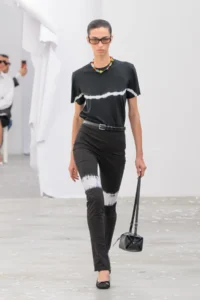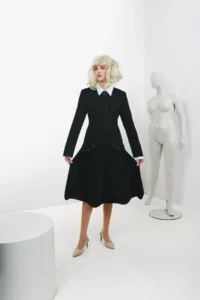
The fashion industry has long grappled with the dichotomy of constant innovation versus sustainable stewardship. For his Fall 2026 collection, Milan-based designer Arthur Arbesser has delivered a profound meditation on this tension, offering a sartorial interpretation of kintsugi—the traditional Japanese art of repairing broken pottery with precious metals. Presented through the brand’s signature see-now, buy-now retail format, Arbesser’s latest lineup is not merely a collection of garments; it is a carefully curated physical manifestation of personal and professional transition, built entirely from the brand’s historical archives.
Against the backdrop of a changing global retail landscape and significant personal evolution, Arbesser utilized this collection to recalibrate his design ethos. Rather than sourcing virgin textiles or commissioning new mills, the designer turned inward, treating his studio’s archive as a quarry of untapped potential. The resulting collection bridges the gap between historical inventory and contemporary relevance, proving that constraints can serve as the ultimate catalyst for creativity.
A Year of Transition and the Genesis of the Archival Shift
To understand the weight of the Fall 2026 collection, one must examine the trajectory of Arthur Arbesser’s eponymous label over the past several years. Founded on a meticulous balance of Viennese heritage and Milanese craftsmanship, the brand has steadily carved out a distinct niche characterized by sharp geometry, vibrant color palettes, and playful textiles. However, like many independent design houses operating in a hyper-competitive post-pandemic economy, Arbesser faced a series of structural and personal crossroads.
"2026 has been a year of major changes in my life, and inevitably in the life of the brand too," Arbesser noted during a preview at his Milan studio. "In a way I needed to put some pieces back together, and I did it using only fabrics we already had in the archive. It was exciting to realize that we were sitting on a pile of old fabrics that could become something new."
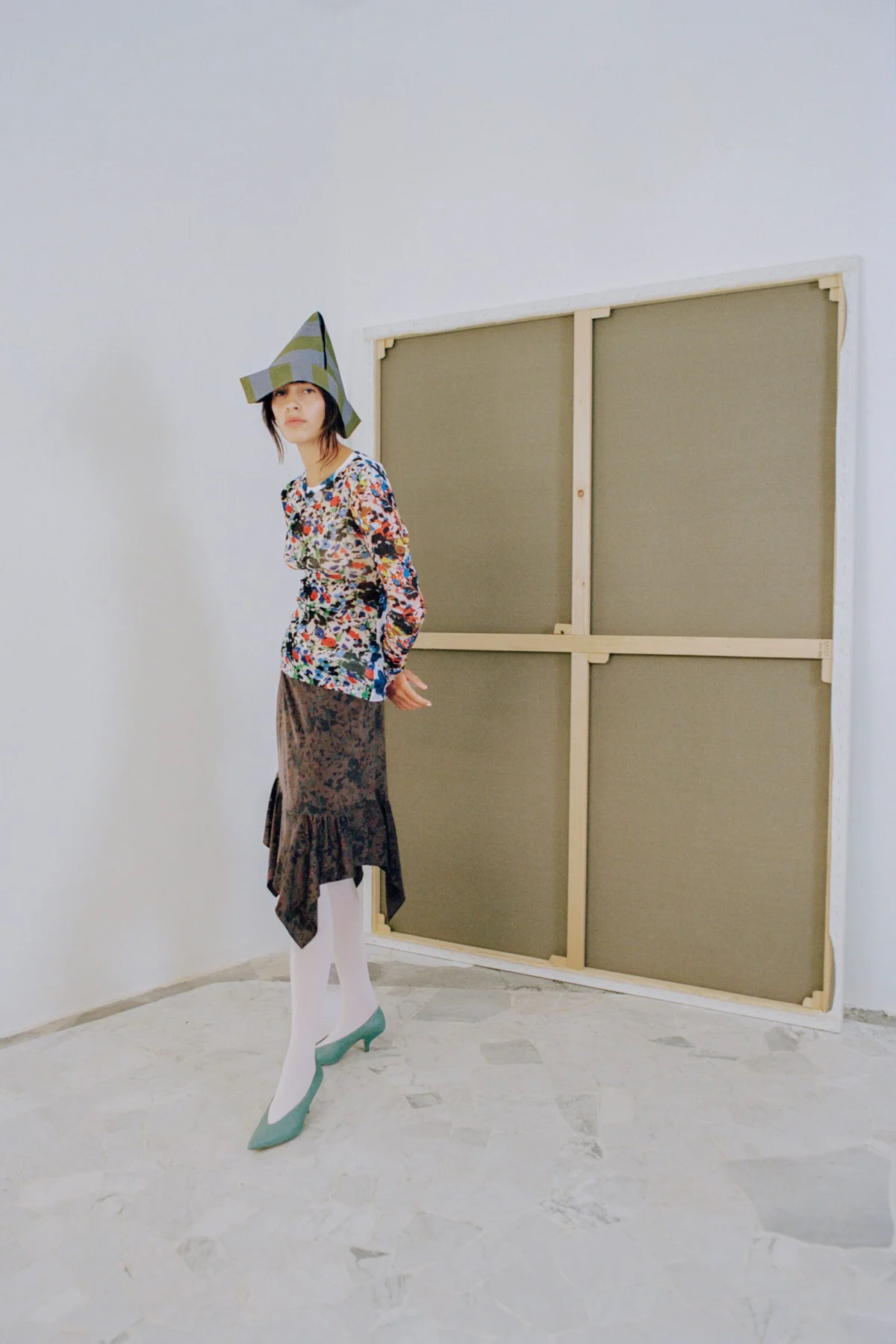
This realization did not happen overnight. The collection was preceded by weeks of exhaustive inventory audits. Arbesser and his team meticulously cataloged every roll, scrap, and remnant left over from previous production cycles. The objective was absolute zero-waste manufacturing, ensuring that not a single yard of historical fabric was discarded. When material volumes were insufficient for traditional multi-size production runs, the design team pivoted, transforming the remnants into statement accessories—such as whimsical scarves modeled after the triangular fabric bunting traditionally used at children’s birthday parties—or utilizing them as intricate color-blocked finishing details.
Reviving the Brand’s Greatest Hits Through a Modern Lens
The Fall 2026 Revival collection reads like a retrospective of Arbesser’s most celebrated design milestones. Rather than abandoning past aesthetics, the designer deliberately resurrected iconic house motifs, weaving them into a cohesive new narrative.
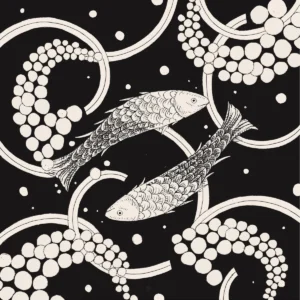
Eagle-eyed followers of the brand will instantly recognize the return of the dramatic baroque print first introduced in Fall 2022. This ornate, classical pattern is juxtaposed against the crisp, utilitarian striped cottons pulled directly from the Spring 2025 inventory. Furthermore, the multicolored checks and the distinct photographic print featuring stylized drinking glasses—both fan favorites from Fall 2024—make a triumphant return. These elements are anchored by the geometric patterns that have steadily evolved into a foundational signature of the Arbesser visual lexicon.
By collaging these disparate elements, Arbesser avoids the trap of nostalgic pastiche. Instead, the collection feels remarkably forward-thinking, a testament to the timelessness of the underlying textile design. The juxtaposition of heavy baroque prints against clean, linear stripes highlights the designer’s mastery of pattern-mixing, a skill that has defined his career since his tenure at traditional fashion houses and his subsequent independent debut.
The Mechanics of Transformation: Garment-Dyeing in Milan
While the archival fabrics provided the raw material, the true alchemy of the Fall 2026 collection took place outside the city limits of Milan. A significant portion of the garments was sent to a small, specialized dye house known for its artisanal approach to finished-garment treatments. Operating with just six industrial washing machines, this intimate facility became the laboratory where disparate historical fabrics were unified.
Garment-dyeing a collection composed of varying fabric compositions—ranging from delicate cottons to structured synthetics—presents immense technical challenges. However, the resulting inconsistency in dye absorption is precisely what gives the collection its organic, lived-in depth. Each piece was engineered to be styled through complex layering, encouraging the wearer to experiment with unexpected combinations of texture and hue.
The tactile landscape of the collection is defined by a deliberate clash of weights and finishes. Lightweight, sheer textiles inject a sense of kinetic movement into the runway presentation. Polka-dot meshes, diamond-woven sheer panels, and striped tulle are layered over and against aggressive cobra-print satin, rich jacquard viscose, classic gingham, zigzag crinkle crepe, and bold animal prints. This sensory overload of pattern and texture reflects Arbesser’s ongoing fascination with visual dissonance.
Inside the Studio: Art, Chaos, and Classical Music
The atmosphere within Arbesser’s creative headquarters—the physical heart of the brand for the past several years—offers a revealing glimpse into the designer’s current mindset. During the collection’s final development phases, the studio doubled as an active art installation.
While Arbesser discussed the logistics of his supply-chain pivot, his longtime friend and collaborator, artist Marcela Gutiérrez, stood before a massive canvas, steadily applying broad strokes of paint. This ongoing artistic dialogue is a hallmark of the brand’s creative process; Gutiérrez’s finished canvases are routinely scanned, manipulated, and transformed into bespoke textile prints for subsequent collections, ensuring a continuous loop of interdisciplinary inspiration.
Acoustically, the studio provided a deliberate contradiction. In the background, an antique boombox played heavy classical compositions, filling the sunlit workspace with soaring orchestral arrangements.
"It feels like a horror movie," Arbesser joked, acknowledging the dramatic tension of the audio backdrop against the vibrant, playful garments taking shape around the room. "But I’m always looking for something that clashes, so I’m happy with that."
Broader Industry Implications and the Shift Toward Circularity
Arbesser’s pivot toward an entirely archival collection arrives at a critical juncture for the global fashion industry. As regulatory bodies in Europe and North America tighten scrutiny on textile waste, carbon footprints, and overproduction, independent designers are forced to rethink traditional seasonal models. While luxury conglomerates pour capital into scalable recycling technologies and certified organic supply chains, independent labels often find their solutions in operational agility and creative resourcefulness.
By demonstrating that a commercially viable, critically lauded collection can be produced entirely from pre-existing inventory, Arbesser offers a compelling blueprint for smaller design houses. The see-now, buy-now format further eliminates the speculative inventory cycles that have long plagued the sector, aligning consumer demand directly with sustainable production realities.
Furthermore, the collection challenges the industry’s obsession with novelty. In an economic climate where consumers are increasingly questioning the value of perpetual consumption, Arbesser’s embrace of kintsugi serves as a powerful metaphor. By highlighting the beauty in repair, repurposing, and historical continuity, the Fall 2026 collection suggests that the future of fashion may not lie in the creation of entirely new things, but in the imaginative reinvention of what already exists.
As the industry looks toward the upcoming fashion weeks, Arthur Arbesser stands out not merely as a designer adapting to logistical constraints, but as a visionary turning constraint into an aesthetic triumph. Through meticulous inventory audits, artisanal garment-dyeing, and an uncompromising commitment to circularity, the Fall 2026 collection secures Arbesser’s place as one of the most intellectually rigorous and creatively fearless independent designers working today.