New York Bridal Fashion Week recently concluded its most ambitious season yet, transforming Manhattan into a global epicenter of couture innovation, heritage craftsmanship, and evolving bridal aesthetics. Over the course of five days, the event served as a critical barometer for the $70 billion global bridal industry, showcasing a duality of design that balanced the rising demand for hyper-individualized, bespoke garments against a nostalgic return to grand, maximalist silhouettes. From the intimate showrooms of emerging designers in SoHo to the high-production runway spectacles of established couture houses, the week solidified a pivot in the bridal market toward "expressive luxury."

The Evolution of the 2027 Bridal Landscape
The 2027 season arrived at a pivotal time for the wedding industry. Following years of post-pandemic restrictions that favored smaller, utilitarian ceremonies, the current market is defined by a "go big or go home" sentiment. Data from major bridal retailers indicates a 22 percent year-over-year increase in spending on primary wedding gowns, reflecting a consumer shift toward garments that serve as art pieces rather than mere ceremonial attire.
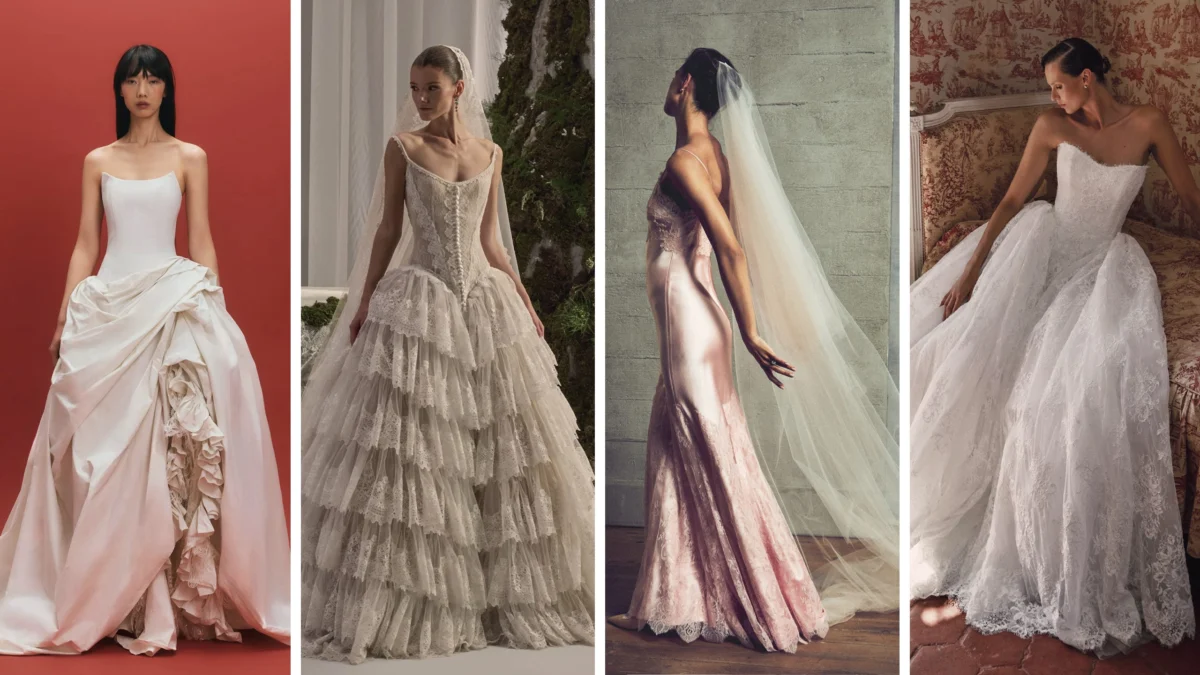
This season’s collections were characterized by a departure from the "quiet luxury" movement that dominated 2025 and 2026. Instead, designers embraced overt opulence. Kyha Scott, founder of Kyha Studios, noted that the industry is experiencing a collective rejection of minimalism in favor of "statement-making" architecture. "Quiet luxury has become less quiet," Scott explained during a presentation of her Josephine collection. "Brides are no longer content with blending into the background. They are seeking ballgowns and A-line silhouettes that occupy space and command attention."

Chronology of Trends: A Season of Contrast
The week unfolded in distinct phases, moving from the technical mastery of intricate lacework to the avant-garde experimentation of non-traditional color palettes.
Day 1-2: The Return of Structural Drama
The opening days were dominated by heavy silks, mikado, and rigid corset work. Designers such as Georges Hobeika emphasized the return of the dramatic Basque waistline, a silhouette that elongates the torso while providing a regal, period-piece aesthetic. This structural focus serves as a counter-reaction to the slip-dress trend that dominated the early 2020s.

Day 3: The Color Revolution
Mid-week presentations challenged the hegemony of "bridal white." The introduction of blush, butter yellow, and sage green—seen prominently in the collections of Monique Lhuillier and Nadia Manjarrez—signaled a broader shift among Gen Z brides who view their wedding day as an extension of their personal style rather than a adherence to Victorian-era color traditions.
Day 4-5: Accessorizing the Ensemble
The final days focused on the "total look." Handbags, which have historically been a secondary consideration in bridal fashion, took center stage. Brands like Anya Hindmarch and Sea New York introduced petite, heavily beaded pouches and fringe-adorned clutches, indicating that the bridal handbag is becoming a permanent fixture of the modern wedding wardrobe.

Expert Analysis: The Demand for Exclusivity
A recurring theme throughout the week was the "bespoke mandate." Jaclyn Whyte, a Toronto-based designer, highlighted that today’s bride is fundamentally different from the customer of five years ago. "Real exclusivity matters more than any passing trend," Whyte stated. "We have seen a significant spike in requests for one-of-a-kind gowns that are hand-signed and retired upon purchase. The bride wants to know that her gown is a singular artifact, not a mass-produced commodity."
This sentiment is supported by broader retail data, which shows that "atelier" services—once reserved for the ultra-wealthy—are being democratized. Mid-market brands are now offering "semi-bespoke" options, where brides can swap sleeves, necklines, or lace patterns, allowing for a personalized experience that mimics the high-couture process.

Textile Innovation and Sustainable Craftsmanship
A significant portion of the week was dedicated to the evolution of lace. No longer used merely as a decorative overlay, lace is now the structural foundation of many garments. Rita Vinieris’s latest collection, The Feeling, showcased a mastery of this technique, utilizing layered lace to create depth and texture that traditional satin cannot replicate.
This focus on texture is not merely aesthetic; it is also a nod to sustainable manufacturing. By using high-quality, complex fabrics that require less synthetic embellishment, designers are creating garments that possess longevity. "For us, the fabric is the starting point," Whyte explained. "When you design from the lace up, you reduce the need for excessive hardware or plastic-based beading, resulting in a more refined and environmentally conscious product."

The Rise of the ‘Minimalist Archive’
While maximalism dominated the headlines, there remained a strong current of 1990s-inspired minimalism. This segment of the market caters to the "second look" or "reception dress" category. Jane Hill Bridal’s Heirloom collection, which drew inspiration from 90s archive designs, utilized Royale satin to create sleek, fluid silhouettes. This trend suggests that the modern bridal wardrobe is increasingly bifurcated: one gown for the formal, dramatic ceremony, and a second, understated gown for the reception.
Footwear and the Practicality Factor
Perhaps the most pragmatic trend to emerge from the 2027 runways was the rise of the "elevated flat." As brides increasingly prioritize comfort to enjoy their own celebrations, the industry has responded with sophisticated alternatives to the traditional stiletto. Mesh flats and Mary Janes, as seen at Marrow and Honor, were presented as viable, chic choices for the aisle. This shift acknowledges that the "wedding day" has become a 12-to-16-hour event, necessitating footwear that can endure long periods of standing and dancing.

Implications for the Future of Bridal Retail
The implications of these trends for the retail sector are significant. Bridal salons must now be prepared to offer a more diverse inventory than in previous years. The demand for color, the rise of the non-traditional veil (including hats and headbands), and the necessity of "multiple looks" for a single event suggest that bridal consultants must act more like personal stylists than retail associates.
Furthermore, the emphasis on the "story" behind the dress—the inspiration, the sourcing of the lace, the number of hours spent on hand-stitching—is becoming a key sales driver. Consumers are looking for transparency and narrative, moving away from the transactional nature of retail toward a more experiential model.

Summary of Key Developments
- Maximalism vs. Minimalism: A clear split in the market between grand, architectural ballgowns and sleek, 90s-inspired column dresses.
- The Color Shift: Pastel tones, particularly butter yellow and mint green, are gaining traction as alternatives to traditional ivory.
- The Accessory Boom: Handbags and non-traditional headpieces (feathers, pillboxes) are now essential components of the bridal look.
- The Bespoke Standard: A move toward individualized, one-of-a-kind gowns that reflect the bride’s personal identity over transient fashion cycles.
As the industry looks toward the 2028 season, the lessons of New York Bridal Fashion Week are clear: the modern bride is looking for a blend of historical grandeur and contemporary freedom. Whether through the choice of an unconventional color, the addition of a custom, hand-signed detail, or the decision to wear a flat shoe, the focus is firmly on the individual. The collections presented this week serve as a testament to the resilience and creative capacity of the bridal industry, proving that while weddings are rooted in tradition, their aesthetic expression remains in a constant, beautiful state of evolution.