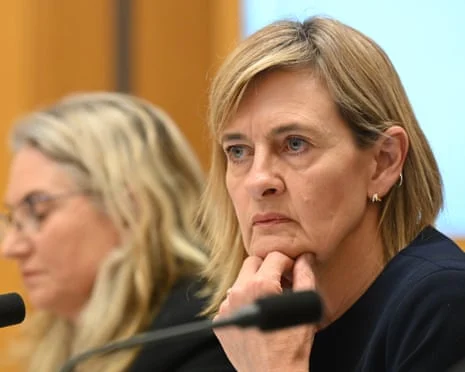
Australia is experiencing a dynamic period marked by political friction, significant advancements in law enforcement technology, a major international defence exercise, and ongoing debates over education funding, all while farewelling a notable public figure. Prime Minister Anthony Albanese has publicly criticised One Nation leader Pauline Hanson for "talking Australia down" during her recent conservative political tour and holiday in Europe, an accusation that underscores broader concerns about national representation and political rhetoric on the global stage. This rebuke comes as a prominent state funeral is held for veteran broadcaster Derryn Hinch, a new campaign for increased private school funding gathers momentum, Western Australia deploys controversial real-time facial recognition technology, and a massive international air combat exercise commences in the nation’s north.
Hanson’s Controversial European Tour and Albanese’s ‘Talking Down’ Accusation
Senator Pauline Hanson, the long-standing leader of the One Nation party, has drawn the ire of Prime Minister Anthony Albanese following her recent engagements in Europe. Hanson’s itinerary included an appearance at the Conservative Political Action Conference (CPAC) in London, a prominent gathering for right-wing figures globally. Prior to her CPAC address, she reportedly recorded a podcast with far-right activist Tommy Robinson, known for his anti-Islam activism and multiple convictions. Adding to the public interest, Hanson was also observed holidaying in Europe with billionaire mining magnate and prominent conservative benefactor, Gina Rinehart.
During a visit to Tiwi Island, Prime Minister Albanese was questioned about Hanson’s activities abroad. His response was unequivocal, framing his own overseas engagements as opportunities to "talk Australia up," in stark contrast to what he perceived as Hanson’s approach. "When I have the opportunity to represent Australia overseas, I talk Australia up. I don’t talk Australia down," Albanese stated. He emphasised a national responsibility for all representatives, regardless of their political stripe, to project a positive image of Australia internationally. "There’s nowhere you’d rather be than Australia, and I think that it is up to our representatives, no matter where they stand in the parliament, when they’re overseas, to talk Australia up, not talk Australia down." The Prime Minister underscored Australia’s status as an "extraordinary nation" envied by the world, reiterating that pride in the nation should be paramount for those representing it abroad.

The controversy surrounding Hanson’s tour was further amplified by a Channel Seven "Spotlight" episode dedicated to the One Nation leader. The program chronicled her journey to Britain, featuring meetings with former Neighbours star Holly Valance and UK Reform Party MP Robert Jenrick, alongside Tommy Robinson. The documentary included several "awkward moments," such as reportedly slim crowd sizes for her CPAC speech in London and uncomfortable exchanges where Hanson and Nationals defector Barnaby Joyce were pressed to defend past criticisms of each other. A street tour in Robinson’s hometown of Luton nearly escalated into a physical altercation with a local resident. Robinson himself, despite previous visa application refusals due to his criminal record, denied ever attempting to enter Australia.
Perhaps the most telling segment of the "Spotlight" episode, as noted by observers, was Hanson’s enthusiastic endorsement of "mass deportation policies." When questioned about Reform UK’s proposals to remove hundreds of thousands of individuals from Britain, Hanson expressed strong favour for a similar policy in Australia targeting those living in the country illegally. "I love it," she reportedly stated, going on to promise that she would plan the implementation of such a policy with bureaucrats should One Nation gain government. This stance immediately reignited debates around immigration and national sovereignty.
The political implications of Hanson’s tour and her televised comments are significant, particularly in light of recent polling data. A Newspoll released on Monday indicated that One Nation’s primary vote had surged to 30%, placing it equal with the governing Labor party and ahead of the Coalition, which registered 19%. While such figures in a live blog context can be volatile and are typically national aggregates that don’t always translate directly to seat-by-seat outcomes, they nonetheless signal a noteworthy level of public support for One Nation’s platform, adding weight to Albanese’s pointed criticisms and the broader scrutiny of Hanson’s international engagements.
Behind the Lens: WA Police Launch Real-Time Facial Recognition Trial
In a striking public demonstration that underscored the evolving landscape of law enforcement technology, Western Australia Police officially launched a five-month mobile trial of real-time facial recognition technology. The event, held on Thursday, July 2, at Perth’s bustling Mirrabooka bus station, saw an arrest unfold live behind a bank of television microphones as Police Commissioner Col Blanch addressed reporters.

A camera mounted on a nearby marked police van, quietly panning across the interchange, was actively scanning hundreds of faces per minute. This sophisticated system instantaneously cross-referenced these profiles against a comprehensive database of approximately 4,000 individuals, including those with outstanding arrest warrants, registered child sexual abuse offenders, and reported missing persons. Midway through the media conference, the algorithm "pinged," alerting officers to a match. Police promptly stepped into the crowd and apprehended a woman wanted for failing to appear in court.
The dramatic timing of the arrest led a reporter to ask Commissioner Blanch for his reaction. Blanch, seemingly unfazed, responded, "Been happening all week. I’d love to say I planned that but I think that’s exactly what the technology is… People are being arrested because they are wanted." This live demonstration marked the public debut of what is an Australian-first for law enforcement in its real-time mobile application, prompting immediate discussions about its effectiveness and potential societal impact.
While hailed by law enforcement as a powerful tool for crime prevention and apprehension, the trial has simultaneously ignited significant backlash over privacy concerns. Civil liberties advocates and privacy experts have voiced strong opposition, questioning the legal framework, oversight mechanisms, and potential for mission creep inherent in such pervasive surveillance technologies. The debate centres on balancing public safety with individual rights and the potential for a surveillance society. The five-month trial is expected to gather crucial data on operational effectiveness and public acceptance, which will inform future policy decisions regarding the broader deployment of real-time facial recognition in Western Australia and potentially across the nation.
Australia’s Air Combat Prowess on Display: Exercise Pitch Black 2026 Commences
Prime Minister Anthony Albanese officially inaugurated Exercise Pitch Black 2026, Australia’s premier international air combat exercise, in Darwin. The biennial event, renowned for its scale and complexity, is set to unfold over the next three weeks across the skies of Australia’s north, involving a formidable array of military assets and personnel from around the globe.
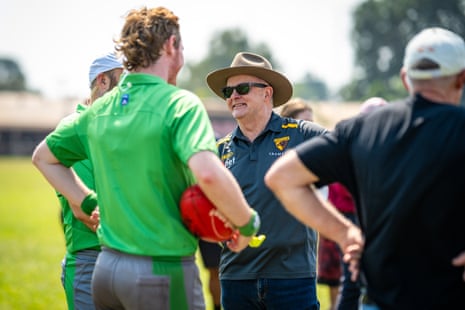
Approximately 100 aircraft and 2,500 personnel from the Royal Australian Air Force (RAAF) and 20 other nations are participating in the high-end training activities. These exercises are primarily conducted from RAAF Bases Darwin and Tindal in the Northern Territory, with additional operations from RAAF Base Amberley in Queensland. The primary objective of Exercise Pitch Black is to strengthen international cooperation and enhance interoperability among participating air forces through realistic combat scenarios. This includes simulated offensive and defensive counter-air operations, as well as air-to-ground strike missions.
A broad coalition of international partners is involved, reflecting Australia’s extensive network of defence alliances and partnerships in the Indo-Pacific region and beyond. Aircraft are deployed from the United States, Japan, Papua New Guinea, Indonesia, the Philippines, Thailand, South Korea, India, Singapore, Germany, France, and Spain. Additionally, embedded personnel from the United Kingdom, New Zealand, Fiji, Canada, Brunei, Malaysia, Finland, and Sweden are taking part, contributing to the multinational effort and sharing expertise.
Prime Minister Albanese underscored the strategic importance of the exercise. "Australia is strongest when we work closely with our partners," he stated at the launch. "Exercise Pitch Black strengthens those partnerships and demonstrates Australia’s commitment to working closely across our region to support peace, stability and security." The exercise serves as a critical platform for collective defence, enhancing the capabilities of participating nations to respond to complex regional security challenges. It also sends a clear message about the commitment of Australia and its allies to maintaining a free and open Indo-Pacific. The training facilitates the refinement of tactics, techniques, and procedures in a large-force employment environment, which is vital for modern air warfare and effective coalition operations.
Private Schools Campaign for Increased Funding Ahead of Labor Conference
Independent Schools Australia (ISA), the peak representative body for private schools, has launched a new campaign aimed at securing increased government funding. This initiative comes strategically just days before Labor’s national conference, where education policy is expected to be a key agenda item. The campaign is specifically targeting electorates held by both Labor and "teal" independents across the country, indicating a sophisticated political strategy to exert pressure on key decision-makers.

The campaign features a multi-faceted approach, including digital advertising, billboards, and posters on buses. These advertisements are being rolled out in inner-city federal seats such as the Labor-held Brisbane and Griffith in Queensland, and Melbourne. Crucially, the campaign is also targeting key teal seats like Mackellar and Wentworth in Sydney, and Curtin in Perth, as well as Goldstein, a seat previously won by Liberal Tim Wilson before he was ousted by a teal independent. The central slogan of the campaign is: "Parents are choosing, families are contributing, and policy needs to reflect that reality."
ISA argues that as a growing number of parents opt for independent schooling and make significant financial sacrifices to fund their children’s education, the government should provide a greater share of public funding. This argument posits that private school parents are also taxpayers and their choices should be acknowledged through increased government support.
However, the campaign faces immediate counter-arguments, particularly from advocates for public education. Data from the Australian Curriculum, Assessment and Reporting Authority (ACARA) from 2023 indicates a significant disparity in funding levels: 98% of private schools were funded above the Schooling Resource Standard (SRS) recommended by the Gonski review, while more than 98% of public schools were funded below it. The SRS is designed to be a needs-based funding model, intended to ensure all schools have the resources to meet the needs of their students. Critics argue that diverting more public funds to already well-resourced private schools would exacerbate existing inequalities in the education system.
Graham Catt, the chief executive of ISA, articulated the sector’s position, stating, "Independent school families have been stereotyped for too long. They are parents and taxpayers making careful decisions about their children’s education, often under real financial pressure. They deserve to be seen, they deserve to be heard and they deserve policy settings that recognise the choices they are already making." The campaign highlights the ongoing tension in Australian education policy regarding the allocation of public funds between government and non-government school sectors, a debate that is likely to intensify during Labor’s national conference.
Corporate Watchdog Nets Record Penalties: ASIC’s Enforcement Push
Australia’s corporate regulator, the Australian Securities and Investments Commission (ASIC), has reported a landmark year for enforcement, securing a record $830 million in civil penalties from courts over the past financial year (2025-26). This figure represents a dramatic increase, surpassing the total penalties obtained in the previous six years combined, underscoring a heightened and more effective enforcement drive by the watchdog.
A significant portion of this record sum came from the largest penalty ever awarded in an ASIC case: a $300 million penalty against the collapsed foreign exchange broker Union Standard in June. This particular case highlights ASIC’s commitment to pursuing substantial penalties for serious corporate misconduct that impacts a large number of investors. For context, from 2019-20 to 2024-25, ASIC secured an average of just $137 million in civil penalties annually, making the 2025-26 result a more than six-fold increase on that average.
Beyond the headline penalties, ASIC’s actions are also set to facilitate significant remediation for consumers and investors. The regulator indicated that its enforcement work would lead to $643.5 million worth of remediation, refunds, and other payments being returned to tens of thousands of affected customers and investors. This focus on restitution demonstrates ASIC’s dual mandate of punishment and consumer protection. Furthermore, the substantial penalties collected will also contribute to the federal budget, providing a direct financial benefit to the government.
In addition to civil penalties, ASIC also issued $12 million worth of infringement notices during the year, double the amount from the 2024-25 period. These notices are typically issued for less severe breaches, offering a more streamlined enforcement mechanism. Sarah Court, the chair of ASIC, commented on the results, stating, "Our enforcement work is focused on misconduct that causes real harm and we are delivering results, forcing change, strengthening accountability and returning money to consumers and investors." This robust enforcement performance signals a more aggressive stance by ASIC in regulating corporate behaviour and protecting market integrity, likely driven by a series of high-profile financial scandals and a renewed government focus on corporate accountability.

Farewell to a ‘Human Headline’: Derryn Hinch’s State Funeral
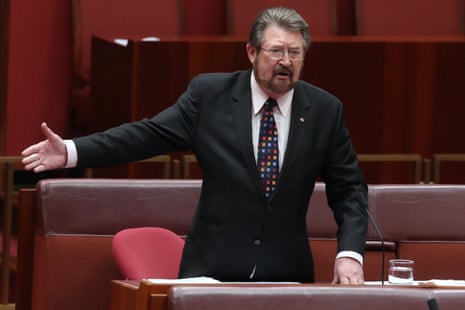
Veteran Australian journalist, broadcaster, and former senator Derryn Hinch, famously dubbed "the Human Headline," was farewelled at a state funeral held in Melbourne. Hinch passed away on July 10 at the age of 82, following a protracted period of significant health struggles. The service, hosted by the Victorian government, took place at midday at the Timber Yard events space in Port Melbourne, attracting a diverse array of notable figures from the spheres of politics and media, alongside his family and friends. For those unable to attend, the service was also livestreamed via the Victorian government website.
The ceremony featured tributes from many who knew Hinch professionally and personally. Among those expected to speak were his long-time friends and former colleagues, including prominent Australian journalist Ray Martin. The proceedings were ably steered by 3AW’s Darren James, who served as master of ceremonies.
Hinch’s life, as chronicled in a Guardian obituary, was indeed a saga fit for a headline. It was a career defined by its fearlessness and often controversial nature, marked by stints in journalism, broadcasting, and a late-career entry into federal politics as a senator. His public life included periods of imprisonment, multiple marriages, and several serious health challenges, all of which played out under the glare of public scrutiny. This unwavering commitment to what he believed was right, often at personal cost, cemented his "Human Headline" moniker. He was a tireless advocate for justice, particularly for victims of crime, and a vocal proponent for organ donation, having himself undergone a liver transplant.
His passing drew an outpouring of tributes from across the political spectrum, highlighting his enduring impact despite his divisive moments. Prime Minister Anthony Albanese and Opposition Leader Angus Taylor both issued statements acknowledging Hinch’s significant contributions to public life. A statement released by the Victorian government remembered Hinch as living a life "defined by his principles and an unwavering commitment to stand up for what he believed was right." His legacy is one of a relentless interrogator and a candid, sometimes provocative, public figure who consistently challenged the status quo, leaving an indelible mark on Australian media and political discourse.
These unfolding events collectively paint a vivid picture of Australia’s current landscape, from the ideological battlegrounds of political rhetoric to the advancements in public security and the solemn reflections on a life lived in the public eye. They underscore the complex interplay of national identity, technological progress, defence strategy, and social policy that defines contemporary Australian society.