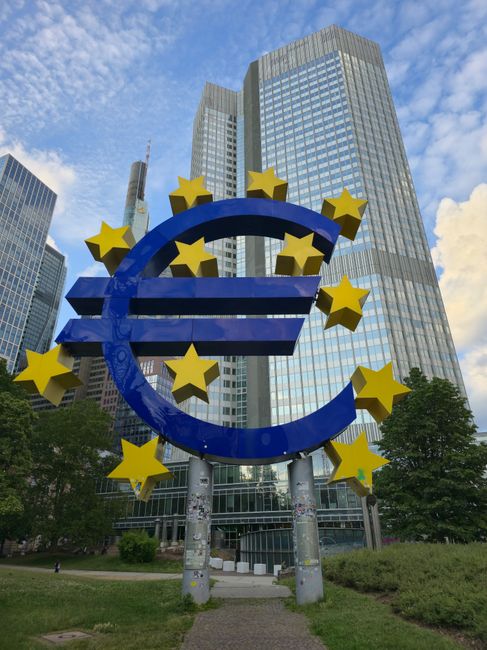
The European Economy: A Multifaceted Landscape of Growth, Challenges, and Innovation
The European economy, a complex and interconnected web of nations united by a shared currency for many and a vast single market, stands as a significant global force. Its sheer scale, encompassing the European Union’s 27 member states and their combined GDP, positions it as a major player in international trade, investment, and technological advancement. Characterized by a strong social market economy model, Europe generally prioritizes a balance between economic efficiency and social welfare, with robust public services, extensive labor protections, and a commitment to environmental sustainability. This fundamental orientation, however, is continuously tested by evolving global dynamics, internal structural adjustments, and the imperative for digital and green transitions. Understanding the European economy necessitates a deep dive into its diverse sectoral strengths, its ongoing policy responses to economic shocks, and its inherent capacity for innovation and adaptation.
Historically, Europe’s economic trajectory has been shaped by periods of industrial revolution, post-war reconstruction, and the ambitious project of economic integration. The establishment of the European Coal and Steel Community, a precursor to the EU, laid the groundwork for a single market that has since blossomed into a powerful engine of trade and prosperity. The introduction of the euro in 1999, and its physical circulation in 2002, further cemented economic ties, creating a more fluid and predictable environment for businesses operating across national borders. This monetary union, while offering significant benefits in terms of reduced transaction costs and price transparency, has also presented unique challenges, particularly in managing divergent economic performance and fiscal policies across member states. The sovereign debt crisis of the early 2010s starkly illuminated these disparities, prompting significant reforms in economic governance and fiscal coordination within the eurozone.
The European economy is not a monolithic entity; rather, it is a mosaic of national economies, each with its own industrial strengths, labor market characteristics, and demographic trends. Germany, for instance, remains the continent’s powerhouse, driven by its highly competitive manufacturing sector, particularly in automotive, machinery, and chemical industries. Its export-oriented model has historically contributed significantly to its economic success, although it is increasingly grappling with the challenges of decarbonization and supply chain resilience. France, with its strong service sector, luxury goods production, and significant agricultural output, also plays a pivotal role. Italy, despite facing structural headwinds, boasts world-renowned brands in fashion, design, and food, alongside a substantial industrial base, particularly in the north. Spain has emerged as a leader in renewable energy and tourism, while the Netherlands is a vital logistics hub and a leader in agricultural technology and innovation. Eastern European economies, having undergone significant transformations since the fall of communism, have become increasingly integrated into the European supply chains, demonstrating impressive growth rates and a growing capacity in manufacturing and IT services.
The digital transformation is a defining feature of the contemporary European economy. The EU has set ambitious goals to foster a digitally enabled society and economy, aiming to capitalize on the opportunities presented by artificial intelligence, big data, and automation. Initiatives like the Digital Single Market strategy seek to remove barriers to online trade, enhance digital skills, and promote cybersecurity. However, Europe faces stiff competition from global tech giants, and concerns persist about its capacity to foster its own indigenous digital champions. Investment in research and development, a strong emphasis on digital infrastructure, and a supportive regulatory environment are crucial for Europe to maintain its competitive edge in this rapidly evolving landscape. The "Chips Act," for instance, aims to bolster semiconductor production and innovation within the EU, recognizing the strategic importance of this foundational technology.
Sustainability and the green transition represent another monumental undertaking for the European economy. The European Green Deal, a flagship initiative, outlines a roadmap to make the EU climate-neutral by 2050. This ambitious agenda necessitates a profound shift across all sectors of the economy, from energy production and transportation to agriculture and industry. Investments in renewable energy sources, energy efficiency measures, sustainable agriculture practices, and the circular economy are central to this transition. While the green transition presents significant economic opportunities in terms of new industries and job creation, it also entails substantial investment costs and potential disruption for carbon-intensive sectors. Ensuring a just transition that supports affected workers and regions is paramount to the success and public acceptance of these ambitious climate goals.
The European Central Bank (ECB) plays a critical role in managing monetary policy for the eurozone. Its mandate is to maintain price stability, but it also contributes to broader economic stability and supports the EU’s general economic policies. In recent years, the ECB has employed unconventional monetary policy tools, such as quantitative easing, to combat deflationary pressures and support economic growth. The current challenge for the ECB involves navigating persistent inflation, balancing the need to curb price rises with the risk of stifling economic activity and exacerbating the sovereign debt concerns of some member states. The coordination between fiscal and monetary policies across member states remains a delicate balancing act, particularly in the face of diverse national economic conditions and political priorities.
The EU’s commitment to social cohesion and its robust welfare states, while contributing to high living standards and social stability, also present unique economic considerations. High levels of social spending, generous unemployment benefits, and strong labor market regulations, while beneficial for workers, can sometimes translate into higher labor costs and potentially lower labor market flexibility compared to some other global economic blocs. Striking the right balance between social protection and economic competitiveness is an ongoing debate and a key policy challenge for European policymakers. Reforms aimed at increasing labor market participation, enhancing skills development, and modernizing social security systems are continuously being pursued.
International trade is a cornerstone of the European economy. The EU is one of the world’s largest trading blocs, with a significant share of global exports and imports. Its extensive network of free trade agreements with countries around the world facilitates market access for European businesses and provides consumers with a wide range of goods and services. However, the European economy is also vulnerable to global economic shocks, trade protectionism, and geopolitical tensions. Recent disruptions to global supply chains, exacerbated by the COVID-19 pandemic and the war in Ukraine, have highlighted the need for greater resilience and diversification in European supply networks. The EU’s efforts to strengthen its strategic autonomy, particularly in critical sectors like raw materials, semiconductors, and pharmaceuticals, are a direct response to these vulnerabilities.
Demographic shifts are another significant factor shaping the future of the European economy. Many European countries face aging populations and declining birth rates, leading to a shrinking workforce and increased pressure on social security and healthcare systems. This demographic trend poses challenges for economic growth, innovation, and the financing of public services. Policies aimed at boosting birth rates, attracting skilled migration, and encouraging longer working lives are being considered and implemented across the continent. The need for effective integration of migrants into the labor market and society is therefore not only a social imperative but also an economic necessity for maintaining dynamism and addressing labor shortages.
Innovation and research and development (R&D) are crucial for the long-term competitiveness of the European economy. The EU consistently invests heavily in R&D, both through its own programs and by encouraging national investments. Universities and research institutions across Europe are at the forefront of scientific discovery and technological advancement. However, translating this research excellence into commercial success and fostering a robust ecosystem of innovative startups and scale-ups remains a key priority. The "European Innovation Council," for instance, aims to bridge the gap between research and market deployment, supporting groundbreaking innovations and helping them to scale up.
In conclusion, the European economy is a dynamic and complex entity characterized by its commitment to a social market model, its drive towards digital and green transitions, and its inherent strengths in manufacturing, services, and innovation. While facing significant challenges from global competition, demographic shifts, and the imperative for climate action, Europe possesses a remarkable capacity for adaptation and reform. Its continued economic prosperity will hinge on its ability to foster a more integrated single market, accelerate its green and digital transformations, ensure a just transition for its citizens, and maintain its position as a global leader in innovation and sustainable development. The ongoing evolution of its economic policies, its commitment to multilateralism, and its ability to leverage its diverse strengths will determine its trajectory in the years to come.
