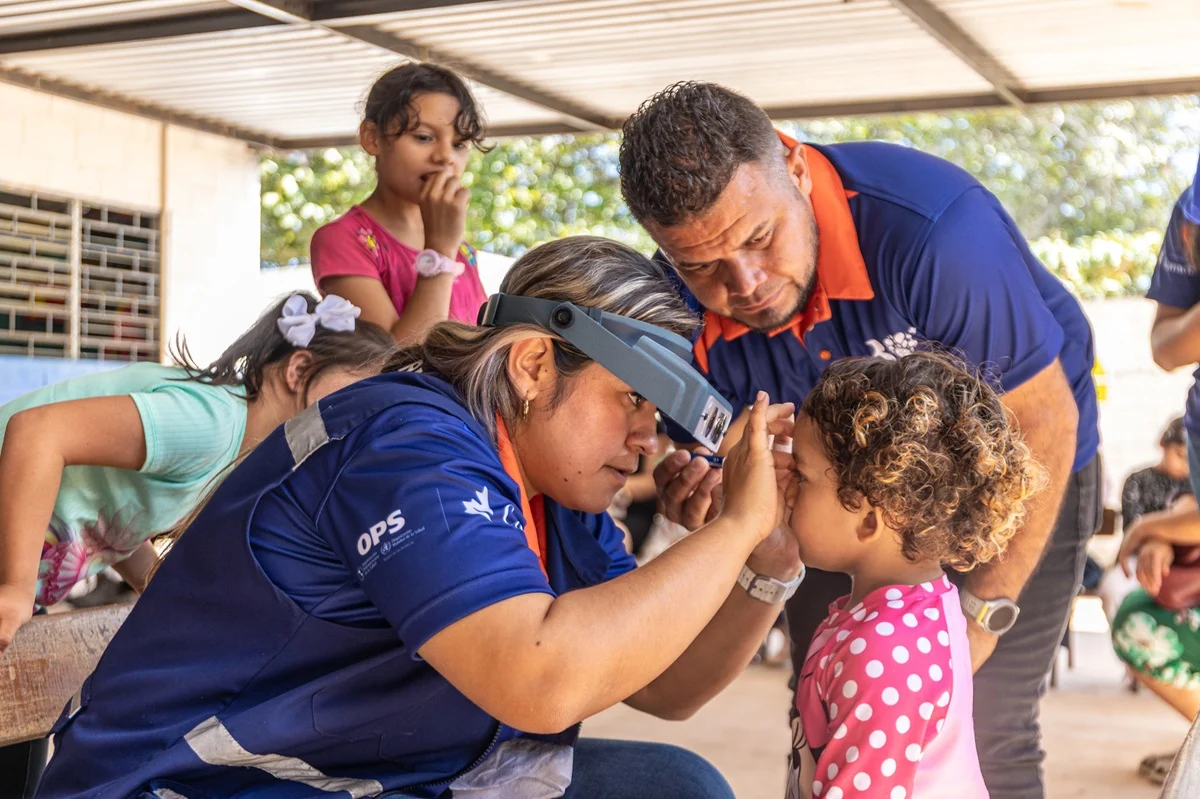
El Salvador has achieved a significant public health victory, officially validated by the World Health Organization (WHO) for eliminating trachoma as a public health problem. This monumental achievement marks a critical step in the global fight against the world’s leading infectious cause of blindness, a disease disproportionately affecting vulnerable populations. The validation signifies that trachoma is no longer a widespread threat to the visual health of the Salvadoran population, underscoring the nation’s sustained commitment to public health and disease eradication.
A Global Health Milestone Achieved
The World Health Organization’s validation is the culmination of a rigorous, multi-year effort by El Salvador to meticulously assess and document its progress in combating trachoma. Trachoma, a bacterial infection caused by Chlamydia trachomatis, is transmitted through direct contact with eye and nasal discharge from infected individuals. While curable in its early stages, repeated infections can lead to a painful scarring of the inner eyelid, a condition known as trachomatous trichiasis (TT). This inward turning of the eyelashes then irritates the cornea, leading to irreversible vision loss and blindness if left untreated.
Dr. Tedros Adhanom Ghebreyesus, WHO Director-General, lauded El Salvador’s success, stating, "I congratulate El Salvador on this remarkable achievement. It is a testament to the power of political commitment, strategic investment, and community engagement." He further emphasized the broader implications, noting, "El Salvador’s success is a vital step towards our global target of eliminating trachoma worldwide by 2030 and a clear signal that a healthier, more equitable future is within reach." This sentiment highlights the interconnectedness of national efforts with global public health objectives.
The Rigorous Validation Process
The path to validation was arduous and scientifically driven. It involved a comprehensive, multi-year process designed to confirm the absence of trachoma as a public health concern and to ascertain the robustness of El Salvador’s health system in detecting, investigating, and responding to any potential resurgence of the disease. This validation process is not merely a declaration; it is an evidence-based assessment of a nation’s public health infrastructure and its capacity to maintain disease-free status.
Between 2023 and 2026, El Salvador implemented targeted assessments across communities identified as having higher environmental and social risk factors for trachoma. These extensive epidemiological surveys involved detailed examinations and data collection to ascertain the prevalence of active trachoma transmission. Crucially, these assessments found no evidence of the disease circulating within these prioritized populations. No signs of active infection were detected in children, the primary demographic affected by the initial stages of the disease (trachomatous inflammation – follicular, TF), nor were advanced cases capable of causing blindness, such as trachomatous trichiasis (TT), found in adults. This lack of detected cases confirmed that trachoma no longer poses a public health problem in the country.
Dr. Jarbas Barbosa, Director of the Pan American Health Organization (PAHO), underscored the significance of these findings and the national commitment. "This validation reflects El Salvador’s commitment to reaching populations in the most vulnerable conditions and generating solid evidence to demonstrate that trachoma is not endemic in the country," Dr. Barbosa stated. "It is the result of sustained efforts to reach communities, identify potential cases, and ensure no one was left behind." This highlights the inclusive and equitable approach taken by El Salvador in its eradication efforts.
A Multisectoral Approach to Elimination
El Salvador’s success in eliminating trachoma as a public health problem is a direct result of a comprehensive, multisectoral strategy. This approach integrated various pillars of public health and social development, demonstrating that disease eradication is often a consequence of broader improvements in living conditions and healthcare access. Key components of this strategy included:
- Strengthened Primary Health Care Services: Enhancing the capacity and accessibility of primary healthcare facilities and personnel was fundamental. This ensured that communities had access to essential health services, including early detection and treatment of eye conditions.
- Improvements in Water, Sanitation, and Hygiene (WASH): Trachoma thrives in environments with poor hygiene and limited access to clean water. Investments in WASH infrastructure and education directly addressed the environmental factors that facilitate the transmission of the bacterium, thereby reducing the reservoir of infection.
- Integrated Eye Health Services: The initiative involved a robust focus on eye health, including comprehensive visual acuity screening for adults. This proactive approach allowed for the identification and management of existing cases, preventing further progression to blindness.
- Cross-Sectoral Collaboration: Effective elimination strategies necessitate collaboration among various government ministries, community leaders, healthcare providers, and international partners. El Salvador fostered strong partnerships to ensure a coordinated and sustained effort.
Sustaining the Gains: A Foundation for the Future
Achieving elimination is a significant accomplishment, but maintaining that status requires ongoing vigilance and robust systems. El Salvador has proactively established mechanisms to sustain its trachoma-free status. These include:
- Trained Health Personnel: Investing in the training and capacity building of healthcare workers ensures they are equipped to identify and manage any potential cases of trachoma or related eye conditions.
- Integrated Surveillance Mechanisms: The country has implemented sophisticated surveillance systems that continuously monitor for the re-emergence of trachoma. This includes active case finding and reporting protocols.
- Capacity for Trichiasis Management: Recognizing that some advanced cases may still exist or emerge, El Salvador has ensured that its national health system has the capacity to diagnose and surgically manage trachomatous trichiasis, preventing blindness and improving the quality of life for affected individuals.
The Minister of Health of El Salvador, Francisco Alabi, expressed pride in the nation’s achievement: "El Salvador has reached a major health milestone by achieving certification as a country free of trachoma, the result of sustained national efforts, with the support of the Pan American Health Organization and the Embassy of Canada," he stated. "We are proud to have reached this achievement in just three years, positioning the country in the region and improving the visual health of our population." The speed of this achievement, noted by the Minister, suggests a highly effective and efficient implementation of the elimination strategy.
International Support and Regional Context
The journey to eliminate trachoma in El Salvador was significantly bolstered by international cooperation. The Pan American Health Organization (PAHO) played a crucial role through its Initiative for the Elimination of Trachoma in the Americas, in close collaboration with the Government of Canada. This partnership provided technical expertise, financial support, and strategic guidance, underscoring the importance of global health initiatives in tackling neglected tropical diseases.
Beyond the direct impact on trachoma elimination, these collaborative efforts often create opportunities to deliver integrated health services to the communities engaged during the assessment phases. This holistic approach ensures that the benefits of disease eradication programs extend to broader public health improvements.
Trachoma’s impact is deeply intertwined with socioeconomic factors. The disease is strongly associated with poverty, poor living conditions, and inequities in access to basic services, including WASH and healthcare. These factors create environments where the bacterium can easily spread, perpetuating a cycle of infection and blindness, particularly in rural and marginalized communities.
The Broader Landscape of Trachoma in the Americas
While El Salvador has successfully eliminated trachoma as a public health problem, the disease continues to be a concern in other parts of the Americas. Trachoma remains endemic in rural and remote areas of Brazil, Colombia, Guatemala, and Peru. PAHO’s efforts extend to investigating and clarifying the epidemiological status of trachoma in other countries where its presence is suspected, including Bolivia, Ecuador, Guyana, Panama, Paraguay, and Venezuela. El Salvador’s success now provides a powerful model and renewed impetus for these ongoing regional efforts.
Globally, trachoma is one of many neglected tropical diseases (NTDs) that disproportionately affect impoverished communities. These diseases, often overlooked by larger global health agendas, carry devastating health, social, and economic consequences. The WHO’s road map for neglected tropical diseases 2021-2030 outlines ambitious targets for the control, elimination, and eradication of these conditions.
A Global Movement Towards Elimination
The WHO’s Alliance for the Global Elimination of Trachoma by 2020 (GET2020), launched in 1996, catalyzed a worldwide movement to combat the disease. This alliance brought together governments, non-governmental organizations, and academic institutions in a concerted effort. Although the initial target year has passed, WHO continues to support endemic countries in their accelerated progress towards the overarching goal of global elimination by 2030.
The definition of eliminating trachoma as a public health problem, as established by the WHO, is precise:
- A prevalence of trachomatous trichiasis (TT) unknown to the health system of less than 0.2% in individuals aged 15 years and older.
- A prevalence of trachomatous inflammation – follicular (TF) in children aged 1-9 years of less than 5%.
- These criteria must be met in each formerly endemic district.
- Crucially, the existence of a robust system to identify and manage incident cases of TT must be in place.
El Salvador’s validation places it among a growing cohort of nations that have successfully tackled this debilitating disease. It is the first country in Central America to achieve this milestone and the second in the Americas, following Mexico. Worldwide, 64 countries have now been recognized by WHO for eliminating at least one neglected tropical disease, with seven of these being in the Americas. This growing list of successes demonstrates that with political will, strategic investment, and community engagement, the elimination of diseases like trachoma is not only possible but attainable.
Preventing Re-emergence: The Path Forward
The WHO strongly advises countries that have achieved trachoma elimination to maintain robust surveillance systems and ensure continued access to quality eye care services. This proactive approach is essential to prevent the re-emergence of the disease, which could otherwise undo years of painstaking progress. Integrated surveillance mechanisms and readily available, high-quality eye care services are the cornerstones of maintaining a trachoma-free status.
El Salvador’s triumph is a beacon of hope, showcasing the transformative power of public health interventions and international cooperation in eradicating diseases that have plagued humanity for centuries. It reinforces the message that a healthier, more equitable future is indeed within reach, one disease-free community at a time.