The automotive industry currently finds itself at a crossroads regarding the long-term viability of plug-in hybrid electric vehicles (PHEVs). For some, these vehicles represent a critical on-ramp to a fully electric future, providing a "best of both worlds" solution that mitigates range anxiety while offering significant emission reductions for daily commutes. For others, PHEVs are viewed as an overly complex and costly compromise, a product of regulatory maneuvering rather than genuine consumer demand. The reality, as suggested by current market trends and regulatory shifts, is a complex tapestry involving technological evolution, environmental scrutiny, and a shifting legal landscape.
At their core, PHEVs are designed to green the ownership experience for a specific demographic: drivers who can access charging infrastructure for their daily commute but require the safety net of a gasoline engine for long-distance travel. By pairing a traditional internal combustion engine with a significantly larger battery than a standard hybrid, PHEVs allow for dozens of miles of zero-emission driving. When the battery is depleted, the vehicle operates as a conventional hybrid, utilizing the engine and a small portion of the battery to maintain efficiency. However, the success of this technology depends entirely on consumer behavior—specifically, whether owners actually plug them in.
The Discrepancy Between Lab Testing and Real-World Use
One of the primary controversies surrounding PHEVs is the "utility factor"—the percentage of miles driven on electricity versus gasoline. Regulatory bodies like the Environmental Protection Agency (EPA) in the United States and the European Commission have historically assumed high levels of electric-only operation. However, recent empirical data suggests a significant gap between these assumptions and reality.
A 2022 study by the International Council on Clean Transportation (ICCT), which analyzed data from thousands of private and corporate vehicles, found that PHEVs are traveling 25% to 65% fewer electric miles than EPA window stickers suggest. In Europe, the discrepancy is even more pronounced, particularly among company-car fleets where drivers may have fuel cards for gasoline but no incentive to charge their batteries. A European Commission study confirmed that real-world CO2 emissions from PHEVs were, on average, 3.5 times higher than the official laboratory values.
In response, the EPA has proposed adjustments to greenhouse-gas regulations to better reflect real-world usage. Despite this increased scrutiny, the latest EPA and Corporate Average Fuel Economy (CAFE) standards suggest that PHEVs will remain a cornerstone of manufacturer strategies for the foreseeable future, as they provide a pathway to meet tightening fleet-wide emission targets without requiring an immediate transition to 100% battery-electric vehicle (BEV) production.
Regulatory Drivers and the Shift Toward "Electric-First" Engineering
The next generation of PHEVs is being shaped largely by California’s Advanced Clean Cars II (ACC II) regulations. These rules, which have been adopted by several other states, mandate that by 2035, all new cars sold must be zero-emission vehicles. Crucially, the regulations allow for a portion of that requirement to be met by PHEVs, provided they offer a minimum of 50 miles of all-electric range.
Consequently, the industry is moving toward a 50-to-70-mile electric range standard. This shift is made possible by improvements in battery energy density and a fundamental change in powertrain philosophy. While older PHEVs often relied on the gasoline engine for heavy acceleration, upcoming models are designed with "electric-first" propulsion. In these systems, the electric motor is the primary powerhouse, and the gasoline engine stays dormant unless absolutely necessary for high-speed cruising or long-distance range extension.
2025 Model Year: Expanding the PHEV Landscape
As we look toward the 2025 model year and the early months of the subsequent calendar year, several new and significantly upgraded PHEVs are set to hit the market. These vehicles range from mainstream crossovers to high-performance luxury sedans and, for the first time, full-size pickup trucks.
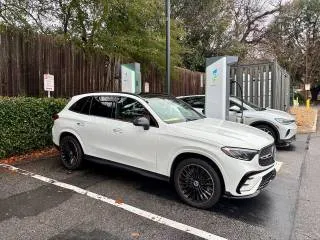
The Mercedes-Benz GLC 350e: Setting a New Standard
The 2025 Mercedes-Benz GLC 350e represents a significant leap forward for the luxury crossover segment. By mating a 2.0-liter turbocharged four-cylinder engine with a 24.8-kwh battery pack (of which 23.3 kwh is usable), Mercedes has achieved an EPA-rated electric range of 54 miles. This figure places the GLC 350e at the forefront of the current market, surpassing the electric range of competitors from Volvo and Lexus.
Beyond range, the GLC 350e addresses a common PHEV pain point: slow charging. Mercedes has equipped the vehicle with a 60-kw DC fast-charge capability, allowing the battery to be topped off in less than an hour. With a combined output of 313 hp and 406 lb-ft of torque, the GLC 350e demonstrates that the next generation of PHEVs will not sacrifice performance for efficiency.
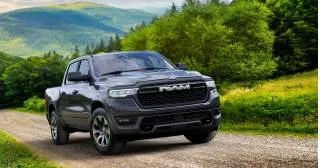
The Ram 1500 Ramcharger: A Paradigm Shift in Trucks
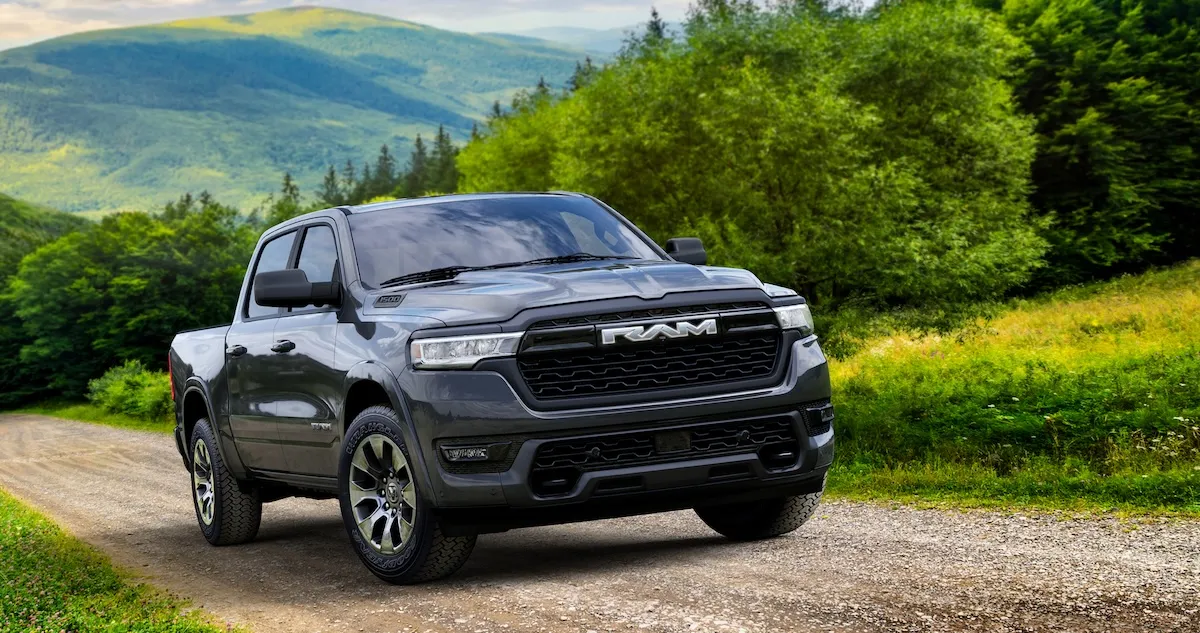
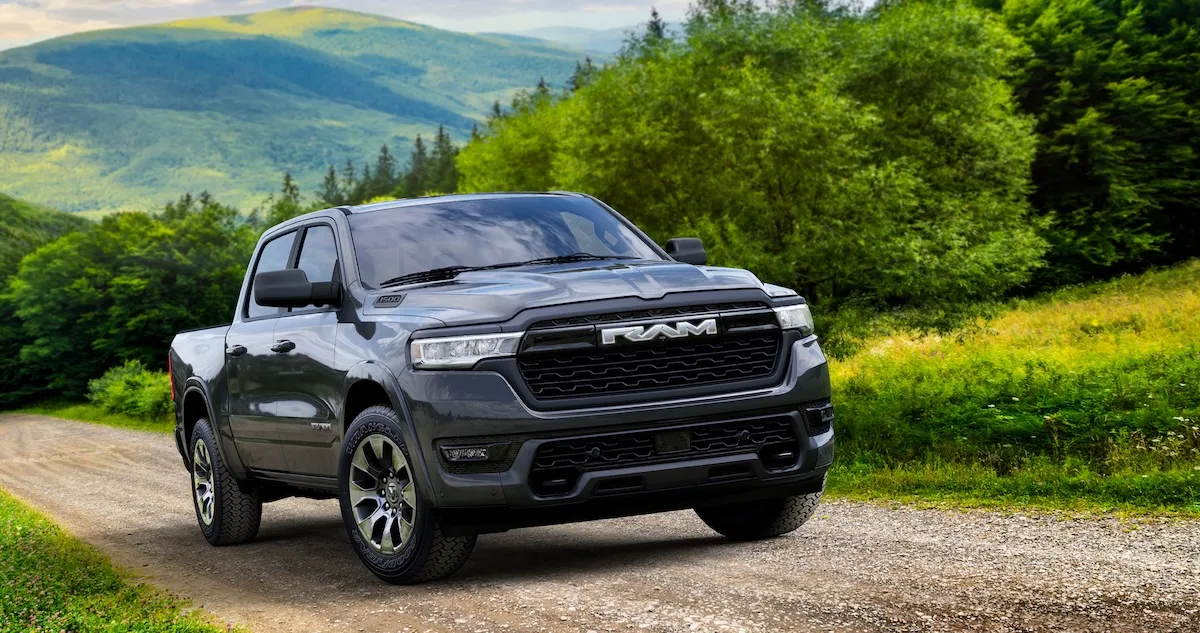
Perhaps the most technologically significant entry for 2025 is the Ram 1500 Ramcharger. Diverging from traditional PHEV architecture, the Ramcharger is a "series hybrid." In this configuration, there is no mechanical connection between the 3.6-liter V-6 engine and the wheels. Instead, the engine acts solely as an on-board generator to charge a massive 92-kwh battery pack.
The Ramcharger is expected to offer a class-leading 145 miles of all-electric range. When the battery is depleted, the gasoline generator provides an additional 545 miles of range, bringing the total to 690 miles. With a dual-motor system producing 663 hp and 619 lb-ft of torque, Ram claims the truck is fully capable of heavy-duty towing, a task that remains a challenge for many pure BEVs due to the rapid depletion of battery reserves under load.
Jeep’s Expanding 4xe Portfolio: Gladiator and Wagoneer
Following the success of the Wrangler 4xe, which became the best-selling plug-in hybrid in the United States, Jeep is expanding its 4xe badge to the Gladiator pickup and the premium Wagoneer lineup. The Gladiator 4xe, confirmed for a 2025 arrival, is expected to utilize the same 2.0-liter turbo-4 system found in the Wrangler, providing roughly 21 miles of electric range and maintaining the brand’s signature off-road capabilities.
Meanwhile, the Wagoneer and Grand Wagoneer 4xe will adopt a version of the Ramcharger’s range-extended system. This move is strategic; the sheer size and weight of these three-row SUVs make them ideal candidates for a series-hybrid setup, which provides the torque-rich benefits of electric motors without the weight and cost of a 200-kwh battery pack required for a pure BEV of similar stature.

Porsche Panamera Turbo S E-Hybrid: High-Performance Electrification
Porsche continues to refine its E-Hybrid strategy with the third-generation Panamera. The 2025 Turbo S E-Hybrid sits at the top of the range, combining a 4.0-liter twin-turbocharged V-8 with a 140-kw electric motor. The total system output is a staggering 771 hp, enabling a 0-60 mph sprint in just 2.8 seconds.
A larger 25.9-kwh battery pack is expected to significantly improve upon the previous model’s 20-mile electric range. For Porsche, the PHEV is not just a regulatory necessity but a performance enhancer, using the instantaneous torque of the electric motor to fill the gaps in the internal combustion engine’s power curve.
Mainstream Updates: Hyundai Tucson and Volvo XC90
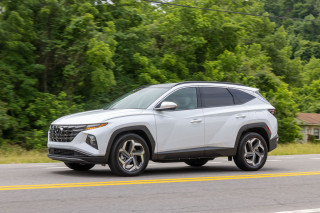
For the 2025 model year, the Hyundai Tucson Plug-In Hybrid receives a mid-cycle refresh focusing on technology and aesthetics. While the powertrain remains steady—offering 33 miles of electric range and 268 hp—the interior has been overhauled with a new curved display and a more intuitive infotainment system. Hyundai has also introduced a "Green Zone" drive mode, which uses geofencing to automatically switch the vehicle into EV mode when driving in residential areas or near schools.
Volvo, which has committed to becoming a fully electric brand by 2030, has refreshed its flagship XC90 T8 plug-in hybrid. Arriving as a 2025.5 model, the XC90 T8 features a revised exterior and an interior interface borrowed from the upcoming EX90 flagship EV. With 33 miles of range and a combined 455 hp, the XC90 remains a vital bridge for Volvo as it transitions its customer base away from traditional combustion engines.
The Outlier: Honda CR-V e:FCEV
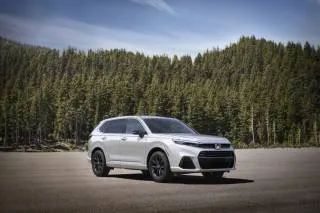
In a unique twist on the PHEV formula, Honda is introducing the 2025 CR-V e:FCEV. Instead of a gasoline engine, this vehicle uses a hydrogen fuel-cell stack to generate electricity. However, it remains a plug-in hybrid because it features a 17.7-kwh battery that can be charged via a standard outlet, providing 29 miles of battery-electric range. This dual-energy approach is intended to alleviate the challenges of California’s currently sparse hydrogen refueling infrastructure, allowing drivers to handle short trips on grid power alone.
Market Implications and the Road Ahead
The proliferation of PHEVs in 2025 reflects a nuanced understanding of the current global infrastructure. While BEV sales continue to grow, the pace of public charging installation has struggled to keep up in many regions. PHEVs serve as a pragmatic solution for consumers who are ready to experiment with electric driving but are not yet ready to commit to a vehicle that requires meticulous trip planning for long journeys.
However, the "on-ramp" theory only holds if these vehicles are used as intended. The environmental impact of a PHEV that is never charged is often worse than that of a standard hybrid, due to the added weight of the unused battery. This has led to calls for more transparent data reporting and potential changes to how PHEVs are incentivized by governments.
From a manufacturing standpoint, PHEVs allow companies to amortize the costs of their existing internal combustion engine platforms while scaling up battery production. As battery costs continue to fall and range continues to rise, the line between a PHEV and a BEV will likely blur, eventually leading to a market dominated by pure electrics. Until then, the 2025 fleet of plug-in hybrids represents the most advanced, diverse, and capable "backup plan" the automotive industry has ever offered.