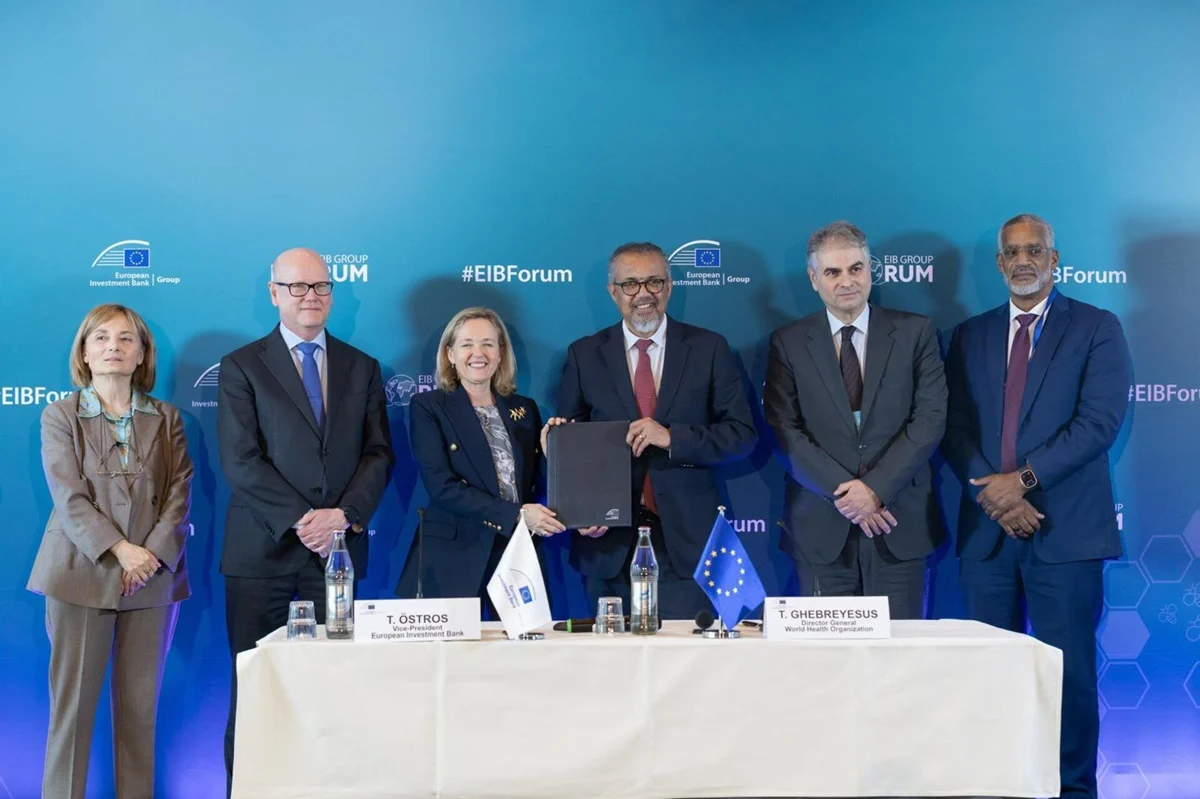
On 6 March 2025, a momentous step forward for healthcare resilience in the Middle East was formally solidified at the European Investment Bank Group Forum in Luxembourg. Dr Tedros Adhanom Ghebreyesus, Director-General of the World Health Organization (WHO), and Thomas Östros, Vice-President of the European Investment Bank (EIB Global), met to sign a landmark financing agreement. This pact commits a €10 million grant dedicated entirely to fortifying and modernizing public health infrastructure across Lebanon. This critical financial injection arrives at a time of profound socioeconomic and humanitarian strain within the Mediterranean nation, providing a vital lifeline to health systems buckling under the weight of successive crises.
The joint initiative focuses on two critical pillars of healthcare delivery. First, it will comprehensively re-establish and modernize Lebanon’s Central Public Health Laboratory, a cornerstone institution necessary for disease surveillance, epidemiological tracking, and diagnostic accuracy. Second, the program prioritizes the uninterrupted procurement and distribution of essential medications and healthcare support. This targeted intervention is specifically designed to aid more than 50,000 vulnerable individuals suffering from chronic, non-communicable diseases—most notably diabetes, cardiovascular disorders, and various forms of cancer—who have found themselves increasingly cut off from life-saving treatments due to severe economic degradation and systemic supply chain failures.
Background Context of the Lebanese Healthcare Crisis
To fully comprehend the significance of the €10 million grant from EIB Global and the WHO, one must examine the compounding crises that have plagued Lebanon over the past half-decade. Once considered the healthcare hub of the Middle East, renowned for its advanced private clinics and highly trained medical professionals, Lebanon has experienced an unprecedented socioeconomic collapse. Beginning in late 2019, the country entered a severe financial depression characterized by the near-total collapse of its banking sector, hyperinflation, and the dramatic depreciation of the Lebanese pound.
This economic tailspin severely impaired the public health sector. The Lebanese government and the central bank could no longer subsidize the import of essential medicines, raw pharmaceutical materials, and medical equipment. Consequently, pharmacies and hospitals faced acute shortages of basic drugs, ranging from common antibiotics to complex chemotherapy agents. At the same time, a mass exodus of healthcare professionals—doctors, specialists, and nurses—fled the country in search of economic stability abroad, leaving public hospitals critically understaffed.
Compounding these structural and financial shocks, Lebanon has endured catastrophic geopolitical and infrastructural events. The August 2020 Port of Beirut explosion devastated vast swaths of the capital, damaging or destroying several major hospitals and healthcare facilities. More recently, regional military escalations, cross-border hostilities, and internal displacement have placed an unbearable strain on an already fragile infrastructure. Hospitals have struggled to cope with mass casualty events while simultaneously managing day-to-day public health needs. In this environment of persistent vulnerability, the Central Public Health Laboratory—the primary institution responsible for monitoring infectious diseases, ensuring food and water safety, and verifying pharmaceutical quality—suffered severe operational setbacks, leaving the nation largely blind to emerging epidemiological threats.
Chronology of Events Leading to the Agreement
The partnership signed in Luxembourg on 6 March 2025 is the culmination of years of strategic planning, continuous emergency response coordination, and high-level diplomatic engagement between international financial institutions, United Nations agencies, and Lebanese health authorities.
During the initial phase of Lebanon’s crisis from 2019 to 2021, the WHO shifted its operational posture from long-term capacity building to emergency containment. The organization focused heavily on plugging critical gaps in medical supplies, deploying emergency trauma kits, and supporting COVID-19 vaccination campaigns amid severe economic headwinds. However, UN officials and international donors quickly realized that short-term humanitarian aid was insufficient to stave off a systemic collapse of the nation’s health architecture.
By 2022 and 2023, discussions intensified between the European Investment Bank—the lending arm of the European Union—and international health bodies regarding long-term structural investments in Lebanon. EIB Global, the branch of the EIB dedicated to international partnerships and development finance outside the European Union, identified public health as a primary strategic sector requiring intervention to prevent total human displacement and regional instability.
Throughout 2024, technical assessments were conducted on the ground in Beirut by WHO and EIB experts. These evaluations pinpointed the Central Public Health Laboratory as an indispensable node for national health security that required urgent capital restoration. Simultaneously, data regarding chronic disease patients highlighted an impending humanitarian catastrophe, as thousands of individuals dependent on regular medication were forced to ration doses or abandon treatments entirely.
The months leading up to the March 2025 EIB Group Forum saw the finalization of the grant framework. The formal meeting between Dr Tedros Adhanom Ghebreyesus and Vice-President Thomas Östros on 6 March 2025 marked the transition of these extensive technical discussions into a concrete, funded operational reality.
Supporting Data and Strategic Priorities
The urgency of the EIB Global and WHO intervention is underscored by sobering public health and economic data compiled over the past several years. According to international health assessments, out-of-pocket health expenditures in Lebanon skyrocketed as public coverage eroded, forcing families to spend a disproportionate share of their dwindling incomes on basic healthcare needs.
Chronic diseases account for a substantial majority of mortality and morbidity in Lebanon. Cardiovascular diseases, cancers, diabetes, and chronic respiratory illnesses represent over 80% of all deaths in the country. Before the crisis, patients relied heavily on the Ministry of Public Health’s centralized programs for subsidized medications. When these subsidies collapsed, the supply chains for chronic disease treatments were fractured.
The targeted allocation of the €10 million grant aims to address these specific metrics:
- Restoration of the Central Public Health Laboratory: Modernizing this facility will re-enable robust molecular diagnostics, antimicrobial resistance tracking, and environmental health monitoring. A functioning national laboratory is not only vital for everyday clinical guidance but also serves as the first line of defense against potential disease outbreaks and biological hazards.
- Support for 50,000 Chronic Disease Patients: By securing a steady, reliable pipeline of specialized pharmaceuticals, the initiative directly mitigates the risk of catastrophic health complications, emergency hospitalizations, and preventable deaths among the most vulnerable demographic segments. This intervention alleviates the immense emotional and financial pressure bearing down on households that would otherwise have to source scarce, exorbitantly priced medications on the black market.
Official Responses and Stakeholder Perspectives
While the formal announcement was delivered jointly by the leadership of the WHO and EIB Global, the broader international development community and regional health advocates have widely praised the agreement as a vital intervention rooted in pragmatic solidarity.
Dr Tedros Adhanom Ghebreyesus, speaking on the importance of resilient health systems during times of crisis, has consistently emphasized that health is a fundamental prerequisite for peace, stability, and sustainable economic recovery. Through this partnership, the WHO leverages its deep operational footprint and technical expertise on the ground in Lebanon to ensure that international financial aid translates directly into clinical outcomes. The collaboration reflects a shared commitment by the United Nations and the European Union to transition from reactive humanitarian relief to sustainable development resilience.
From the perspective of the European Investment Bank, Thomas Östros highlighted EIB Global’s unwavering dedication to supporting partner nations facing extraordinary external and internal pressures. As the financial arm of the European Union, the EIB utilizes its AAA-rated borrowing capacity and extensive developmental expertise to mobilize grants and concessional financing for projects that deliver high social impact. Investing in Lebanon’s public health infrastructure is viewed by the bank not merely as a charitable endeavor, but as a strategic investment in regional security and human capital preservation.
Lebanese health authorities and local non-governmental organizations have similarly expressed profound appreciation for the timely infusion of resources. Local medical syndicates and patient advocacy groups have frequently warned that the chronic disease medication deficit was a ticking time bomb. The direct procurement mechanisms established under the WHO-EIB framework are expected to bypass many of the bureaucratic and financial bottlenecks that have historically hampered aid distribution in the country.
Broader Impact and Implications
The implementation of the €10 million grant carries far-reaching implications for the future of Lebanon’s health sector and serves as a blueprint for international cooperation in fragile, conflict-affected states.
First and foremost, the re-establishment of the Central Public Health Laboratory restores a vital national asset. In an era marked by the growing threat of emerging infectious diseases and antimicrobial resistance, no nation can afford to operate without a high-functioning reference laboratory. By rebuilding this facility to international standards, the project reinstates Lebanon’s capacity for evidence-based policymaking, epidemiological surveillance, and rapid outbreak response.
Second, the targeted support for chronic disease sufferers addresses an often-overlooked dimension of humanitarian crises. While acute trauma and infectious disease outbreaks frequently dominate international headlines, the silent suffering of individuals deprived of chronic medications represents a massive, enduring toll on human life and healthcare systems. By stabilizing treatment access for over 50,000 individuals, the initiative prevents avoidable emergency interventions, thereby reducing the burden on overstretched public hospitals.
Furthermore, this agreement underscores the evolving role of international financial institutions in public health delivery. Historically, the EIB focused primarily on hard infrastructure projects such as transport, energy, and water sanitation. In the wake of global health shocks, the bank has increasingly recognized that human infrastructure—specifically robust public health systems—is equally critical to economic stability and sustainable development.
As the project rolls out its operational phases throughout 2025 and beyond, its success will likely be measured not only by the physical restoration of laboratory walls and the volume of pharmaceutical boxes delivered, but by its ability to restore public trust in the Lebanese healthcare system. By bridging the gap between immediate humanitarian need and long-term institutional capacity building, the collaboration between EIB Global and the WHO establishes a resilient foundation upon which Lebanon can begin to rebuild its public health future.