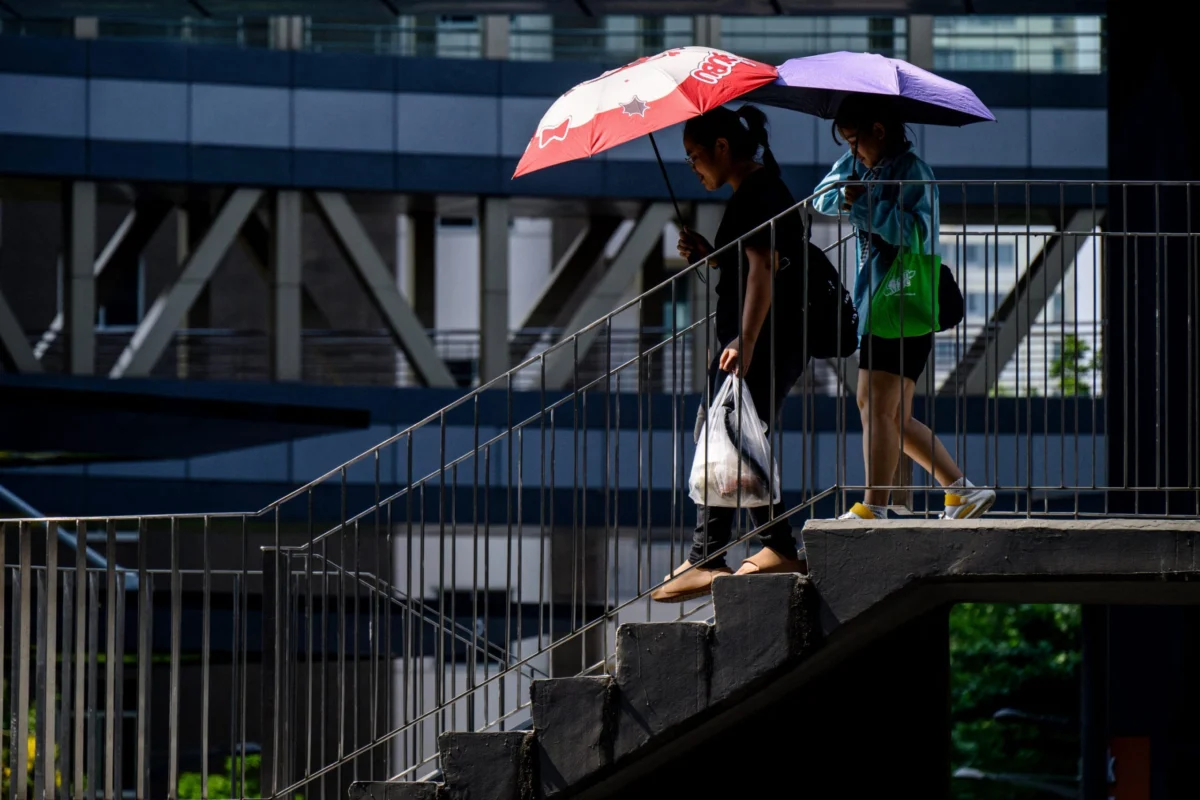
Bangkok’s urban core experienced a searing heat index of 51.9 degrees Celsius in late June, a peak in a prolonged period of dangerously high temperatures that commenced in April. For the millions inhabiting Thailand’s bustling capital, such oppressive conditions have regrettably become a familiar, almost mundane, aspect of daily life. Yet, for city administrators, urban planners, and national leaders, including the recently re-elected Bangkok Governor Chadchart Sittipunt, this persistent meteorological assault serves as an increasingly urgent alarm bell, underscoring the profound and multifaceted dangers posed by escalating heat. The implications extend far beyond mere discomfort, threatening to fundamentally reshape the city’s economic vitality, social fabric, and overall livability.
The Unrelenting Heatwave: A New Normal
The recent peak of 51.9 degrees Celsius, measured by the heat index, represents the ‘feels like’ temperature, accounting for both ambient air temperature and humidity – a critical metric in a tropical climate like Bangkok’s. This level of heat falls squarely into the "danger" or "extreme danger" categories, where the risk of heatstroke and heat exhaustion becomes acutely elevated, even for individuals at rest. For residents, this translates into a tangible daily struggle: outdoor work becomes perilous, with construction workers, street vendors, and delivery personnel facing significant health risks and reduced productivity. Public transport systems, often lacking adequate air conditioning, turn into oppressive ovens, making commutes arduous. Even indoor environments demand constant, energy-intensive cooling, placing immense strain on the city’s power grid and household budgets.
The sustained period of extreme heat since April signals a worrying trend, moving beyond isolated heatwaves to a new climatic reality. This pattern is consistent with broader global climate change models predicting more frequent and intense heat events, particularly in vulnerable urban centers within tropical and subtropical regions. The physiological toll on the human body, particularly among vulnerable populations such as the elderly, young children, and those with pre-existing health conditions, is a growing public health concern, with hospitals reporting increased admissions for heat-related illnesses.
A City Under Siege: Economic and Social Ramifications
The economic repercussions of sustained extreme heat are substantial and far-reaching, directly impacting Bangkok’s role as a regional economic powerhouse. A comprehensive analysis by the World Bank paints a stark picture: a mere one-degree Celsius increase in Bangkok’s average temperature could precipitate over 2,300 additional heat-related deaths annually. The financial cost is equally staggering, with an estimated 44 billion Thai baht (approximately $1.3 billion USD) lost each year due to reduced labor productivity, as outdoor workers are forced to curtail hours or operate less efficiently. Furthermore, increased demand for air conditioning translates into roughly 17 billion baht ($509 million USD) in additional electricity costs, a burden borne by both businesses and households.
Thailand’s economy is heavily reliant on sectors particularly susceptible to thermal stress: tourism, manufacturing, agriculture, and construction. In tourism, Bangkok’s allure as a vibrant cultural and shopping destination diminishes during its hottest months, potentially diverting visitors to cooler climates or prompting shorter stays. The outdoor nature of agriculture and construction renders workers highly vulnerable, directly impacting output and project timelines. Manufacturing facilities face increased cooling costs and potential disruptions to supply chains if worker health or equipment overheating becomes an issue. These combined factors threaten to erode Bangkok’s long-term competitiveness as an attractive place to live, work, and visit, jeopardizing its status as a premier global city. The impending 2026 meetings of the International Monetary Fund and World Bank Group, returning to Thailand for the first time since 1991, will undoubtedly feature these pressing economic challenges prominently, with discussions likely to be held in robustly air-conditioned environments.
The Climate Trajectory: Alarming Projections for Bangkok
The current heat, severe as it is, merely foreshadows a much hotter future. Projections indicate that Bangkok’s average daily maximum temperature is set to climb to 38.1 degrees Celsius by 2050, a significant increase from 33.3 degrees Celsius recorded in 2000. This represents the steepest projected rise for any major Southeast Asian capital, positioning Bangkok at the forefront of the region’s climate vulnerability. The ASEAN Centre for Energy further forecasts a near-tripling of "extreme heat days"—those exceeding 35 degrees Celsius—to approximately 120 per year by mid-century. This means residents could experience over a third of the year under conditions deemed extreme heat.
Bangkok’s unique urban morphology exacerbates these climatic trends. As a sprawling, densely populated metropolis characterized by extensive concrete and asphalt surfaces, limited green spaces, and high-rise buildings that trap heat, the city is a prime example of the "urban heat island" (UHI) effect. The UHI phenomenon causes urban areas to be significantly warmer than surrounding rural areas, with temperatures potentially increasing by up to seven degrees Celsius within the city core compared to its outskirts. This effect intensifies at night, preventing adequate cooling and placing continuous stress on the urban environment and its inhabitants. The combination of global warming and the localized UHI effect creates a dangerous feedback loop, accelerating the city’s warming trajectory and amplifying its impacts.
Bangkok’s Initial Response: Emergency Measures and Their Limits
Acknowledging the growing threat, the Bangkok Metropolitan Administration (BMA) has not been entirely passive. Under its Urban Heat Management Framework, the city has implemented a range of emergency measures designed to mitigate immediate risks. These include the establishment of over 300 cooling centers strategically located across the city, providing temporary respite for residents during peak heat. Additionally, hydration stations have been rolled out in public areas, accompanied by heat-health advisories disseminated through various channels to inform the public about precautions and symptoms of heat-related illnesses. The BMA has also proactively identified 379 heat-risk zones, allowing for targeted emergency responses and resource allocation to the most vulnerable neighborhoods.
While these initiatives demonstrate a commendable commitment to public safety and provide crucial immediate relief, experts and urban planners increasingly caution that such emergency measures are inherently limited in their scope and efficacy as systemic, long-term solutions. Cooling centers, for instance, offer temporary refuge but do not address the root causes of urban heating. Their capacity is finite, accessibility can be an issue for certain populations, and they do little to reduce ambient temperatures in the wider urban environment—the following week, or indeed, the following year. They represent a reactive approach, designed to respond to crises rather than prevent them. As instances of extreme heat become more frequent and prolonged, the city’s resilience will depend less on the speed of its emergency response and more on the foresight and quality of its long-term planning, well before temperatures reach dangerous levels. The paradigm must shift from merely reacting to heat to fundamentally designing a city that is inherently resilient to it.
Shifting Paradigms: From Reaction to Proactive Design
The imperative for Bangkok is clear: a fundamental shift from short-term, reactive measures to comprehensive, proactive urban design and planning that integrates heat resilience at its core. This requires a multi-pronged approach encompassing policy, infrastructure, technology, and community engagement. The primary challenge lies in redirecting long-term investments to areas where they will yield the greatest impact. The World Bank has highlighted a critical gap: Bangkok’s current cooling initiatives are not optimally benefiting its hottest neighborhoods because detailed microclimate data is not fully integrated into planning and investment decisions. This means that resources might not always be deployed to the areas experiencing the most severe heat island effects or harboring the most vulnerable populations.
To truly design for heat, urban planners need granular, real-time data on temperature variations, humidity levels, wind patterns, and heat absorption across different urban surfaces. This data can inform targeted interventions, ensuring that investments in green infrastructure, reflective materials, and improved ventilation are strategically placed for maximum cooling effect. This data-driven approach moves beyond a one-size-fits-all solution, allowing for customized strategies tailored to the unique thermal characteristics of each neighborhood.
Leveraging Data and Innovation: Lessons from Singapore and Beyond
One compelling model for data-driven urban planning comes from Bangkok’s regional neighbor, Singapore. The city-state’s "Digital Urban Climate Twin" offers a sophisticated approach, allowing planners to simulate and test various heat mitigation measures before committing significant public resources. This innovative tool integrates vast datasets—including climate models, urban morphology, vegetation cover, and building characteristics—to create a virtual replica of the city. Within this digital environment, planners can experiment with interventions such as increased tree planting, the creation of ventilation corridors through building design, and the use of cool pavements or green roofs.
The Digital Urban Climate Twin has already provided quantifiable insights, confirming what was once intuitive: the cooling effect of a single well-placed park can extend to a radius of up to 300 meters, significantly mitigating the urban heat island effect in surrounding areas. However, the research also offers nuanced findings, cautioning that simply planting trees indiscriminately may yield diminishing or even counterproductive returns if not integrated into a broader ventilation strategy. For instance, dense tree canopies without adequate airflow can trap heat, especially at night.
While Bangkok does not need to replicate Singapore’s model wholesale, it can certainly adopt the core principle of leveraging advanced data analytics and simulation tools to guide investment decisions. This would involve developing its own localized microclimate mapping capabilities, potentially utilizing satellite imagery, drone-based thermal cameras, and ground-level sensor networks. Beyond tree planting, other nature-based solutions (NBS) and innovative materials hold promise. These include:
- Green Roofs and Walls: Reducing heat absorption on building surfaces and providing evaporative cooling.
- Permeable Pavements: Allowing water infiltration to reduce surface temperatures and runoff.
- Water Features: Ponds, canals, and fountains can create localized cooling effects through evaporation.
- Cool Pavements and Reflective Surfaces: Using materials that reflect solar radiation rather than absorbing it, significantly lowering surface and ambient temperatures.
- Urban Design for Ventilation: Orienting buildings and planning street layouts to maximize airflow and create cooling breezes.
Implementing these solutions in a densely packed, rapidly developing city like Bangkok presents challenges related to space availability, existing infrastructure, and coordination across multiple agencies and private developers. However, the long-term benefits in terms of public health, economic resilience, and urban livability far outweigh these complexities.
The Crucial Role of Finance: Bridging the Adaptation Gap
Building a truly heat-resilient city demands substantial financial investment, far exceeding what municipal budgets alone can typically provide. There is an urgent need to cultivate a robust pipeline of "investable resilience projects" – initiatives that are well-defined, backed by reliable data, and supported by clear policy signals to attract both public and private capital. These projects could range from large-scale green infrastructure developments and public transport upgrades to incentivizing energy-efficient building retrofits and promoting the use of cool materials in construction.
The current financial landscape reveals a significant disparity. A 2025 analysis by the Climate Policy Initiative revealed that Southeast Asia requires an estimated $20 billion annually for adaptation investments but receives only about $2.5 billion – an alarming 88 percent shortfall. This represents one of the widest adaptation finance gaps in any subregion in Asia. Bridging this gap requires a concerted effort from international financial institutions, national governments, and the private sector.
International bodies like the World Bank and the International Monetary Fund can play a pivotal role in facilitating access to climate finance, providing technical assistance, and helping cities develop bankable projects. Private sector engagement is also crucial, requiring innovative financial mechanisms such as green bonds, public-private partnerships, and impact investing to mobilize capital. Clear policy frameworks, regulatory incentives, and transparent governance are essential to de-risk these investments and create an attractive environment for private capital. The upcoming IMF and World Bank meetings in Bangkok in 2026 present a critical platform to highlight these financial challenges and galvanize global support for climate adaptation initiatives in vulnerable cities.
Beyond Infrastructure: Social Equity and Public Health
The discussion around urban heat resilience must extend beyond infrastructure and finance to encompass critical social equity and public health dimensions. Extreme heat disproportionately impacts vulnerable populations. Low-income communities often reside in neighborhoods with fewer green spaces, more impervious surfaces, and older, less insulated housing, exacerbating the urban heat island effect. Outdoor workers, who often lack adequate protective measures or the flexibility to adjust their schedules, face the greatest health risks and economic hardship. The elderly, individuals with chronic health conditions, and children are also particularly susceptible to heat-related illnesses.
Beyond immediate heatstroke, prolonged exposure to high temperatures can exacerbate respiratory and cardiovascular diseases, impact mental health, and disrupt sleep patterns, leading to broader public health crises. Therefore, a truly resilient city must integrate social equity into its heat adaptation strategies, ensuring that cooling solutions and protective measures are accessible to all, especially the most vulnerable. This includes targeted cooling programs, community outreach, and public education campaigns tailored to diverse linguistic and cultural groups.
A Defining Mandate: Governor Chadchart’s Challenge
Governor Chadchart Sittipunt, recently re-elected with a strong mandate, stands at a critical juncture. His second term offers a unique opportunity to elevate heat adaptation as a signature priority, transforming Bangkok into a global leader in urban climate resilience. The city has demonstrated its capacity for rapid response during acute heat spikes, deploying emergency measures with efficiency. However, the greater and more defining test lies in its ability to transition from these reactive measures to deliberate, sustained, and strategic investment in a city fundamentally built for the heat it already knows is coming.
This requires bold leadership to champion innovative planning, integrate advanced data analytics, foster inter-agency collaboration, and unlock the necessary financial resources. It means prioritizing green infrastructure, promoting sustainable urban development, and ensuring that every new project contributes to a cooler, more livable Bangkok. The choices made today will determine not only the health and prosperity of Bangkok’s current residents but also the legacy of the city for future generations.
Conclusion
Bangkok’s escalating heat crisis is not merely a seasonal inconvenience; it is a profound existential challenge demanding immediate and visionary action. The economic costs, public health risks, and threats to urban livability are undeniable and growing. While the city has initiated emergency responses, the path forward necessitates a paradigm shift towards proactive, data-driven urban design and significant investment in long-term resilience. By embracing innovative solutions, bridging the adaptation finance gap, and prioritizing social equity, Governor Chadchart and Bangkok’s leaders have the opportunity to transform the city’s vulnerability into a testament of resilience, ensuring its continued vibrancy and prosperity in a rapidly warming world. The question is no longer if Bangkok will adapt, but how swiftly and strategically it will invest in a future built to withstand the heat.