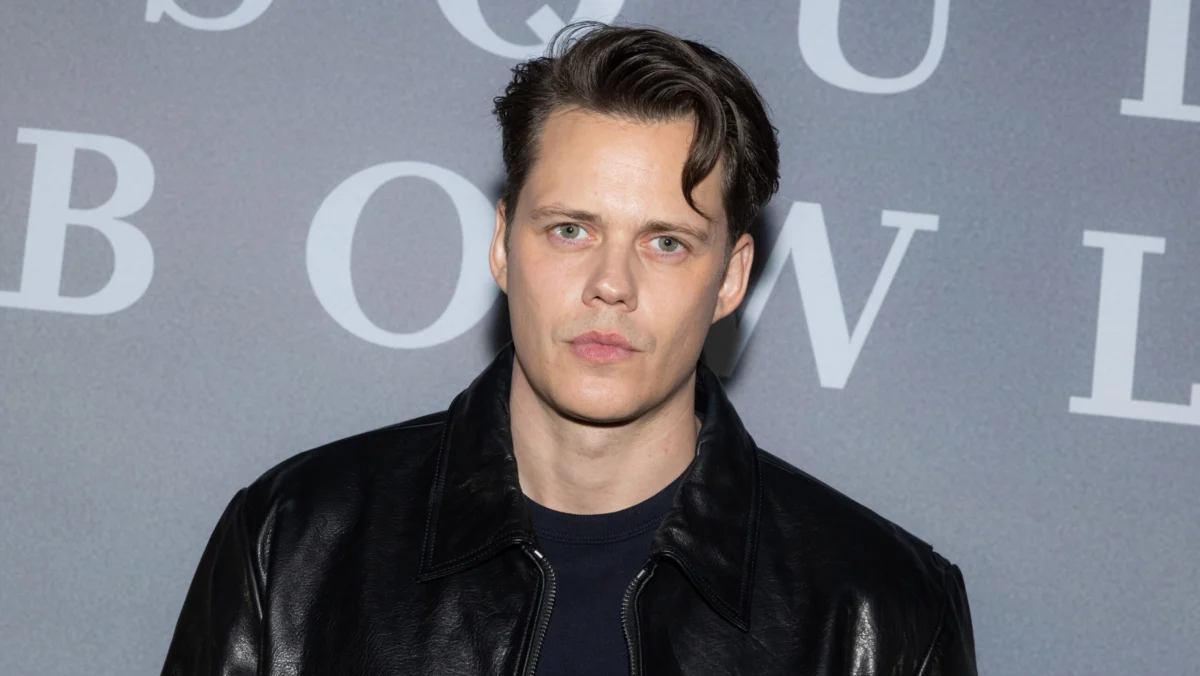
The search for the next James Bond remains one of the most closely watched narratives in the global entertainment industry, but for actor Bill Skarsgard, the high-profile casting process is a periphery event. During a candid appearance on the Happy Sad Confused podcast hosted by Josh Horowitz, the 36-year-old Swedish performer addressed recent speculation regarding his potential involvement in the 007 franchise, clarifying that he was never in contention for the lead role. His comments offer a rare, direct insight into the opaque nature of Bond casting and provide a broader reflection on his evolving career trajectory as he seeks to distance himself from the dark, villainous roles that have defined his ascent to stardom.
Addressing the Bond Rumors and Casting Process
The mystery surrounding the successor to Daniel Craig, who concluded his tenure as James Bond with 2021’s No Time to Die, has occupied public discourse for years. As Eon Productions and the Broccoli family continue their rigorous search for the next incarnation of Ian Fleming’s iconic spy, various names have circulated through trade reports and industry leaks. Skarsgard, whose commanding presence and unique range have made him a fan-favorite for the role of a Bond antagonist, confirmed that he was never part of the formal discussions.
“I wasn’t even thrown into the mix,” Skarsgard remarked during the podcast interview, maintaining a lighthearted tone while dispelling the rumors. He jokingly attributed his absence from the shortlist to his heritage, noting, “Maybe they were like, ‘We can’t do a Swede for this guy.’”
While the lead role of 007 was never on the table, Skarsgard acknowledged that the prospect of joining the Bond universe as a singular, memorable villain remained an intriguing possibility. He noted that he would not be interested in the multi-film commitment required of the lead actor, a role that typically demands a decade or more of professional focus. Instead, he expressed an affinity for the “one-off” villain archetype, pointing to the performances of fellow actors like Mads Mikkelsen and Javier Bardem—both of whom delivered iconic, career-defining turns as Bond antagonists.
A Career Defined by Darkness: The Skarsgard Legacy
Bill Skarsgard’s hesitation regarding future villain roles is rooted in his prolific track record of portraying some of modern cinema’s most unsettling antagonists. Since his breakout as Pennywise the Dancing Clown in the 2017 adaptation of Stephen King’s It, Skarsgard has become Hollywood’s go-to talent for characters defined by psychological complexity and physical menace.
His resume in this space is extensive. From his chilling, transformative performance as Count Orlok in the recent reimagining of Nosferatu to the vengeful, tragic figure of Eric Draven in The Crow, Skarsgard has consistently explored the darker corners of human (and supernatural) behavior. His appearance as the Marquis Vincent Bisset de Gramont in John Wick: Chapter 4 further solidified his reputation as an actor capable of exuding sophisticated, calculated malice.
However, the actor suggests that the saturation of such roles has led to a sense of professional exhaustion. “For a villain, it would have to be something that felt original to me, that was something that I hadn’t done before,” he explained. “I feel, kind of, spent with those things. But there’s villains that could be really fun in different ways and if it’s the right kind.” This desire for creative evolution is a common inflection point for actors who find themselves typecast after achieving significant success in a particular genre.
The Landscape of the 007 Casting Search
The broader context of Skarsgard’s comments highlights the high-stakes environment currently surrounding the Bond franchise. As the production prepares for its next installment—which will be directed by Denis Villeneuve—the list of potential candidates has narrowed and shifted multiple times.
Recent reports from The Hollywood Reporter indicate that the casting process has reached a stage of intensive screen testing. High-profile names such as Callum Turner, Jack Lowden, and Josh O’Connor have reportedly participated in these sessions. More recently, the inclusion of Robert Pattinson in testing reports has signaled that the production is looking for actors with significant leading-man experience and a proven ability to anchor a global franchise. Additionally, Nicholas Hoult has been frequently mentioned in industry circles as a serious contender, underscoring the production’s preference for established, versatile talent.
The delay in naming a new Bond is not without precedent. Following the departures of previous actors, the producers have historically taken their time to ensure the candidate aligns with the long-term vision for the series. Given that the franchise is currently undergoing a strategic pivot under the direction of Villeneuve, the casting choice is viewed as a foundational decision that will dictate the tone of the next decade of films.
Professional Pivot: From War Drama to New Horizons
While he distances himself from the villainous roles that propelled his career, Skarsgard is currently focusing on projects that demand a different kind of intensity. He is currently starring in the war film The Mosquito Bowl, directed by Peter Berg. The film, which has received attention for its historical gravity and ensemble performances, marks a departure from the supernatural and high-octane action roles he has frequented.
The Mosquito Bowl, which premiered in theaters and is slated for a digital release on Netflix on November 25, follows the real-life story of a football game played between U.S. Marines during the Battle of Okinawa. The role allows Skarsgard to lean into grounded, character-driven storytelling, a shift that aligns with his stated desire to explore new creative territories.
Implications for the Industry
The public’s desire to see Skarsgard as a Bond villain—and his own acknowledgment of the role’s appeal—speaks to the intersection of fan expectation and actor agency. In an industry driven by franchises and intellectual property, actors often find their public image inextricably linked to their most famous roles. Skarsgard’s candidness regarding his desire for variety is indicative of a broader trend among A-list actors who prioritize artistic longevity over the comfort of genre familiarity.
For the Bond franchise, the absence of Skarsgard from the casting conversation is a minor footnote in a much larger, more complex puzzle. However, his comments serve as a reminder that the casting of 007 is a collaborative negotiation between the studio’s vision and the actor’s professional aspirations. As the industry awaits the final announcement of the next James Bond, the focus remains on finding a performer who can balance the weight of the franchise’s legacy with the fresh, evolving needs of a global audience.
Looking Ahead
As Bill Skarsgard transitions into this next phase of his career, the industry will be watching to see which roles he chooses to pursue. By setting boundaries on his involvement in villain-centric narratives, he is intentionally opening doors to dramas, period pieces, and potentially, lighter fare that could demonstrate a wider spectrum of his capabilities.
The search for the next James Bond continues, and while the field of candidates remains competitive and largely kept under wraps by Eon Productions, the discourse surrounding the role remains a testament to the character’s enduring relevance. Whether Skarsgard eventually finds himself cast as a Bond antagonist in a later film or continues to pursue independent, auteur-driven projects, his career remains one of the most compelling narratives in contemporary film. His move away from the “spent” energy of villainy is not just a personal preference; it is a strategic maneuver that promises to redefine his footprint in the industry for years to come.