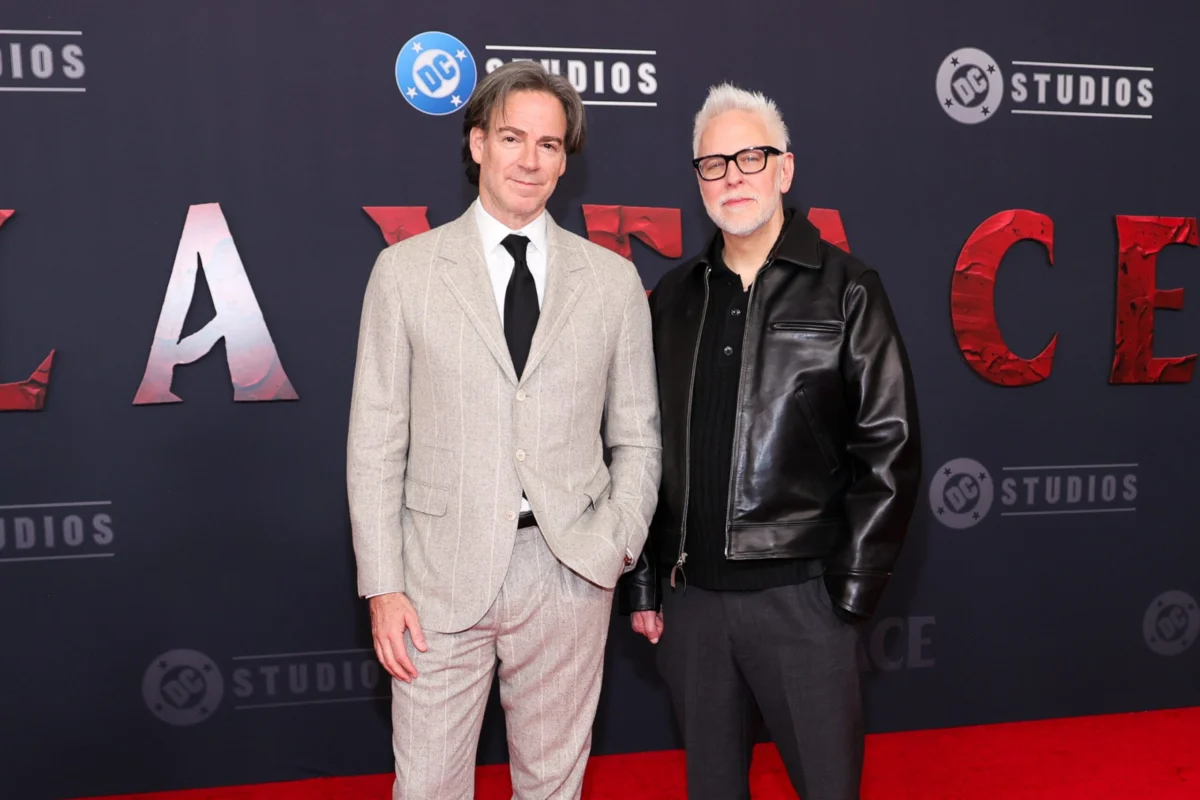
This significant leadership transition, announced on November 9, 2026, marks the end of a tumultuous chapter for the DC brand and signifies a major strategic pivot for Skydance, which finalized its acquisition of Warner Bros. Discovery just over a month ago. Jeremy Latcham, a seasoned producer and former Marvel Studios executive who was instrumental in the foundational years of the Marvel Cinematic Universe, has been appointed as the new president and chief creative officer of DC Studios. He is scheduled to assume his new responsibilities on December 1, overseeing the entirety of the studio’s film, television, and animation output.
The decision to oust Gunn and Safran arrives as a surprise to many industry observers, particularly because early reports from the post-merger transition period indicated that the duo had secured their positions within the new corporate structure. However, the reality of the boardroom proved less stable than initial public relations messaging suggested. On November 6, Skydance chairman and CEO David Ellison and co-CEO Ynon Kreiz personally delivered the news to Gunn and Safran, effectively terminating their tenure at the helm of the studio.
A History of Strategic Reboots
The removal of Gunn and Safran marks the second time in just 13 years that the DC cinematic apparatus has undergone a comprehensive reset. Since 2013, the studio has struggled to find a consistent creative identity that balances the massive scope of the DC Comics library with the demands of the modern box office.
The DC Extended Universe (DCEU) began in 2013 with Zack Snyder’s Man of Steel, a film that attempted to establish a gritty, cohesive foundation for future stories. This initiative eventually resulted in a decade of volatile performance, ranging from the high-grossing Wonder Woman (2017) to the critical and commercial disappointment of The Flash (2023). During this period, the studio grappled with creative interference, director turnover, and an inconsistent tone that often left audiences confused about which films occupied the same narrative space.
When Gunn and Safran were hired in November 2022, the mandate was clear: consolidate the fragmented properties into a single, cohesive, and commercially viable shared universe. Gunn, having already achieved significant success as the writer-director of the Guardians of the Galaxy trilogy and the DC-adjacent The Suicide Squad (2021), was viewed as the ideal architect for this new era. Safran, a veteran producer with a strong track record at New Line Cinema—most notably the Conjuring universe—was brought in to manage the logistical and operational demands of the studio.
The Tenure of Gunn and Safran: A Mixed Legacy
The tenure of the duo was defined by a series of aggressive creative risks, resulting in a performance that can best be described as a mixed bag. Their first major release, Superman (2025), provided a strong start, grossing $618.7 million worldwide. The film introduced David Corenswet as the iconic hero and was largely successful in establishing the aesthetic and narrative tone for the intended new universe.
However, momentum stalled in the summer of 2026 with the release of Supergirl. With a production budget estimated at $170 million, the film failed to resonate with audiences, earning only $126 million globally and becoming one of the lowest-performing films in the studio’s recent history. The poor reception to Supergirl sparked internal discussions regarding the sustainability of the "Gunn-Safran" vision, particularly as the studio struggled to maintain a consistent box office presence.
Conversely, the pair found unexpected success in smaller-scale, experimental projects. The R-rated body-horror film Clayface, produced on a modest budget of $44 million, was a critical and commercial bright spot, grossing $109 million by early November 2026. This success suggested that while the studio struggled with traditional superhero tentpoles, there was still an appetite for character-driven, genre-adjacent stories. Television projects, including the second season of Peacemaker and the critically lauded Lanterns, further solidified the idea that the studio’s strengths were increasingly found outside of the traditional blockbuster format.
The Transition to Jeremy Latcham
Jeremy Latcham’s arrival represents a deliberate return to the "Marvel model"—a system of interconnected storytelling that relies on deep creative oversight and long-term planning. Latcham’s pedigree is impeccable; as a founding member of the Marvel Studios team, he was involved in the production of Iron Man (2008), The Avengers (2012), and the Spider-Man collaboration between Sony and Marvel.
His departure from Marvel in 2017 to launch Latcham Pictures allowed him to branch out into diverse genres, as evidenced by his work on Dungeons & Dragons: Honor Among Thieves. His return to the superhero genre as the leader of DC Studios is a high-stakes move for Skydance. In a brief statement following his appointment, Latcham noted: "I’ve had the privilege to help bring some of the most celebrated superhero stories to life on the big screen, and I’m excited and honored for the opportunity to now lead DC Studios into its next era."
As president and chief creative officer, Latcham will report directly to Dana Goldberg and Josh Greenstein, who serve as co-chairs of the Skydance Motion Picture Group. His primary challenge will be to determine which elements of the current DC architecture are worth preserving and which should be discarded in favor of a fresh approach.
Broader Implications and Uncertainties
The immediate future of the DC slate remains in a state of flux. The production of Man of Tomorrow, the direct sequel to the 2025 Superman, is currently in its final stages of post-production and is slated for a July 2027 release. Furthermore, the production of The Batman: Part II continues under the direction of Matt Reeves, with veteran director Steven Soderbergh having been brought on to oversee remaining scenes following a family emergency for Reeves.
However, beyond these near-term projects, the roadmap for the DC Universe is largely unwritten. It remains unclear whether Corenswet’s portrayal of Superman will continue into a third film, or if the studio will choose to pivot toward an entirely new iteration of its core characters. The fate of the Lanterns television series, despite its initial success, is also subject to review as the studio reevaluates its long-term streaming and theatrical integration.
The industry is watching closely to see if the "franchise fatigue" that has plagued the genre for the past two years can be reversed by a change in management. Data from recent theatrical cycles suggests that audiences are becoming increasingly selective, favoring original concepts or high-quality genre deviations over the standard "superhero formula." Latcham’s challenge is to balance the corporate desire for a connected universe with the creative necessity of keeping the characters fresh and relevant.
Industry Reaction and Conclusion
Analysts suggest that the firing of Gunn and Safran is a clear indication that David Ellison and the Skydance leadership are prioritizing absolute control over their new intellectual property assets. While Gunn and Safran will remain as producers on various DC projects—ensuring some continuity—they no longer hold the keys to the kingdom.
The history of the DC film franchise has been defined by its volatility. From the initial, disjointed efforts of the early 2010s to the ambitious but ultimately inconsistent attempt to build a unified brand under the outgoing leadership, the studio has been searching for a stability that has remained elusive. Whether Jeremy Latcham can provide that stability, or if he is simply the latest architect in a recurring cycle of creative disruption, remains to be seen.
As the industry enters the final months of 2026, the status of the DC brand serves as a microcosm for the broader challenges facing Hollywood’s major studios. The era of the "guaranteed" superhero hit appears to have passed, replaced by a more competitive and uncertain landscape where creative vision, budget discipline, and audience engagement are the only reliable metrics of success. For Skydance, the appointment of Latcham is an expensive, high-stakes bet that the right leadership can unlock the true, long-term potential of the DC roster. Whether that bet pays off will be one of the defining narratives of the coming decade in film.