The 2026 United States midterm elections have delivered a tectonic shift in the nation’s political landscape, culminating in a historic "blue wave" that has profoundly dismantled Republican control across Capitol Hill. Following decisive victories in multiple high-stakes congressional districts, the Democratic Party has extended its commanding lead in the House of Representatives to 251 seats against the Republican Party’s 155, with 29 races remaining uncalled. This sweeping mandate reflects deep-seated voter dissatisfaction with inflation, economic anxiety, and the trajectory of the current administration, leaving political analysts to describe the outcome as a generational repudiation of the ruling party.
Chronology of the 2026 Midterm Shift
The momentum of the election cycle began to crystallize late Tuesday night as early returns indicated widespread losses for Republican incumbents in traditional strongholds and toss-up districts alike. By Wednesday morning, international media outlets and domestic election trackers highlighted a radically altered legislative map.
As counting stretched into Thursday, key battleground races fell to Democratic challengers. In Arizona’s sixth congressional district, US Marine veteran and Democrat JoAnna Mendoza unseated two-term Republican incumbent Juan Ciscomani. Simultaneously, in Colorado’s fifth congressional district, former Army captain Jessica Killin defeated first-term Republican incumbent Jeff Crank, who faced mounting criticism late in the cycle over controversy involving his campaign choices.
Further east, North Carolina’s ninth congressional district saw a historic upset as Democrat Richard Ojeda flipped a seat that had remained solidly red for 14 years, defeating two-term Republican incumbent Richard Hudson. In Ohio’s 10th congressional district, Democratic challenger Kristina Knickerbocker unseated veteran Republican congressman Mike Turner. These wins built upon earlier Democratic pickups in Montana’s first congressional district, where smokejumper Sam Forstag defeated conservative radio host Aaron Flint, and in Arizona’s first district, where emergency room doctor Amish Shah succeeded outgoing Republican David Schweikert.
High-Stakes Senate Battles and Local Political Realignments
While the House results have cemented a massive Democratic majority, control of the upper chamber has also leaned heavily toward the Democrats, who currently hold a 54-seat majority while awaiting final tallies in remaining contests.

Among the most intensely watched uncalled races is the Senate contest in Mississippi. Democratic candidate Scott Colom has maintained a razor-thin lead over Republican incumbent Cindy Hyde-Smith with 96% of the vote reported. A potential victory by Colom would mark an unprecedented political milestone in a state where Donald Trump carried a 22-point margin in the 2024 presidential election. Democrats have not won a US Senate seat in Mississippi since 1982, nor has the state elected a Black individual to federal office in Washington since 1875.
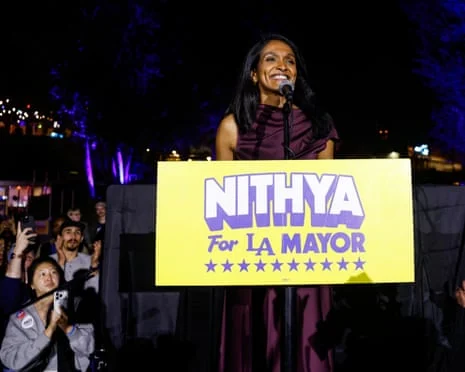
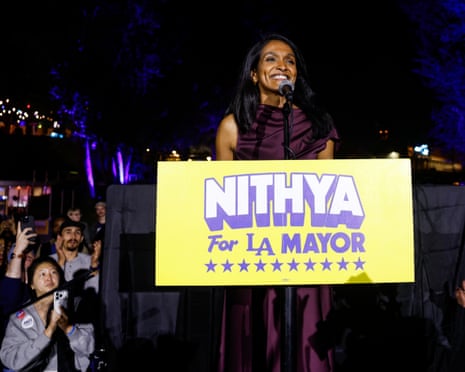
Simultaneously, municipal politics experienced seismic tremors. In Los Angeles, progressive urban planner Nithya Raman edged out incumbent mayor Karen Bass in a closely watched contest. Raman’s narrow victory reflects growing voter frustration with local governance, urban management, and housing pressures on the West Coast.
Republican Autopsy and Blame Shifting
The magnitude of the losses has triggered intense infighting and finger-pointing among Republican leaders. High-profile figures within the party have been unsparing in their critique of the campaign strategy and macroeconomic conditions that alienated the electorate.
Appearing on his podcast, Texas Senator Ted Cruz described the election outcome as a "Watergate-level repudiation" rather than a routine midterm correction. Cruz noted that voter turnout was high across political affiliations, indicating that Republicans, libertarians, and independents actively rejected party candidates at the ballot box. "Food is too high, gas is too high, diesel is too high, insurance is too high, life is too high," Cruz remarked, criticizing members of his own party for failing to acknowledge economic realities.
Former House Speaker Newt Gingrich echoed these sentiments on social media, characterizing the vote as a "failed performance election" driven by public anger over pocketbook issues rather than abstract ideological debates.
Meanwhile, Donald Trump attributed the losses to his absence from the ballot, despite having spent the final weeks of the campaign urging supporters to treat the midterms as a referendum on his leadership. Other conservative figures, including Vice President JD Vance and Florida Governor Ron DeSantis, pointed to broader policy strains, such as the economic impact of foreign policy conflicts and misallocated campaign expenditures, as catalysts for the defeat.
Executive Actions and Administrative Fallout
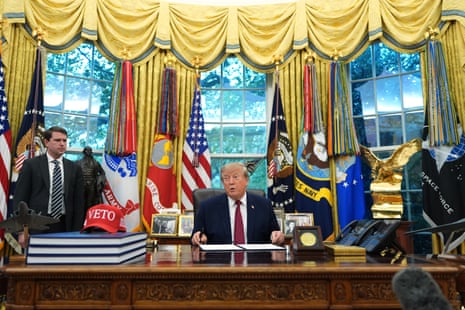
Amid the fallout from the legislative defeat, the administration has moved to secure legacy policy positions. On Thursday, Donald Trump signed an executive order designating the recently renovated, gilded Oval Office and Cabinet Room as a "national monument." The action is designed to legally insulate the interior design choices from future alterations by incoming administrations. The move followed pointed public criticism from former President Barack Obama during campaign rallies, who lampooned the aesthetic choices and argued that the administration was prioritizing interior decoration over pressing economic solutions.
In the Department of Justice, high-level structural shifts are already underway following the election. Attorney General Todd Blanche confirmed the resignation of Harmeet Dhillon, head of the DOJ’s Civil Rights division. Dhillon, a prominent conservative attorney and former personal lawyer to Trump, oversaw significant shifts in federal civil rights enforcement during her tenure. Her departure marks the first high-profile exit from the executive branch following the congressional turnover, with Democrats signaling plans for robust oversight and investigation of federal agencies.
Economic Factors and the Role of Big Tech Spending
Economic indicators played a central role in shaping voter behavior. Persistent inflation, high energy costs, and anxieties surrounding the rapid expansion of artificial intelligence infrastructure and data centers fueled widespread discontent.
Tech industry executives who invested heavily in the political cycle also faced significant losses. Political action committees backed by figures like Elon Musk poured hundreds of millions of dollars into Republican-aligned groups, yet Democrats swept every Senate race where those funds were deployed most heavily. Analysts note that voter skepticism regarding the influence of corporate wealth and technocratic power in politics served as a powerful mobilization tool for Democratic candidates.
International Repercussions
The seismic shift in Washington has also resonated globally, drawing swift reactions from international allies and adversaries alike. Ukrainian President Volodymyr Zelenskyy welcomed the Democratic congressional victory during an interview with German broadcaster ZDF, expressing optimism that a divided or Democratic-leaning US Congress would secure sustained military and financial aid for Kyiv. Highlighting the bipartisan nature of past support, Zelenskyy emphasized that renewed cooperation between Washington and European partners would serve as a crucial stabilizing factor in Eastern Europe.
Conversely, state-aligned media in nations such as Iran framed the Republican defeat as a sign of eroding American hegemony, linking the domestic electoral backlash directly to ongoing foreign policy strains.
Broader Implications and Outlook for the 110th Congress
As Capitol Hill prepares for the new congressional session, Democratic leadership faces the delicate task of governing a deeply polarized nation. Senate minority leader Chuck Schumer addressed the Center for American Progress following the election, acknowledging that many citizens voted out of frustration with the current administration rather than an embrace of the Democratic platform.
"Millions of Americans voted for us because of frustration with Trump, not out of love for the Democratic Party," Schumer stated. He emphasized that the party’s disciplined focus on "cost, chaos, and corruption" resonated with voters, providing an opportunity to rebuild trust through legislative action focused on economic relief and government accountability.
With the certification of new members approaching and the final margins in the House and Senate nearly settled, the 2026 midterms have fundamentally reconfigured the American political landscape. The incoming Congress will inherit a nation grappling with economic headwinds, heightened partisanship, and an executive branch forced to navigate a newly empowered legislative opposition.