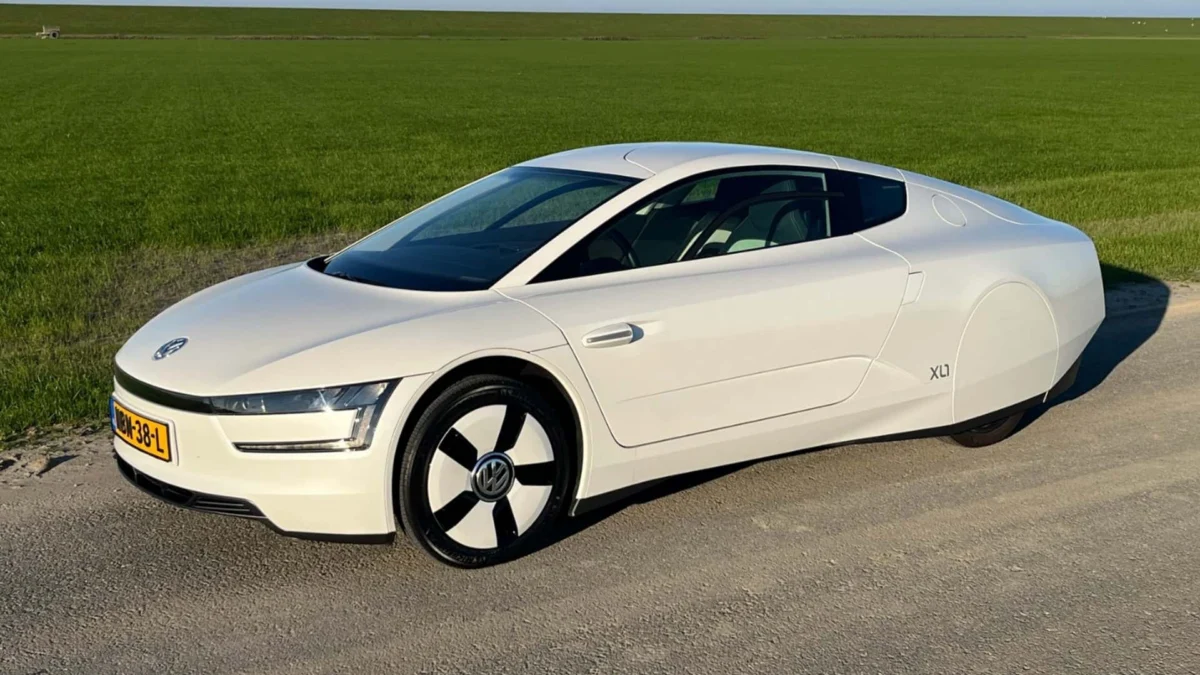
In the annals of automotive history, few vehicles have attempted to reconcile the conflicting demands of extreme fuel economy and road-legal practicality as aggressively as the Volkswagen XL1. Launched in 2013 following a grueling 12-year gestation period, the XL1 was never intended to be a mass-market product. Instead, it served as a high-stakes engineering laboratory, a physical manifestation of the ambition held by then-Volkswagen Group chairman Ferdinand Piëch to create a production car capable of achieving a fuel consumption rate of just one liter per 100 kilometers. Today, one of these rare machines, a 2016 model with just over 1,000 miles on the odometer, has surfaced for auction on the digital platform Catawiki, offering a glimpse into a project that pushed the boundaries of physics and manufacturing.
A Legacy of Ambition and Engineering
The genesis of the XL1 can be traced back to the early 2000s, rooted in Piëch’s desire to prove that the internal combustion engine—when paired with radical aerodynamics and weight-saving materials—could rival the efficiency of any propulsion system on the horizon. The project evolved through several concept stages, including the "1-Litre Car" of 2002 and the L1 concept of 2009, before culminating in the limited-production XL1.
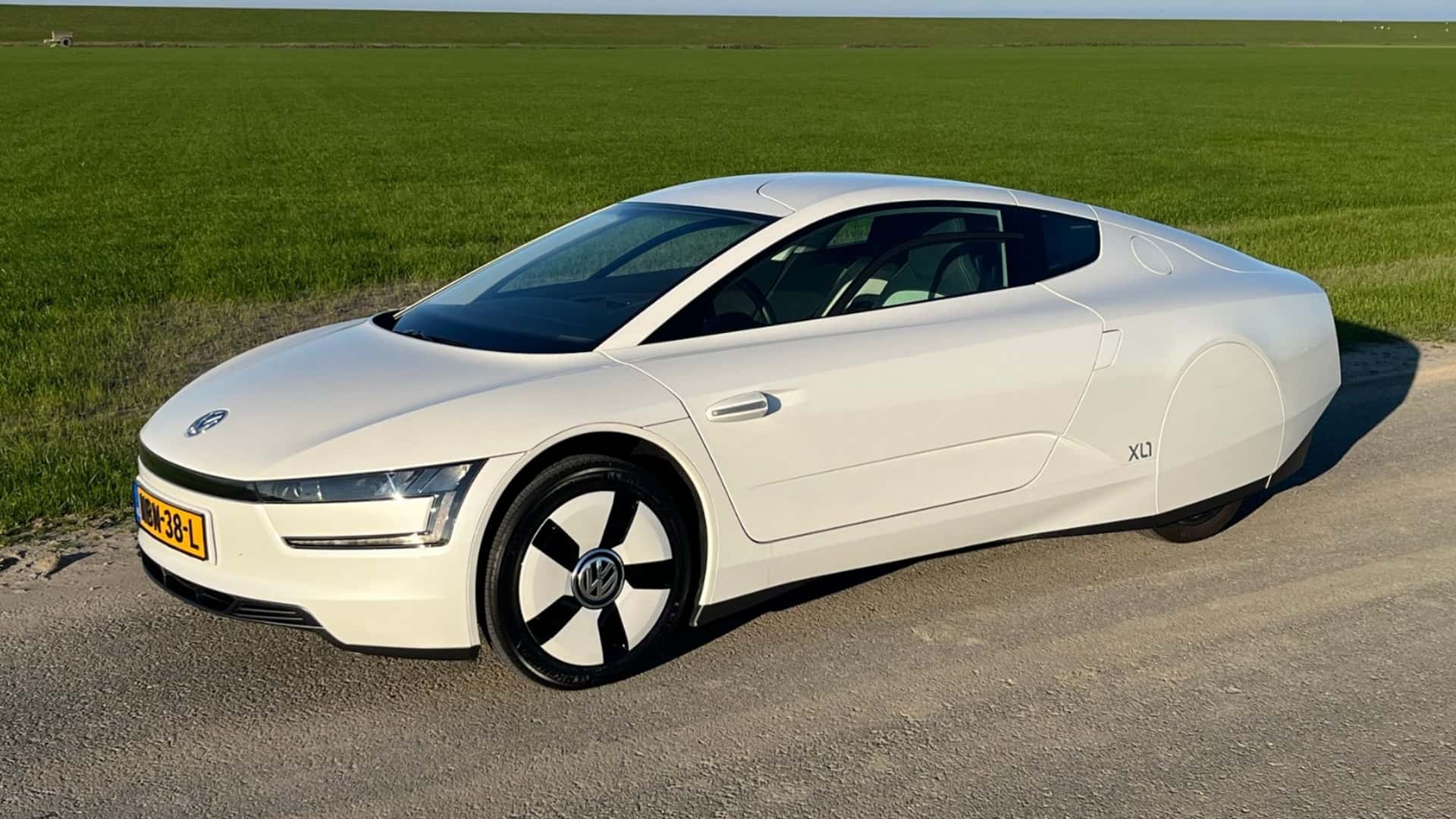
The vehicle’s design philosophy was dictated by the singular pursuit of reducing drag. With a drag coefficient of 0.189, the XL1 remains one of the most aerodynamically efficient production cars ever built. Its teardrop-shaped body, featuring rear-wheel skirts and a narrow track, allowed the vehicle to slip through the air with minimal resistance. This focus on efficiency extended to the chassis and bodywork, which were constructed almost entirely from carbon-fiber-reinforced plastic (CFRP). This advanced material usage—uncommon for Volkswagen at the time—resulted in a total vehicle curb weight of just 1,852 pounds (840 kilograms).
Technical Specifications and Powertrain Dynamics
Under the sleek exterior lies a unique plug-in hybrid powertrain that defies conventional automotive categorization. The engine is a compact, 800cc, two-cylinder turbo-diesel unit, mounted mid-ship behind the driver. This engine is mated to an electric motor and a 5.5-kWh lithium-ion battery pack, providing a synergy that produces a total output of 68 horsepower and 103 pound-feet of torque.
The integration of the plug-in hybrid system was a late-stage development, added to ensure the vehicle could meet the necessary efficiency targets in varying driving conditions. Because the architecture was not originally designed for charging, early production models required a substantial 50-pound removable charging unit to be stowed in the trunk, a quirk that underscores the experimental nature of the vehicle.
In terms of performance, the numbers are modest by modern standards. With its limited horsepower, the XL1 achieves a 0-to-60 mph sprint in approximately 12.7 seconds and reaches an electronically limited top speed of 99 mph. However, these figures are secondary to its core purpose: economy. The vehicle is capable of traveling 31 miles on electricity alone and achieves an astonishing 261 miles per gallon (combined cycle) when the diesel engine is in operation. Volkswagen’s engineers noted that at a constant speed of 62 mph, the vehicle required only about 8 horsepower to maintain momentum, a testament to its aerodynamic and mechanical efficiency.
Market Rarity and Auction Context
Volkswagen produced only 250 units of the XL1, making it statistically rarer than the Bugatti Veyron of the same period. For collectors and enthusiasts, this scarcity is a primary driver of the vehicle’s current market value. The model currently listed on Catawiki is a 2016 iteration—the final year of production—and is presented in near-showroom condition.
The expected sale price, estimated at approximately $140,000 to $150,000, reflects its status as a collector’s item rather than a practical solution to modern fuel costs. While the prospect of 261 mpg is alluring in an era of fluctuating energy prices, the reality of owning an XL1 involves significant logistical hurdles. The vehicle is a highly specialized piece of machinery; replacement parts for its unique carbon-fiber chassis or the specific hybrid-diesel drivetrain are not readily available through standard service channels. Furthermore, as a diesel-powered hybrid, it does not benefit from the same infrastructure support or ease of maintenance as a modern, mass-produced battery electric vehicle (BEV).
Broader Implications for the Automotive Industry
The XL1 project provided Volkswagen with invaluable data regarding lightweight construction and aerodynamic optimization, much of which was eventually integrated into the brand’s broader efforts in electrification and efficiency. The carbon-fiber construction techniques refined during the XL1 project informed the development of later projects, though the high cost of production eventually prevented the technology from reaching the mainstream segments that Piëch originally envisioned.
From an industry standpoint, the XL1 serves as a bridge between the era of maximizing internal combustion efficiency and the current transition toward full electrification. While the industry has since pivoted away from diesel-hybrid experiments toward pure battery-electric architectures, the XL1 remains a pivotal reference point. It demonstrated that by stripping away non-essential weight and minimizing parasitic drag, a vehicle could achieve extraordinary levels of energy conservation.
Assessing the Investment
For the prospective buyer, the XL1 is less a daily driver and more a piece of "rolling history." The current auction highlights a broader trend in the automotive market: the premium placed on limited-run technology demonstrators. While a modern EV might offer superior daily utility, lower maintenance costs, and better performance, the XL1 offers something entirely different—the chance to own a vehicle that was never meant to be sold to the public in the first place.
Ferdinand Piëch’s vision was to push Volkswagen to the edge of what was technologically possible. By forcing the company to commit to a 12-year development cycle, he ensured that the XL1 would not merely be a concept car, but a functional vehicle that passed all safety and emissions standards of the time. Whether the market will continue to sustain high prices for such vehicles remains to be seen, but for now, the XL1 occupies a unique niche. It stands as a reminder of a period when the automotive industry was willing to spend millions to prove a point, not for the sake of profit, but for the sake of engineering pride.
As the auction closes, the successful bidder will not just be purchasing a car; they will be acquiring a testament to a specific moment in European automotive history—a time when the "one-liter car" was the ultimate goal, and when one of the world’s largest automakers was willing to defy conventional wisdom to achieve it. In the context of the global shift toward sustainable mobility, the XL1’s influence is subtle but undeniable, representing a bold, uncompromising step in the long, ongoing evolution of transportation efficiency.