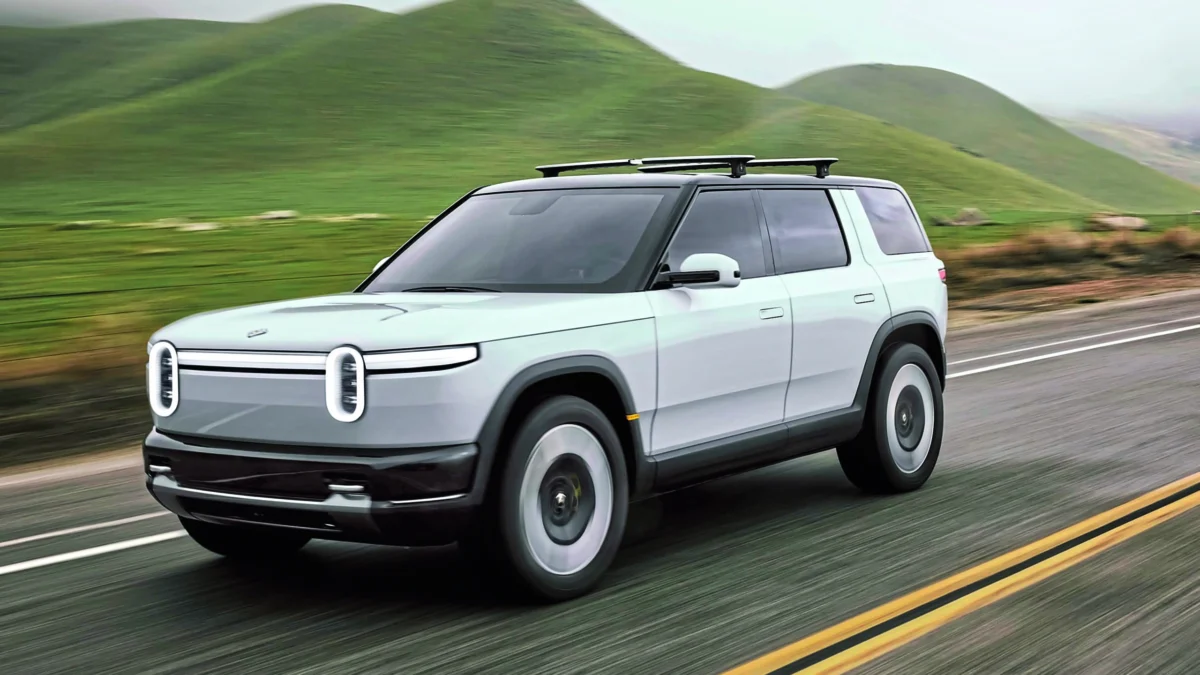
In an era where the mid-size electric SUV market has become increasingly homogenized, the arrival of the Rivian R2 represents a significant departure from the prevailing design language. As the industry grapples with a flood of technologically similar vehicles, the California-based manufacturer has positioned its latest offering as a purposeful, adventure-oriented alternative to established incumbents such as the Tesla Model Y. With its 4.72-metre footprint, the R2 is engineered for versatility, balancing the demands of dense urban environments like London or Manhattan with the rugged requirements of outdoor recreation.
Strategic Market Positioning and Evolution
Rivian, founded in 2009 by R.J. Scaringe, has spent the last decade establishing its credentials as a premium manufacturer of electric adventure vehicles. Following the successful launch of the R1T pickup and the R1S SUV—both of which utilize a heavy-duty, truck-based architecture—the R2 signals a strategic shift toward mass-market accessibility. By pivoting to a lighter, car-like unibody construction, Rivian aims to capture a broader demographic of consumers who prioritize efficiency and maneuverability without sacrificing the brand’s rugged identity.
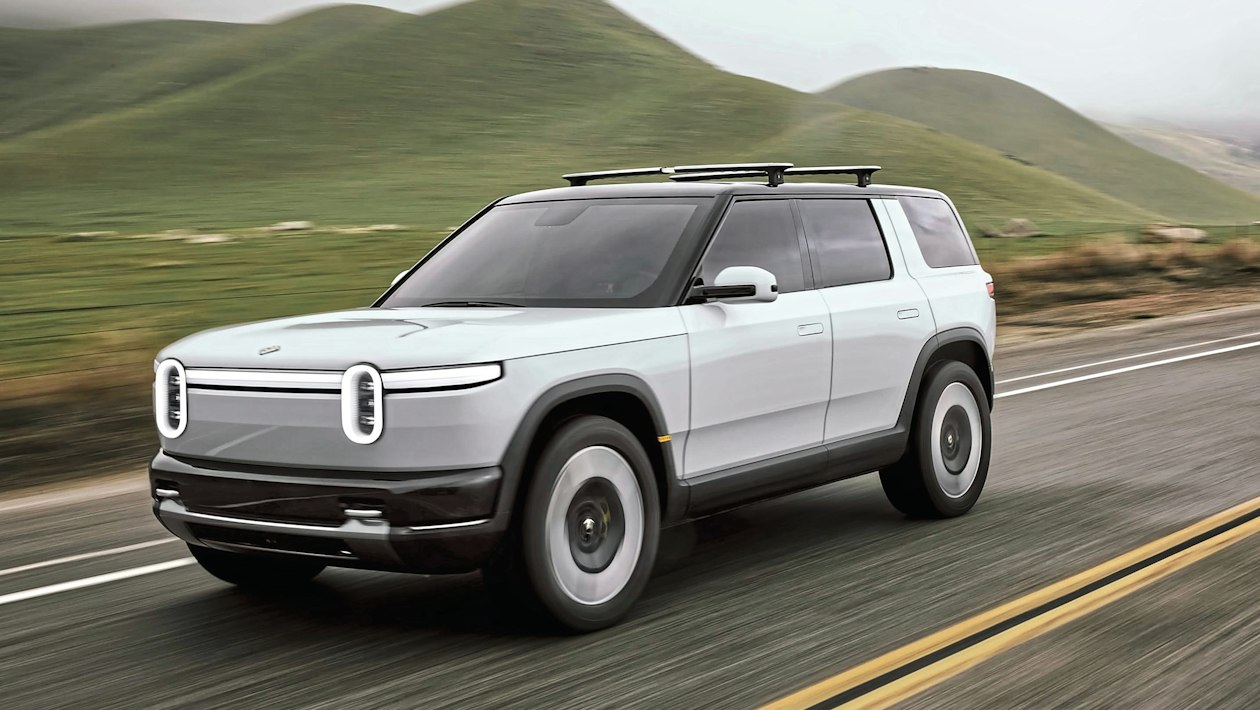
The R2 is not merely a downsized R1S; it is a foundational pillar for the company’s future scaling. The development timeline of the R2 has been accelerated to meet the growing demand for sub-£50,000 electric SUVs, a segment currently dominated by legacy automakers and an influx of cost-competitive manufacturers from China. Rivian’s decision to build the vehicle in Illinois, combined with a focus on streamlined manufacturing, suggests a long-term plan to achieve the economies of scale necessary to challenge Tesla’s market share directly.
Engineering and Technical Specifications
At the heart of the R2 is an 87.9kWh battery pack, which serves as the energy source for the vehicle’s powertrain configurations. Initial performance models feature a dual-motor, all-wheel-drive system capable of delivering 647bhp and 826Nm of torque, enabling a 0-62mph sprint of approximately 3.6 seconds. While these figures place the R2 at the high end of the performance spectrum, Rivian has also committed to a phased rollout of more accessible variants, including a single-motor rear-wheel-drive model and a base-trim version expected to launch with a smaller battery pack in 2027.
However, the vehicle’s 400-volt electrical architecture represents a conservative choice in a market increasingly shifting toward 800-volt systems. While the R2 is capable of a peak charging speed of 230kW—allowing for a 10-to-80 percent charge in 29 minutes—competitors from BMW and Mercedes-Benz have already surpassed the 300kW threshold. Rivian justifies this by emphasizing the vehicle’s "zonal architecture," which allows for superior software integration and rapid over-the-air (OTA) updates, a factor that appears to be the primary driver behind recent high-profile partnerships.

The Volkswagen-Rivian Software Joint Venture
One of the most consequential developments in the lead-up to the R2’s market entry is the $6 billion strategic partnership with Volkswagen Group. Faced with persistent challenges regarding its internal software development via the Cariad division, Volkswagen has pivoted to utilize Rivian’s software stack. This collaboration is set to redefine the user experience within the Volkswagen Group’s future electric vehicle lineup.
The implications of this deal are profound. By integrating Rivian’s zonal architecture—which relies on high-speed data transmission and a centralized control system—into upcoming Volkswagen models, the German automaker hopes to resolve long-standing complaints regarding the sluggishness of its infotainment systems. For the consumer, this means that features debuted in the R2, such as the advanced Autonomy+ driver-assistance system and the high-resolution, responsive interface, will soon become a benchmark across a significantly larger fleet of vehicles.
Design Philosophy and Practicality
Rivian’s design ethos remains distinct from the sleek, aerodynamic profiles favored by many EV competitors. The R2 retains a boxy, functional aesthetic that maximizes interior volume. A standout feature is the fully retractable rear window, a practical inclusion that facilitates the transport of long cargo such as skis or surfboards—a nod to the company’s "outdoor lifestyle" branding.

Inside, the cabin rejects the minimalist extremes found in many modern EVs. While the infotainment is dominated by a central touchscreen, the inclusion of tactile, high-quality scroll wheels on the steering wheel demonstrates a commitment to ergonomics. Physical switches are retained for essential seat adjustments, and the presence of twin gloveboxes and a large center console storage drawer suggests that the designers prioritized usability over pure visual reductionism. The use of premium, sustainable materials throughout the interior further distinguishes the R2 from mass-market rivals.
Performance in Real-World Conditions
Testing the R2 across diverse terrain reveals a vehicle that prioritizes composure and comfort. Despite the absence of complex air suspension, the semi-active damper system effectively manages uneven surfaces and significant road irregularities. The steering is precise, providing a level of driver feedback that is often absent in the segment. In heavy, stop-start traffic, the regenerative braking system is well-calibrated, offering a smooth deceleration profile that minimizes the need for traditional braking.
The vehicle’s "Autonomy+" system is perhaps its most impressive feature. Utilizing a suite of cameras and high-speed processing, the system manages motorway navigation with minimal intervention. Unlike many driver-assist features that feel intrusive, Rivian’s implementation is subtle, allowing for a seamless transition between human control and automated guidance.
Future Outlook and The R3 Project
Looking ahead, the R2 is merely the first step in a broader expansion. Rivian has already teased the R3, a compact model that further shrinks the company’s footprint. With design cues reminiscent of a modernized classic hatchback, the R3 is expected to address the entry-level segment, with projected US pricing starting around $35,000.
The success of the R2 in the United States, and its eventual introduction to the European market in 2028, will serve as a bellwether for Rivian’s viability as a long-term competitor to legacy giants. The company must navigate the dual challenges of scaling production and maintaining the high-quality, "characterful" experience that currently distinguishes its products.
Summary of Implications
The Rivian R2 is a manifestation of the current state of the automotive industry: a collision of software-defined features, sustainable material choices, and the urgent need for competitive charging performance. While its 400-volt architecture may appear behind the curve compared to ultra-fast-charging European rivals, the vehicle’s overall package—defined by its unique design, clever storage solutions, and superior software—creates a compelling value proposition.
As traditional manufacturers struggle to adapt their legacy processes to the speed of software development, companies like Rivian are setting the pace. The R2 is more than just a new SUV; it is a demonstration of how a tech-forward approach to vehicle architecture can provide a meaningful point of differentiation. For potential buyers, the R2 offers a refreshing alternative that successfully bridges the gap between the utilitarian nature of a traditional SUV and the high-tech requirements of the modern, digitally connected driver.
While market analysts remain cautious regarding the impact of global supply chain volatility on the 2028 European release date, the technological foundation laid by the R2—and its symbiotic relationship with Volkswagen’s manufacturing might—suggests that Rivian is well-positioned to maintain its relevance. The coming years will be critical as the company moves from a niche player to a volume manufacturer, but the R2 provides a strong foundation upon which that transition can be built. As the transition to electric mobility accelerates, the R2 stands as a testament to the fact that efficiency and functionality need not come at the cost of personality or design.