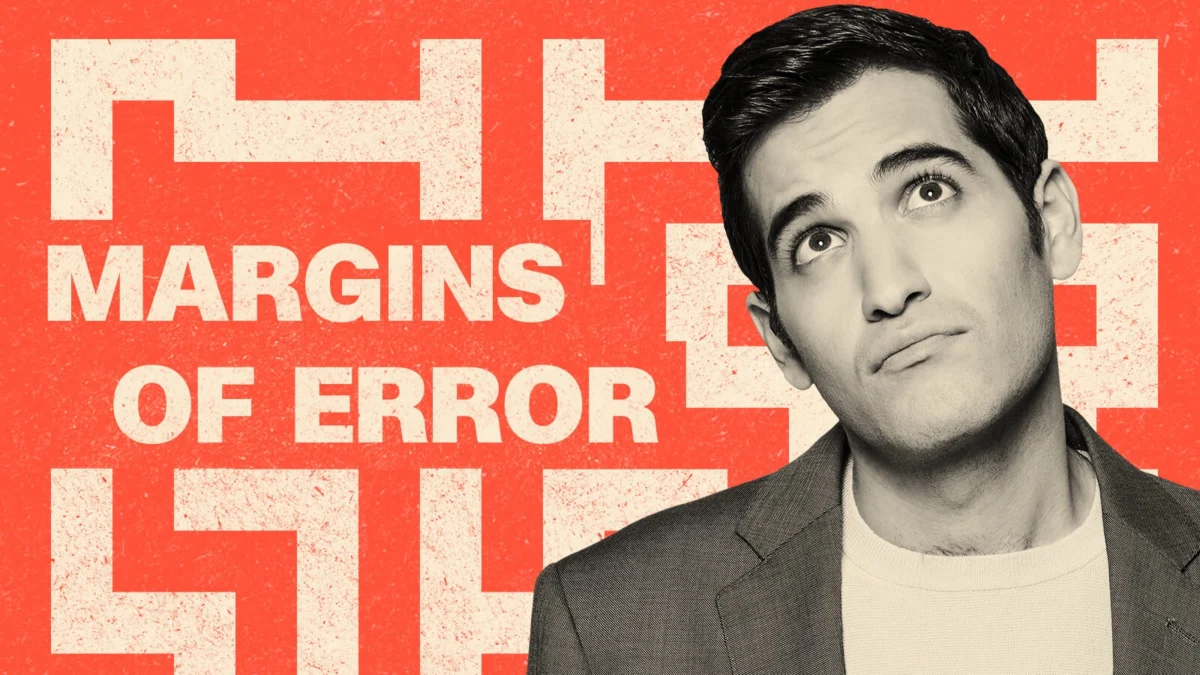
In an increasingly data-saturated world, where numbers often dictate narratives, CNN’s Senior Data Reporter Harry Enten embarks on a compelling mission to peel back the layers of statistics and uncover the profound human stories they tell. His podcast, "Margins of Error," delves into a diverse array of everyday phenomena, challenging conventional wisdom and revealing the deeper truths about societal beliefs, behaviors, and cultural quirks. Through rigorous analysis and engaging interviews with experts, Enten transforms seemingly dry data points into illuminating insights, making complex statistical concepts accessible and relevant to a broad audience. The podcast, a specialized offering from CNN Podcasts, aims to move beyond mere calculations to explore the "why" behind the "what," examining everything from the economics of happiness to the psychology of supporting underdogs.
The Analytical Lens: What is "Margins of Error"?
"Margins of Error" distinguishes itself by not just presenting data, but by meticulously dissecting its implications for the human experience. Enten, known for his incisive political and social analysis, brings his signature curious and skeptical approach to a wide range of topics, demonstrating how quantitative information underpins nearly every facet of modern life. The podcast’s core premise is that while data provides a factual foundation, its true value lies in interpretation – understanding what those numbers really say about who we are and what we believe. This investigative journey often leads Enten to explore unexpected connections and challenge long-held assumptions, pushing listeners to look closer at the world around them through a statistical lens.
Decoding Human Behavior: Recent Explorations
The podcast’s recent episodes, spanning from May to July 2022, exemplify its eclectic and thought-provoking nature, tackling subjects that resonate with universal human experiences. Each episode serves as a deep dive into a specific topic, enriched with expert commentary, historical context, and, crucially, data-driven analysis.
Pains, Trains and Automobiles: Optimizing the Journey (Released July 5, 2022)
The universal experience of travel, often fraught with stress and logistical challenges, was the focus of the "Pains, Trains and Automobiles" episode. Enten explored the myriad annoyances associated with getting from point A to point B – from cramped airline legroom and escalating gas prices to opaque service fees. This topic gained particular resonance in mid-2022, as global travel began to rebound significantly following the COVID-19 pandemic, leading to increased demand, higher costs, and often, diminished service quality. Data from the Air Travel Consumer Report indicated a surge in flight delays and cancellations during this period, alongside record-high gasoline prices, contributing to widespread traveler frustration.
Enten sought to identify more efficient modes of transit and fuel, consulting "very smart people" dedicated to optimizing travel. This included discussing how artificial intelligence (AI) could revolutionize road trip planning, creating the most efficient routes by analyzing traffic patterns, road conditions, and points of interest. Research by entities like the National Bureau of Economic Research has consistently shown that inefficient travel contributes billions of dollars in lost productivity and fuel consumption annually. The episode also delved into the science behind faster airplane boarding processes, referencing studies that propose innovative methods like reverse pyramid or window-middle-aisle boarding to reduce turnaround times. Furthermore, the discussion touched upon futuristic transportation solutions, such as kelp-powered vehicles, highlighting the growing imperative for sustainable travel options amidst increasing environmental concerns. Experts in transportation logistics and sustainable energy emphasized the long-term economic and ecological benefits of such innovations, suggesting a paradigm shift in how societies approach mobility.
Why are Losers the Favorites? The Underdog Phenomenon (Released June 28, 2022)
In a fascinating exploration of human psychology, Enten tackled the curious phenomenon of why people often gravitate towards underdogs. Studies across various fields, from sports psychology to consumer behavior, consistently show a widespread preference for the perceived weaker contender over the established favorite. This episode featured insights from Nadav Goldschmied, an expert on underdog psychology, and CNN’s own Coy Wire, a former Buffalo Bills player who shared firsthand experiences of being underestimated. The discussion extended beyond sports and politics, positing that this bias is deeply ingrained in the human experience.
Psychological research suggests that people side with underdogs due to a combination of factors: a desire for fairness, an appreciation for effort against odds, and a stronger emotional connection to the narrative of struggle and triumph. Polling data frequently reveals that a significant portion of the population identifies more with a challenger than an incumbent, whether in electoral contests or competitive markets. Enten, alongside guests like Neil Paine of FiveThirtyEight, also engaged in a "serious analysis" of which team truly deserves the title of "America’s Team," challenging popular notions that often default to high-profile franchises like the Dallas Cowboys or New York Yankees. This segment underscored the subjective nature of collective identity and how shared narratives can override pure statistical dominance in shaping public sentiment. The implications of this underdog bias extend to marketing, political campaigns, and even social justice movements, where framing a cause as an uphill battle can garner significant public sympathy and support.
Forecasting the Future of Weather: Precision and Climate Change (Released June 21, 2022)
Weather forecasts have become an indispensable part of daily life, yet public frustration often mounts when predictions fall short. Enten’s episode on weather forecasting revealed that, despite common complaints, the accuracy of predictions has dramatically improved over recent decades. This advancement is largely attributable to significant leaps in meteorological science, computational power, and satellite technology. Data from organizations like the National Oceanic and Atmospheric Administration (NOAA) illustrates that 5-day forecasts today are as accurate as 3-day forecasts were 20 years ago.
The episode explored the "secrets to predicting the weather accurately," highlighting the complex models and vast data inputs used by meteorologists. However, the discussion also pivoted to the significant challenge posed by climate change. As global weather patterns become more volatile and extreme events more frequent, the predictability of localized weather phenomena is increasingly complicated. Climate scientists warn that while large-scale climate models are becoming more robust, the nuances of regional weather forecasting are facing unprecedented challenges due to rapidly changing atmospheric conditions. This introduces new "margins of error" into predictions, making accurate long-range forecasts particularly difficult. The segment emphasized the ongoing need for investment in meteorological research and infrastructure to adapt to these evolving conditions, underscoring the critical role of accurate forecasts in disaster preparedness, agriculture, and everyday planning.
The Mysterious Disappearance of Love, Sex and Romance (Released June 14, 2022)
Contrary to the ubiquity of romance-themed reality shows, Enten investigated whether love, sex, and romance are, in fact, declining in real life. Statistics painted a sobering picture: declining marriage rates, lower reported frequencies of sexual activity, an increasing number of single individuals, and a perceived reduction in traditional romantic gestures. For instance, data from the Pew Research Center and the General Social Survey has shown a steady decline in marriage rates and an increase in adults reporting no sexual activity in the past year, particularly among younger demographics.
"Sherlock Harry" embarked on a quest to identify the "culprit" behind this perceived decline, even attending a "Bridgerton Ball" to immerse himself in a romantic ideal. The episode explored various societal shifts that might contribute to these trends: economic pressures delaying marriage and family formation, increased focus on individual careers, the complex dynamics introduced by dating apps, and changing social norms around relationships. Sociologists and demographers infer that factors like student debt, rising housing costs, and evolving gender roles all play a part in reshaping relational patterns. The analysis pointed to a potential redefinition of romance and intimacy in the 21st century, rather than an outright disappearance, but acknowledged the statistical evidence of shifts away from traditional benchmarks. The implications touch upon demographic trends, mental health, and the future of social structures.
Why Americans Won’t Give an Inch on Metric (Released June 7, 2022)
The United States stands as one of only three countries globally (alongside Liberia and Myanmar) that has not fully adopted the metric system, a fact that perplexes many outsiders and even some within the nation. Enten explored this enduring resistance, going "the extra yard" to understand why Americans remain content with a hybrid system of liters and gallons, inches and centimeters. The episode revealed that the reluctance to fully embrace metrication is deeply intertwined with "national pride and history," coupled with significant economic and political considerations.

Historically, attempts to convert the U.S. to the metric system, notably in the 1970s, faced strong public and industrial opposition. The sheer cost of retooling manufacturing plants, recalibrating machinery, and re-educating the populace was deemed prohibitive. Public opinion polls consistently show a strong preference for the familiar imperial units, despite the scientific and international advantages of the metric system. Economists estimate the cost of a full conversion today could run into hundreds of billions of dollars. The analysis highlighted the practical inefficiencies and occasional scientific blunders (e.g., the Mars Climate Orbiter crash due to unit confusion) that result from this dual system. Yet, the episode concluded that the cultural inertia, coupled with the immense logistical and financial undertaking, makes a complete shift highly improbable in the foreseeable future, emphasizing the complex interplay of culture, economics, and politics in national decision-making.
When Did ‘Diet’ Become a Dirty Word? (Released May 31, 2022)
For many, including Harry Enten, "diet" soda has been a familiar and often beloved beverage. However, the episode noted the rapid disappearance of the "diet" label, replaced by terms like "zero sugar" or "sugar-free" across the carbonated beverage industry. This rebranding raises questions about consumer perception and marketing strategies. The episode investigated the drivers behind this shift and whether there is any substantive difference between the labels or if it’s merely a "war of words."
Market research data from the early 2020s revealed a significant decline in the sales of products explicitly labeled "diet," while "zero sugar" alternatives surged in popularity. This trend reflects evolving consumer attitudes towards health, wellness, and body image. The term "diet" had become associated with negative connotations – deprivation, artificiality, and often, an outdated approach to weight management. Inferred statements from marketing experts suggest that "zero sugar" projects a more positive image, aligning with broader health and wellness trends that prioritize natural ingredients and conscious consumption over restrictive dieting. While the artificial sweeteners often remain the same, the change in nomenclature represents a strategic pivot to better resonate with a health-conscious consumer base. The episode underscored the powerful influence of language and branding in shaping public perception and driving market trends within the food and beverage industry.
Cashing in on Happiness: The Pursuit of Joy (Released May 24, 2022)
The age-old question of whether money can buy happiness was rigorously examined in this episode. Enten sought to determine "how much money do we need to be happy" and whether financial benchmarks truly correlate with increased joy. He interviewed Matt Killingsworth, who developed an app to track happiness in real time, contributing to ongoing research in behavioral economics. Early studies, such as the 2010 work by Daniel Kahneman and Angus Deaton, suggested an income threshold (around $75,000 in the U.S.) beyond which additional income did not significantly increase daily emotional well-being. More recent research, including Killingsworth’s own, has indicated that happiness can continue to rise with income even beyond this figure, particularly when money is used to buy experiences rather than material possessions.
Enten explored the theory that "paying for experiences may be key to finding joy," testing this hypothesis firsthand by participating in a high-flying trapeze session with Trapeze School New York. This experiential learning demonstrated the immediate and lasting positive emotions associated with novel, engaging activities. The analysis delved into the psychological benefits of experiences – they create lasting memories, foster social connections, and often align more closely with personal growth and identity. The episode’s implications extend to personal finance advice, suggesting that mindful spending on enriching experiences can yield greater satisfaction than accumulating material goods. This perspective offers a nuanced view on the complex relationship between wealth and well-being, moving beyond simple correlation to explore the qualitative aspects of financial allocation.
Harry Makes a Spectacle of Himself: The Evolution of Eyewear (Released May 17, 2022)
Once associated with negative stereotypes like "four eyes" or "nerd," glasses have undergone a significant cultural transformation, now often viewed as a fashion accessory or a symbol of intelligence. Enten explored this shift, investigating the origins of past stigmas and the possibility that people who wear glasses might indeed be smarter. Historical context revealed that glasses were initially a functional necessity, sometimes associated with scholarly pursuits but also with weakness or infirmity. However, the rise of stylish frames and celebrity endorsement has repositioned eyewear as a desirable aesthetic choice.
Research on the link between intelligence and myopia (nearsightedness), while not definitively causal, has shown correlations, with some studies suggesting higher rates of myopia among individuals with higher IQs. Enten also uncovered the intriguing use of eyewear in legal settings, noting that defense attorneys sometimes advise clients to wear glasses in court, inferring that they might project an image of trustworthiness, intelligence, or studiousness, potentially influencing jury perception. He visited Dr. Craig Moskowitz of Moskowitz Eye Care to gain professional insight into vision correction and its societal perception. The episode highlighted how cultural perceptions of physical attributes can evolve dramatically over time, influenced by fashion, social norms, and even strategic manipulation of appearance in professional contexts, demonstrating the complex interplay between physical reality and symbolic meaning.
Bursting the Bath Time Bubble: A History of Hygiene (Released May 10, 2022)
The frequency of bathing has become a surprisingly contentious topic, with ongoing debates about how often personal hygiene is truly necessary. Enten’s investigation into this "bath time bubble" revealed that the answer might be "less than you think." He explored humanity’s complicated relationship with washing, tracing its history from the communal baths of Ancient Rome, which were as much social hubs as they were places of cleansing, to modern Western norms of daily showering. Dermatologists often advise that daily full-body washing is not strictly necessary for health, and in some cases, can even strip the skin of beneficial oils, leading to dryness or irritation.
Enten consulted experts to differentiate between hygienic necessity and ingrained societal norms, which often dictate daily bathing as a social imperative. The episode also saw Enten experiment with life "without deodorant," pushing the boundaries of personal hygiene experimentation. This segment highlighted the environmental implications of frequent bathing, particularly water consumption, and questioned the pervasive influence of marketing by the personal care industry, which often promotes daily use of numerous products. The discussion underscored how hygiene practices are deeply culturally embedded, often driven by social expectations and commercial interests as much as by scientific health recommendations, inviting listeners to reconsider their own routines.
Do I Sound Funny to You? The Shifting Landscape of Accents (Released May 3, 2022)
The notion that "no one thinks they have an accent" yet "we all do" formed the premise of this episode, which explored the distinct ways Americans speak across different regions. Enten questioned whether these unique accents are disappearing and, if so, what cultural elements might be lost along the way. Linguists have observed trends of both accent divergence (as new regionalisms emerge) and convergence (as media and increased mobility lead to homogenization).
The episode delved into sociolinguistics, examining how accents are powerful markers of identity, heritage, and belonging. Data on linguistic shifts suggests that while some broad regional differences persist, the sharper, more pronounced distinctions of previous generations may be softening, particularly among younger demographics exposed to national media and diverse social networks. Harry Enten even experimented with adopting an entirely new accent, demonstrating the plasticity of speech and the conscious effort required to modify it. The analysis considered the impact of conformity on communication, raising concerns about the potential erosion of regional cultural distinctiveness. While the loss of distinct accents might facilitate broader communication, it also represents a diminution of linguistic diversity, which carries with it unique histories and cultural narratives.
Beyond the Numbers: Harry Enten’s Approach
Harry Enten’s unique strength lies in his ability to translate complex statistical concepts into compelling narratives that resonate with everyday experiences. His journalistic approach is characterized by a blend of rigorous data analysis, accessible explanations, and a healthy dose of curiosity and self-deprecating humor. He doesn’t just report numbers; he interrogates them, exploring their origins, biases, and broader societal implications. This methodology empowers listeners to develop a more critical understanding of the data they encounter daily, fostering greater data literacy. By bringing in diverse experts – from sociologists and psychologists to meteorologists and marketing strategists – Enten ensures a multi-faceted exploration of each topic, providing listeners with a comprehensive and nuanced perspective.
The Broader Impact: Data Literacy in the Modern Age
In an era frequently characterized by misinformation and echo chambers, "Margins of Error" serves a crucial educational function. By demonstrating how data can be used to understand human behavior, beliefs, and societal structures, the podcast equips its audience with the tools to critically evaluate information and challenge preconceived notions. It highlights that data, while powerful, is not inherently neutral; its interpretation requires context, skepticism, and an understanding of its limitations. The podcast champions the idea that a deeper engagement with statistics can lead to more informed opinions, better decision-making, and a richer appreciation for the complexities of the human condition. In doing so, "Margins of Error" transcends mere entertainment, offering a vital public service by promoting data literacy as a fundamental skill for navigating the modern world.