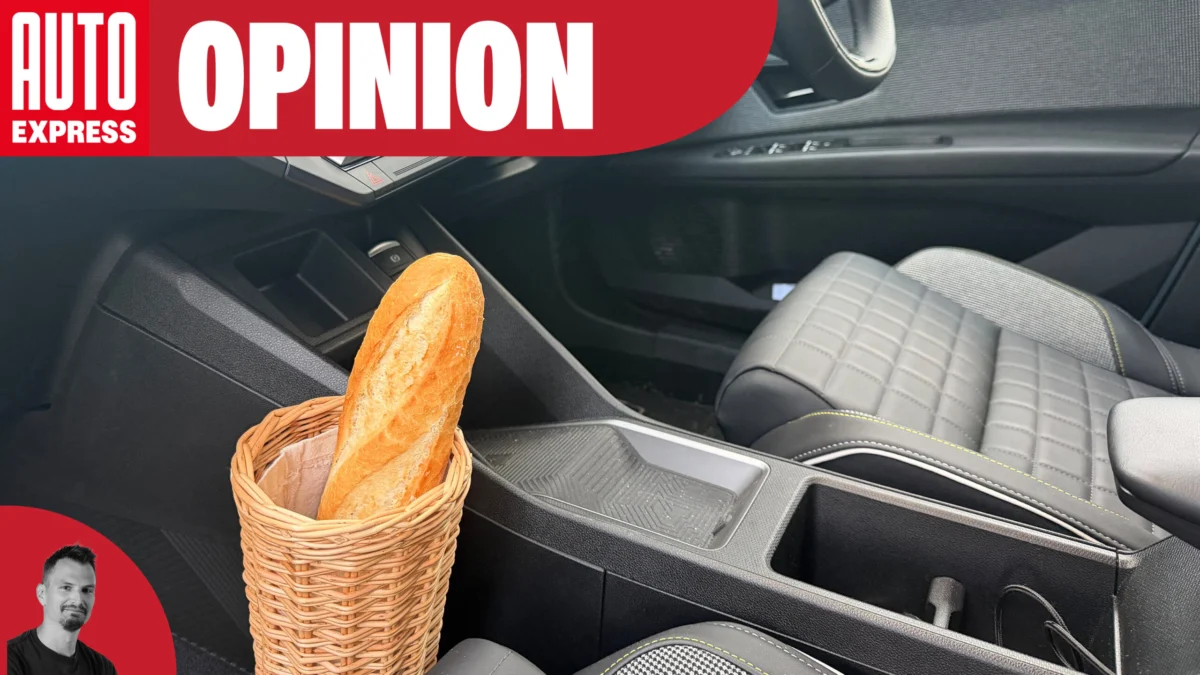
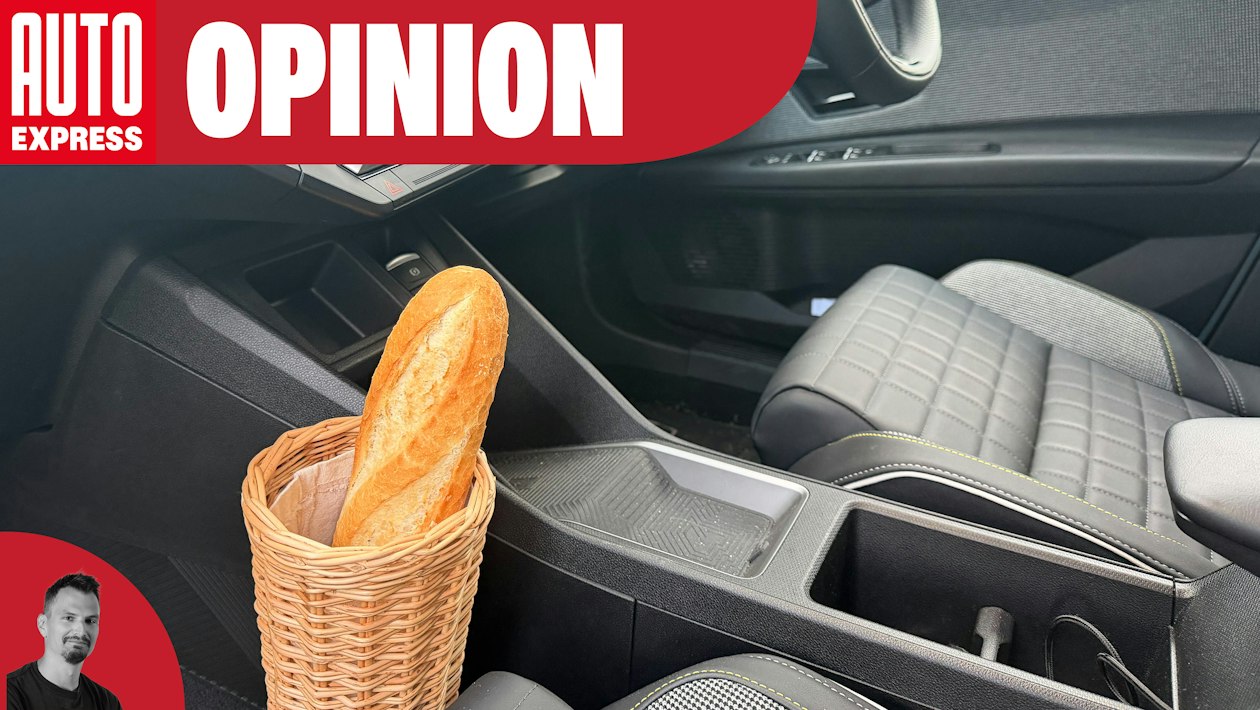
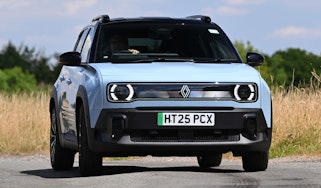
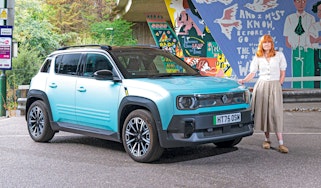
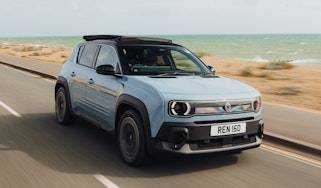
The inclusion of an official, dedicated baguette holder as an optional accessory for the modern Renault 4—and its compatibility with the Renault 5—serves as a poignant case study in contemporary automotive design. While the accessory itself carries a retail price of £138 and occupies a significant portion of the passenger footwell, its existence transcends mere utility. It represents a deliberate shift by Renault to reintroduce personality and "joie de vivre" into the mass-market vehicle segment, a sector that has been increasingly dominated by austere, appliance-like transport solutions.
A Departure from Modern Minimalism
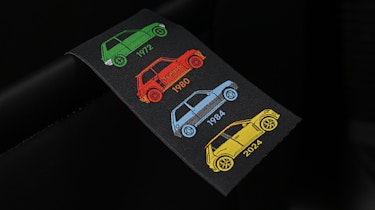
The automotive industry has spent the last decade prioritizing digital integration, aerodynamic efficiency, and cost-optimized interior modularity. This trend has often resulted in cabins that, while technologically advanced, lack distinct character or human-centric charm. Renault’s decision to market whimsical, 3D-printed accessories—such as custom storage bin covers featuring historical designs or drive selector stalks emblazoned with national motifs—marks a strategic pivot. These items, priced at approximately £30, are not designed to enhance the vehicle’s performance, but rather to foster an emotional connection between the driver and the machine.
This design philosophy is particularly relevant in the United Kingdom, where the cultural habit of daily trips to a local boulangerie is less prevalent than in mainland Europe. In the UK, bread is typically purchased during larger, infrequent supermarket excursions. Consequently, the baguette holder is rarely used for its intended purpose. However, its success as a commercial accessory suggests that consumers are actively seeking vehicles that offer a narrative or a touch of humor, even if the practical application of those features remains limited.

The Evolution of Playful Design
Historically, the integration of "Easter eggs" and playful design elements was a hallmark of boutique and cult-classic vehicles. The original MINI, launched in 2001 under BMW ownership, successfully leveraged its heritage to create a premium, personality-driven market space. For years, however, mainstream manufacturers largely moved away from such risks, favoring conservative, uniform interiors.
Recent market data suggests that this is changing. Renault is not alone in its efforts to inject levity into the vehicle experience. Fiat, for instance, has embraced this trend with the Grande Panda, utilizing unique textures, vibrant color palettes, and unconventional materials like bamboo fiber in its cabin. Citroen is similarly exploring this space, with the 2CV concept featuring a removable picnic basket as a central console, signaling a trend toward "lifestyle-integrated" vehicle design.
Chronology of Renault’s Recent Design Shifts
- Late 2023: Renault begins to signal a return to its roots, focusing on the electrification of its "Icons" series, specifically targeting the R4 and R5 nameplates.
- 2025: Official launch of the Renault 4 E-Tech and Renault 5 E-Tech, accompanied by an extensive catalog of 3D-printed accessories.
- 2026: Market reception data indicates that these personalization options are driving customer engagement, with high attachment rates for aesthetic-focused add-ons.
- Late 2026: Competitors, including Citroen and Fiat, accelerate their own "fun-focused" design programs in response to changing consumer preferences for vehicles that provide a unique brand experience.
Technical and Practical Implications
From an engineering perspective, the introduction of modular accessories like the baguette holder presents both opportunities and challenges. The holder, which clips onto the center console, effectively demonstrates the flexibility of modern vehicle architecture. By providing attachment points for third-party or proprietary accessories, manufacturers can extend the lifecycle of a vehicle’s interior.
However, there are trade-offs. The baguette holder, for instance, encroaches on the passenger footwell, which may be viewed as a negative in terms of ergonomics and spatial efficiency. For some, this represents an unnecessary compromise. Yet, for the target demographic—urban commuters looking for a reprieve from the monotony of standard automotive interiors—the "frivolity" of such an accessory provides a tangible mood-lifting effect on the morning commute.
Competitive Pressure and Market Positioning
The rise of Chinese automotive manufacturers has significantly altered the global competitive landscape. Many of these new entrants offer high levels of standard equipment and aggressive pricing, effectively setting a new benchmark for "value for money." Established European brands are finding it increasingly difficult to compete on price alone.
Consequently, legacy manufacturers are pivoting toward "brand equity" and "cultural resonance." If a vehicle is viewed as a utilitarian appliance, the consumer’s purchasing decision is often driven solely by price and technical specifications. If, however, a vehicle is marketed as a companion with a distinct personality—evidenced by quirks like a baguette holder or hidden design motifs—the manufacturer can justify a price premium and cultivate long-term brand loyalty.

Industry Reactions and Expert Analysis
Industry analysts have noted that these design choices are not merely decorative; they serve as a hedge against the commoditization of the electric vehicle. By focusing on design details that are "Instagrammable" and shareable, brands like Renault are tapping into social media-driven marketing.
For instance, the inclusion of the Eiffel Tower hidden within the heating elements of a Citroen C3 Aircross rear window or the Willys Jeep grille references in modern Jeep models are low-cost, high-impact features. They require minimal manufacturing effort but provide a significant "talkability" factor that resonates with younger, design-conscious demographics.
The Future of "Easter Eggs" and Personalization
As the industry moves further toward total electrification, the "fun vacuum" created by the loss of the internal combustion engine’s mechanical character must be filled by other means. While some manufacturers are attempting to bridge this gap through synthetic soundscapes or simulated gear shifts, others are looking toward physical, quirky, and tactile design elements.
The success of these initiatives will likely be measured by vehicle retention rates and the used-market appeal of these "cult-classic" modern cars. Vehicles that possess a distinct personality are statistically more likely to hold their value over time, as they become collectable rather than disposable.
Conclusion: A Strategic Necessity
The baguette holder in the Renault 4 may seem like a frivolous luxury, but it is a symptom of a broader, more strategic shift in the automotive industry. As cars become more technologically homogenous, the ability to delight the consumer through small, clever design touches is becoming a critical competitive advantage.
Whether it is through 3D-printed trim, innovative storage solutions, or subtle nods to national heritage, manufacturers are beginning to understand that the modern motorist values character just as much as capability. By reintroducing humor and personality into the cabin, Renault and its peers are ensuring that the act of driving—or even just sitting in traffic—remains a human experience rather than a robotic one. In a world of increasing automation and digital saturation, these small, physical flourishes are not just welcome; they are essential for the survival of the automotive brand as a cultural icon.