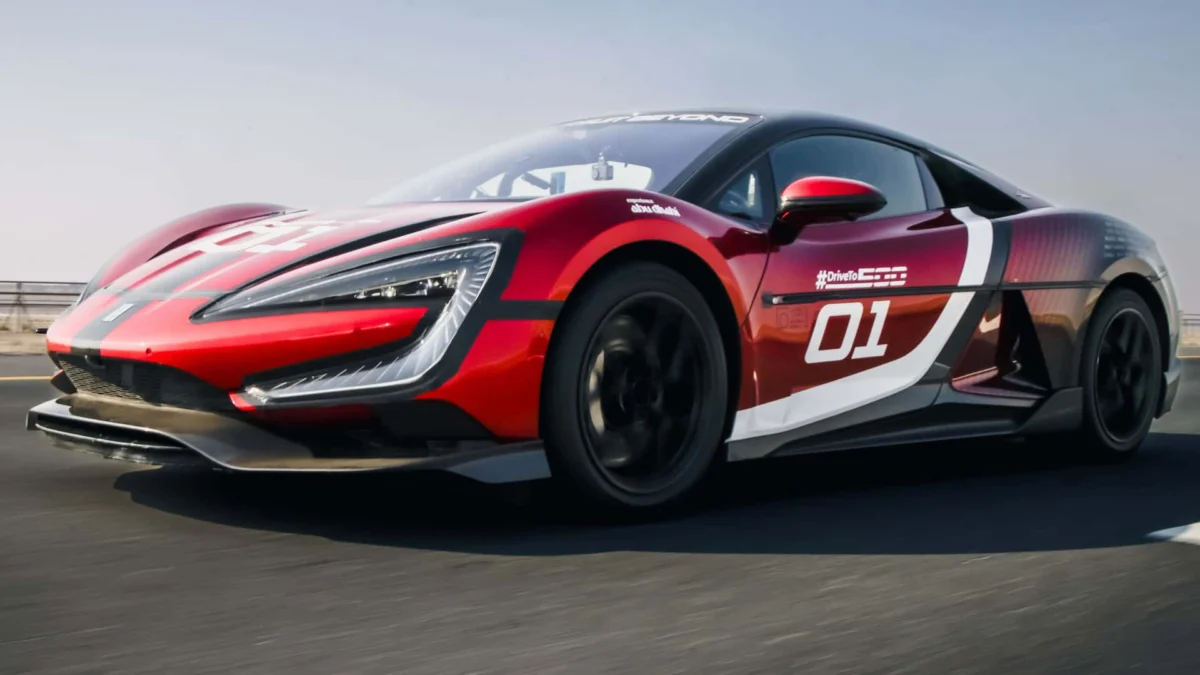
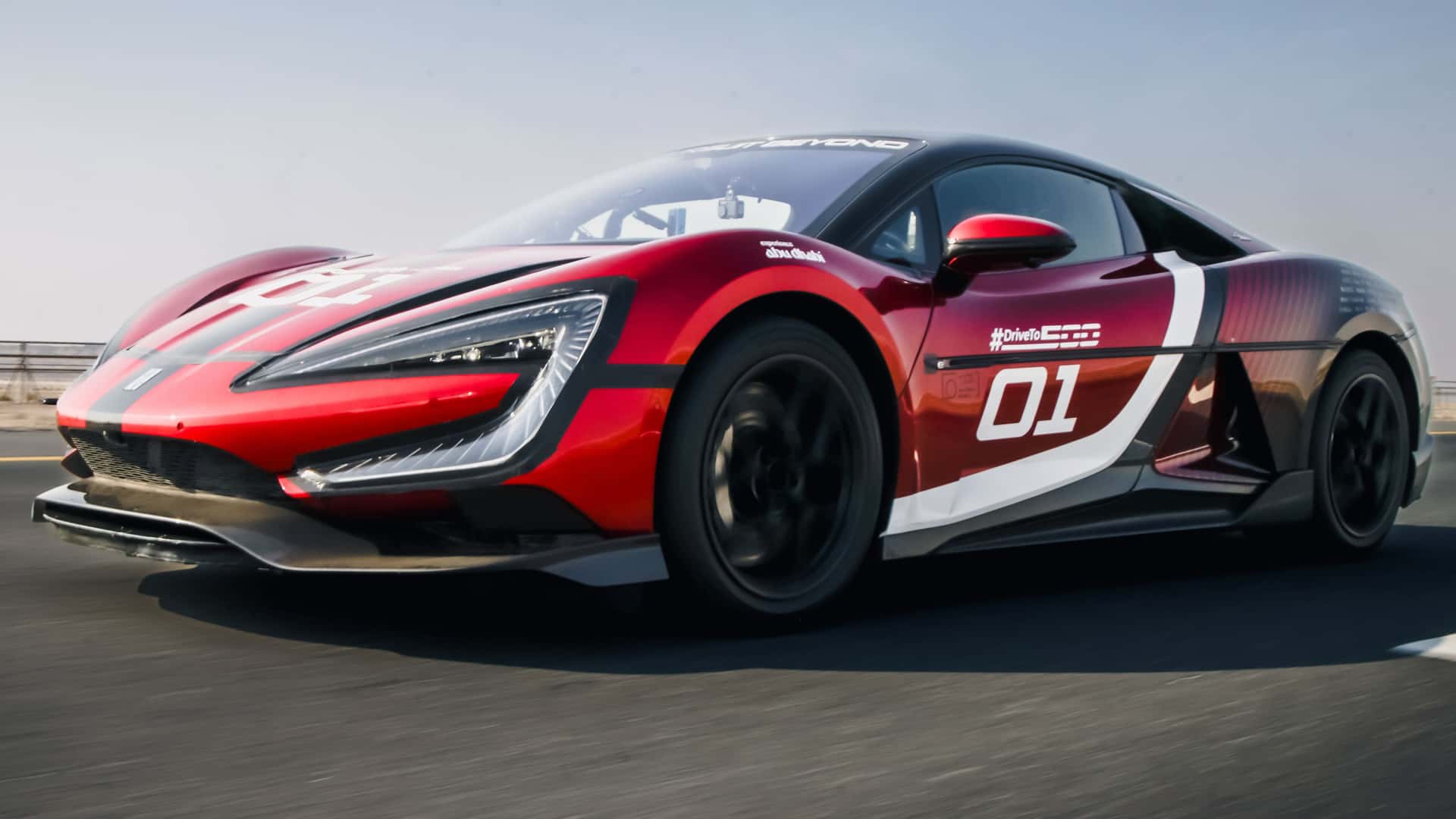
The landscape of automotive performance has been irrevocably altered following a landmark achievement in the United Arab Emirates. On November 1, 2025, the BYD Yangwang U9 Xtreme, a specialized two-door electric hypercar, officially etched its name into the history books by reaching a blistering speed of 503.17 kilometers per hour (312.6 miles per hour). This feat represents more than just a numerical victory; it marks the first time in the history of the automobile that a production-specification vehicle has surpassed the 500-kph threshold, a milestone long considered the "holy grail" of high-performance engineering.
The record-breaking run took place on a closed 10-kilometer stretch of the E11 highway in the Al Dhafra Region of Abu Dhabi. Under the stewardship of veteran German racing driver Marc Basseng, the vehicle completed the sprint in a single-direction run, validated by sophisticated Racelogic telemetry equipment and subsequently recognized by the FIA. This achievement solidifies the U9 Xtreme’s position at the pinnacle of modern performance, effectively leapfrogging the established titans of the hypercar industry.
A Chronology of the Pursuit of Speed
The path to this record was characterized by meticulous preparation and incremental gains. BYD had signaled its intent to rewrite the rulebook as early as 2024, when the automaker publicly announced its goal to shatter the 500-kph ceiling. This ambition was not merely aspirational; it was the culmination of a multi-year development cycle centered on the Yangwang brand, BYD’s luxury performance division.
The momentum began to build significantly in September 2025, when the U9 Xtreme reached a speed of 496.22 kph (308.3 mph), setting the baseline for the world’s fastest production car. However, the engineering team, led by a cadre of experts in aerodynamics and battery management, recognized that the final 4-kph gap to the 500-kph milestone required a more refined approach.
The final record-breaking event unfolded over two days in late October and early November. On October 31, the testing phase commenced with two initial runs, during which the vehicle achieved a peak speed of 490 kph (304.4 mph). Rather than settling for this impressive figure, the team utilized the data harvested from these runs to conduct real-time adjustments. Engineers modified the car’s active aerodynamics, recalibrated the suspension damping to optimize ground effect, and fine-tuned tire pressures to handle the immense thermal load generated at such velocities. On the final run of the second day, the vehicle successfully pushed past the barrier, cementing the 503.17-kph record.
Technical Architecture of the Record-Breaker
The Yangwang U9 Xtreme is a masterclass in modern electric vehicle architecture. To achieve such speeds, the vehicle leverages a quad-motor drivetrain that produces a staggering 2,977 horsepower. The distribution of power to all four wheels allows for instantaneous torque vectoring, a necessity for maintaining stability at speeds where traditional internal combustion engines would struggle with power delivery consistency.
Crucial to this performance is the car’s 1,200-volt electrical system, which utilizes a specialized lithium iron phosphate (LFP) battery pack. Unlike standard LFP batteries, this unit is engineered for a high discharge rate—specifically, a 30C discharge rate—allowing it to supply the massive current required by the motors without experiencing significant voltage sag.
Managing the kinetic energy at these speeds required a complete overhaul of conventional systems. The U9 Xtreme is equipped with custom-engineered GitiSport e-GTR2 Pro semi-slick tires, which were specifically designed to withstand the structural stress of rotational forces exceeding 300 mph. Braking power is provided by a high-performance system featuring titanium calipers and carbon-ceramic rotors, ensuring that the vehicle can shed speed effectively after a high-velocity run. The limited-production nature of the vehicle—restricted to just 30 units—underscores that this is a technical showcase for BYD’s capabilities rather than a mass-market offering.
The Debate Over Methodology
While the achievement is undeniable in its raw data, it has ignited a discussion regarding the standards of record-keeping in the automotive industry. Traditionally, the benchmark for the "world’s fastest car" has been determined by the average speed of two runs performed in opposite directions. This methodology is designed to neutralize variables such as wind direction and gradient changes.
BYD’s decision to perform a single-direction run has invited scrutiny from industry purists and rival manufacturers. Companies such as Rimac, Bugatti, and Koenigsegg—who have historically championed the two-way average method—may view the result with a degree of reservation. However, the FIA’s recognition of the achievement suggests that the governing body is adapting its criteria to accommodate the unique challenges and capabilities of modern electric hypercars.
From an engineering perspective, a single-direction run at 503 kph on a public road represents a significant safety undertaking. The logistics of closing a 10-kilometer stretch of the E11 and ensuring the surface integrity for a car traveling at 140 meters per second are immense. While some may argue that the two-way average remains the "gold standard," the sheer force and stability demonstrated by the U9 Xtreme in a single, sustained push is a testament to its engineering integrity.
Broader Implications for the EV Industry
The success of the Yangwang U9 Xtreme serves as a clear signal that the transition to electric power in the hypercar segment is not merely a lateral move but a vertical one. For years, the argument against EVs in the ultra-high-performance tier focused on weight and the limitations of battery energy density. BYD has effectively countered these narratives by demonstrating that, with sufficient voltage and advanced thermal management, electric drivetrains are capable of sustained, record-breaking performance that exceeds the capabilities of combustion engines.
This milestone also carries significant weight for the Chinese automotive sector. It signifies a shift from the era of "fast-follower" manufacturing to a position of global leadership in automotive technology. By occupying the top spot on the leaderboard, BYD is setting a new benchmark that will force European and American manufacturers to rethink their development strategies.
Furthermore, the data generated from this record attempt will likely filter down into more accessible product lines. The development of high-discharge LFP batteries and high-speed tire technology are advancements that could eventually improve the reliability, thermal efficiency, and safety of standard electric vehicles.
The Path Forward
As the dust settles in Abu Dhabi, the automotive world is left to digest the reality that a five-hundred-kph production car is no longer a theoretical concept. The Yangwang U9 Xtreme has moved the goalposts for every manufacturer currently designing vehicles in the extreme performance category.
While the debate regarding testing methodologies will likely continue in enthusiast circles, the objective reality remains: the threshold has been crossed. For the 30 individuals who will eventually own a U9 Xtreme, the vehicle represents more than a collector’s item; it is a piece of history. For the rest of the industry, it is a wake-up call that the era of electric hyper-performance has arrived, and it is moving at speeds previously thought impossible for a production-series automobile.
The achievement also invites questions about the future of speed records. If 500 kph has been surpassed, the inevitable question is: how much further can these machines go? With the rapid evolution of power electronics and aerodynamic simulation software, it is highly probable that the ceiling will continue to rise. For now, however, the record belongs to BYD, marking a defining moment in the history of transport and signaling a new chapter in the ongoing quest for ultimate automotive velocity.