The National Oceanic and Atmospheric Administration’s (NOAA) National Marine Fisheries Service (NMFS) has initiated a contentious regulatory process that could fundamentally reshape the protection of one of the world’s most pristine marine ecosystems. On November 9, 2026, the federal agency published proposed rules that would lift long-standing commercial fishing prohibitions within the Pacific Islands Heritage Marine National Monument (PIH). The proposal targets the waters surrounding Johnston Atoll, Wake Island, and Jarvis Island, effectively opening an area of 1 million square kilometers—an expanse more than twice the total landmass of California—to commercial exploitation.
While the proposal mandates that waters within 50 nautical miles (nmi) of these islands remain protected, the region between 50 and 200 nmi would be transitioned into an active commercial zone. This shift represents a significant departure from previous conservation policies, signaling a prioritized focus on domestic resource extraction under the current administration’s directives.
A Chronology of Policy Shifts and Legal Challenges
The current proposal is the latest development in a volatile timeline of executive actions and judicial interventions regarding the Pacific marine monuments. The origins of this conflict can be traced back to a sustained administrative push to decentralize federal marine protections.
In April 2025, the administration issued a high-profile presidential proclamation aimed at “unleashing” the economic potential of American commercial fishing within the Pacific. Following this, NOAA Fisheries issued a formal authorization letter seeking to open specific sectors of the monument to fishing fleets. That action was met with immediate resistance from environmental organizations, most notably Earthjustice, which filed a lawsuit on behalf of several conservation groups. In a landmark victory for those plaintiffs, a federal court ruled that the Fisheries Service’s initial attempt to bypass standard regulatory procedures was unlawful, effectively nullifying the authorization and forcing the monument’s protections to remain in place.
The new proposal published on November 9 serves as the administration’s second, more formal attempt to bypass those previous judicial hurdles. By moving through the official rulemaking process—which includes public comment periods and formal impact assessments—the government aims to create a more resilient legal framework for these changes. However, the move has already reignited the same legal tensions that defined the 2025 litigation, with plaintiffs signaling their intent to return to court should these rules be finalized.
The Ecological Significance of the PIH
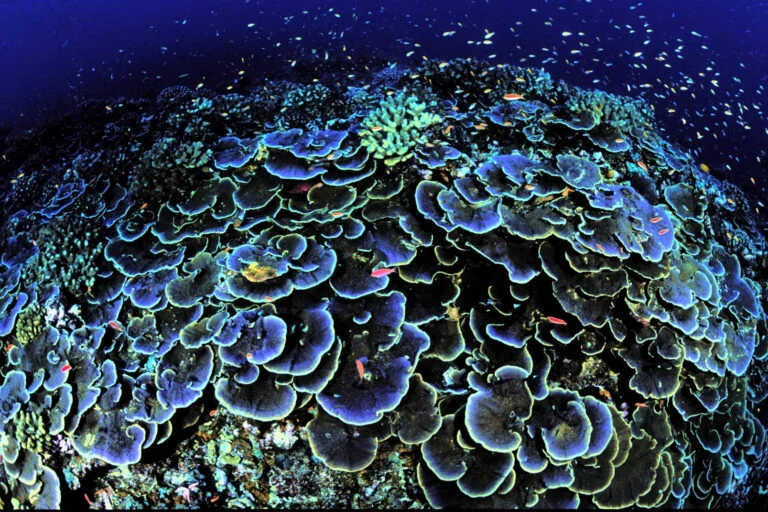
The Pacific Islands Heritage Marine National Monument is widely regarded by marine biologists as a critical repository of biodiversity. The area is defined by its complex geological and biological features, which include 5,000-year-old coral reef systems and a network of 165 known seamounts. These seamounts function as essential underwater islands, providing localized upwellings of nutrient-rich water that support a diverse food web.
Data from the Pacific Islands Heritage Coalition and various oceanographic surveys highlight the monument as a vital sanctuary for several threatened and endangered species. These include highly migratory apex predators such as sharks and tuna, as well as sea turtles, whales, and diverse seabird populations that rely on the islands for nesting.
Environmental advocates argue that the industrialization of the zone between 50 and 200 nmi will disrupt the "halo effect" that these protected areas provide. The halo effect refers to the spillover of fish populations from protected zones into surrounding waters, which theoretically sustains regional fisheries. By allowing large-scale commercial fishing fleets into these peripheral waters, critics contend the government is undermining the very sustainability it claims to be pursuing.
Analysis of the Federal Justification
In its public filing, NOAA maintains that the proposed regulations are designed to support the "long-term sustainability of U.S. fisheries." The agency argues that by increasing access to these waters, domestic fleets can reduce their operational costs and improve their competitive standing in the global market.

Interestingly, the agency’s own internal documents provide a nuanced view of the economic benefits. While the proposal aims to expand access, NOAA admits that the actual net gain for the U.S. fishing industry may only be "minor." This acknowledgment has drawn criticism from economists and conservationists alike, who argue that the potential for environmental degradation far outweighs the marginal economic utility identified by the agency.
From an analytical standpoint, the move reflects a tension between two competing philosophies of marine management: the "utilitarian-extractive" approach, which views federal waters as underutilized economic assets, and the "precautionary-conservationist" approach, which views these areas as essential climate buffers and biodiversity reserves.
Public and Stakeholder Reactions
The public comment period, which concludes on December 9, has become a focal point for the broader debate on ocean management. Indigenous leaders, particularly those from Native Hawaiian communities, have expressed profound concern regarding the cultural implications of the proposal.
William Aila, a former chair of the Hawaiʻi Department of Land and Natural Resources and a prominent Native Hawaiian fisherman, emphasized that the ocean is not merely an economic resource but a central element of Pacific cultural identity. "The ocean has always been a place of connection for Pacific peoples," Aila stated. "These same waters provide threatened and endangered wildlife a rare refuge where they can feed, breed, and recover. Many Pacific Islander descendants have answered the call to protect this special area, and we are hopeful that their comments will allow us to protect this place for generations to come."
Legal experts are similarly weighing in on the potential for further litigation. David Henkin, an attorney at Earthjustice who spearheaded the 2025 legal victory, has stated clearly that the group is prepared to challenge the new proposal. "We prevailed in court the last time this happened," Henkin said. "We’ll head back to court again to defend the pristine waters of the Pacific Islands Heritage Marine National Monument."
Broader Implications for Global Marine Policy
The outcome of this regulatory process will likely have implications that extend well beyond the borders of the United States. The international community is currently grappling with how to manage high-seas biodiversity, particularly in the context of the United Nations’ High Seas Treaty.
If the U.S.—historically a leader in marine protected area (MPA) designation—successfully rolls back protections in such a massive, ecologically significant region, it may set a precedent for other nations to weaken their own maritime commitments. Conversely, if the administration is forced to abandon the plan due to public pressure or legal intervention, it will serve as a significant reinforcement of the power of administrative law in protecting global commons.
As the December 9 deadline for public comments approaches, the focus remains on the extent to which the government will weigh the scientific data concerning species loss against the pressure to provide immediate, albeit minor, relief to the commercial fishing industry. The final decision will not only determine the fate of the coral reefs and seamounts of the PIH but will also define the current administration’s legacy in environmental stewardship and federal land management.
For now, the status of the monument remains in limbo, as the scientific community continues to publish warnings about the fragility of these ecosystems. Whether this area will remain a pristine, undisturbed refuge or become a new frontier for industrial fishing depends heavily on the outcome of the coming months of legal and bureaucratic maneuvering. The conflict serves as a stark reminder that in the 21st century, the definition of "sustainability" remains a central and highly contested battleground in global governance.