Lyme disease stands as the most prevalent vector-borne illness in the United States, with nearly 500,000 cases diagnosed annually according to the Centers for Disease Control and Prevention (CDC). Caused by the bacterium Borrelia burgdorferi and transmitted primarily through the bite of the blacklegged tick (Ixodes scapularis), the disease remains a significant public health burden. While antibiotics are effective in early stages, untreated infections can lead to severe complications involving the heart, joints, and nervous system, and some patients continue to report debilitating symptoms long after initial treatment. For over three decades, the prevailing wisdom regarding what drives tick population surges and infection rates has been largely dictated by fragmented, short-term observations. However, a monumental, 35-year longitudinal study conducted by the Cary Institute of Ecosystem Studies in Millbrook, New York, is fundamentally challenging these long-held assumptions.
The study, recently published in the Proceedings of the National Academy of Sciences, synthesizes more than three decades of meticulous field data. By tracking the complex, intertwined relationships between forest flora—specifically oak trees—and the fauna that inhabit them, including mice, predators, and ticks, researchers have uncovered a series of ecological patterns that defy conventional wisdom. This research, spearheaded by disease ecologist Richard Ostfeld and his colleague Shannon LaDeau, represents a rare achievement in scientific inquiry: the ability to distinguish between transient statistical noise and genuine, predictable ecological drivers.
The Myth of the Deer: A Re-evaluation of Transmission Drivers
For much of the 1980s and 1990s, public health messaging often focused on the role of white-tailed deer. As the suburbanization of the American landscape progressed, the visibility of deer populations increased, and early anecdotal evidence suggested a direct correlation between deer density and the prevalence of ticks. The hypothesis was intuitive: adult female ticks require a substantial blood meal to produce eggs, and deer, being large mammals, provide a primary host for these adult ticks. Under this logic, more deer meant more adult ticks, which in turn meant more larvae, more nymphs, and ultimately, more Lyme disease risk.
However, the Cary Institute’s long-term data set—spanning over 2,000 acres of temperate forest—has failed to support this theory. When analyzing the entirety of the 35-year window, researchers found no statistically significant relationship between deer density and the abundance of nymphal ticks. While small subsets of the data might have hinted at a correlation, the multi-decade view clarified that the relationship was not causal. This finding is critical for public health policy; it suggests that culling deer populations, a strategy previously debated in many suburban communities as a way to "solve" the Lyme problem, may be far less effective than once assumed.
The Rodent Connection: Mice as the Primary Predictors
If deer are not the primary drivers of tick surges, what is? The data points directly to the white-footed mouse. Unlike deer, which serve as hosts for adult ticks but do not carry the B. burgdorferi bacteria efficiently, white-footed mice are highly competent reservoirs. They are extremely effective at passing the bacteria to larval ticks during their blood meals.
The Cary Institute research revealed a robust, quantifiable pattern: years marked by a surge in mouse populations were followed, with a one-year lag, by a 40% increase in nymphal ticks. This is because larval ticks, which emerge in the summer, rely on mice as their primary host. When a mouse population is high, a higher percentage of larvae survive and become infected. Because these infected larvae then molt into nymphs the following year, they pose the greatest threat to humans during the subsequent spring and summer seasons. By monitoring mouse population density, public health officials could, in theory, issue early warnings to local communities, allowing for increased vigilance and preventative measures well before the tick season peaks.
The Acorn Connection: A Two-Year Forecasting Model
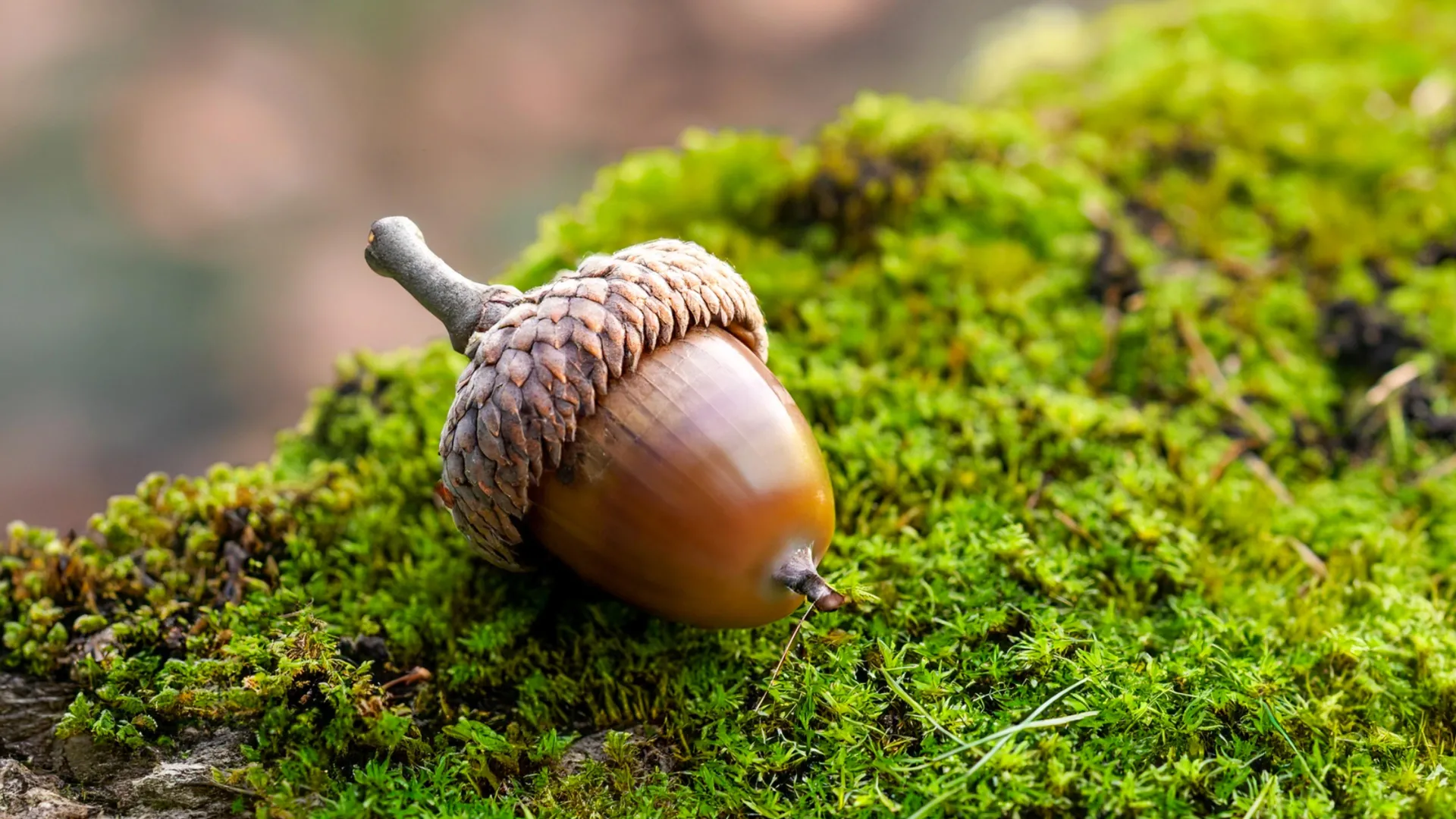
Perhaps the most startling revelation of the study is the role of oak trees in the Lyme disease cycle. The researchers identified a "bottom-up" regulatory mechanism triggered by acorn masting—the phenomenon where oak trees synchronously produce massive quantities of acorns every few years.
This event acts as a biological "pulse." A heavy acorn crop provides a massive food surplus for forest rodents, allowing mouse populations to explode in the following year. As established, an increase in mice leads to an increase in infected ticks. Consequently, the researchers found that a bumper crop of acorns acts as a reliable, two-year leading indicator for an increase in nymphal ticks. This chain reaction demonstrates how botanical cycles can dictate the epidemiological landscape of a region, offering a sophisticated tool for long-range public health forecasting.
Beyond Population Numbers: The Complexity of Infection Prevalence
While the number of mice can predict the total number of ticks, the researchers encountered a significant hurdle when trying to predict the infection rate of those ticks. Initially, the team hypothesized that more mice would inevitably lead to a higher percentage of infected ticks. Early data seemed to confirm this, but as the study progressed into its third decade, the relationship dissolved.
The explanation lies in the biodiversity of the forest. Ticks do not exclusively feed on mice; they also feed on squirrels, skunks, and opossums. These species are much less efficient at passing the B. burgdorferi bacteria to the ticks. When these "dilution" species are abundant, they provide a "sink" for the tick larvae. The larvae that feed on these animals are significantly less likely to become infected. Therefore, the overall prevalence of infection in the nymphal tick population is a result of the competition among various hosts. This finding underscores the importance of biodiversity; a forest with a healthy variety of host species can actually lower the risk of Lyme disease by "distracting" ticks away from the highly infectious mouse populations.
Climate and the Resilience of the Tick
The study also addressed the impact of climate change, specifically regarding temperature extremes. Conventional wisdom suggested that both deep freezes and heatwaves might help curb tick populations by causing mass mortality. The Cary Institute data, however, indicates a higher level of resilience than previously expected. Ticks have proven adept at navigating extreme temperatures by burrowing into the leaf litter or deeper soil layers, which act as a thermal buffer against the harsh conditions at the surface.
Paradoxically, the research noted that while individual ticks can survive heat, years with higher overall temperatures often see a decrease in nymphal tick abundance. The interplay between climate, host behavior, and tick survival remains one of the most complex variables in the model. As the climate continues to shift, these patterns will likely evolve, necessitating continued, rigorous monitoring.
Broader Implications and Future Directions
The implications of this 35-year study are profound. By moving away from short-term snapshots and embracing long-term ecological monitoring, the Cary Institute has provided a blueprint for how to understand complex, multi-species disease systems. For public health officials, the takeaway is clear: managing Lyme disease requires a holistic view of the environment.
The findings have already prompted a shift in how experts view the "risk landscape." Efforts to mitigate Lyme disease might be better served by focusing on the factors that support biodiversity and understanding the bottom-up influence of forest productivity rather than relying on simplistic interventions.
As the researchers look toward the next decade of data, the focus will remain on how climate change and landscape fragmentation—including the influx of invasive species—will alter these delicate balances. The Cary Institute team emphasizes that the forest is not a static environment; it is a dynamic system of shifting interactions. Understanding these connections is not merely an academic exercise; it is a vital component of protecting human health in an era of environmental uncertainty. The data collected in Dutchess County serves as a reminder that the health of the human population is inextricably linked to the health of the ecosystems we inhabit. As the environment changes, so too will the risks we face, and only through such long-term, systems-level research can we hope to anticipate and mitigate the challenges of tomorrow.