The trajectory of the American backyard chicken phenomenon can be mapped almost entirely through the shifting cost of a dozen Grade A eggs. In March 2025, consumer prices peaked at roughly $6.22 per dozen, driving a massive wave of urban and suburban households to seek food independence through small-scale poultry farming. By June 2026, however, that same dozen averaged a modest $2.14, flipping the economic arithmetic and cooling the unprecedented demand that had previously emptied commercial hatcheries and feed stores nationwide.
This extreme price volatility underscores a broader narrative of commercial disruption, shifting consumer behavior, and emerging public health risks. While the financial incentive to raise backyard hens has largely evaporated with normalized grocery prices, the operational, biosecurity, and regulatory burdens have intensified. As federal health agencies report rising numbers of zoonotic disease outbreaks, prospective and veteran flock owners alike are re-evaluating the true cost of keeping poultry in America’s backyards.
The Price Signal That Built the Boom, Then Reversed It
To understand the modern backyard flock movement, one must examine the compounding retail egg price increases that preceded it. According to the United States Department of Agriculture’s (USDA) Economic Research Service, retail egg prices rose 32.2% in 2022, followed by a modest 1.4% increase in 2023, an 8.5% jump in 2024, and a staggering 21.9% surge in 2025.
The primary driver behind this prolonged inflation was Highly Pathogenic Avian Influenza (HPAI), commonly known as bird flu. Since the devastating outbreak began in February 2022, the virus has impacted more than 166 million birds across commercial and backyard operations, decimating inventories of chickens, turkeys, ducks, pheasants, and geese.
As commercial production gradually recovered and supply caught up with consumer demand, the market shifted dramatically. The USDA recorded significantly fewer HPAI detections in the first quarter of 2026 compared to the same period in 2025. Replacement pullets—young female chickens—became widely available, easily covering routine flock turnover and minor losses. Consequently, retail egg prices in May 2026 dropped 35.2% lower than the previous year. The Economic Research Service forecasted a 30.4% price decline for the full calendar year, with wholesale prices paid to farmers plummeting by an unprecedented 82.9%.
This market correction had an immediate impact on consumer enthusiasm. The American Pet Products Association estimated that approximately 11 million U.S. households kept backyard chickens in early January 2025, nearly doubling the 5.8 million reported in 2018. During the peak price panic, feed stores sold out of chicks weeks before traditional spring "chick days," and major hatcheries reported order volume spikes of 80% or more.
By mid-2026, however, first-time buyers had largely exited the market, leaving chick sales concentrated among experienced keepers simply replenishing their existing flocks. Financial analysts note that treating backyard chickens as a hedge against grocery inflation is fundamentally a bet on egg-price volatility—a bet that shifted drastically against hobbyists as industrial production stabilized.
Calculating the True Yield and Expenses of a Flock
For those weighing the prospect of building a coop, modern economic modeling requires looking past romanticized notions of self-sufficiency. USDA projections indicate table egg availability will reach 21.5 dozen per person in 2025 and rise to 22.9 dozen in 2026, translating to roughly 260 to 275 eggs annually per average American.
While commercial laying hens average an impressive 300 eggs per year, backyard flocks rarely achieve that output. According to University of Minnesota Extension guidelines, backyard hens typically begin laying around six months of age and remain productive for five to 10 years, with peak production occurring during the first two years. During this window, owners can realistically expect 180 to 250 eggs per hen, followed by a natural tapering of production and seasonal winter slowness unless coops are artificially illuminated.
Therefore, a single productive hen roughly covers one person’s annual egg consumption during her prime years. To maintain steady supply, owners must budget for more birds than basic math suggests, or plan for the realities of aging flocks. Retired layers yield tough meat unsuited for standard culinary uses, though they can be repurposed for long-simmering soup stocks. Meat production presents an even greater logistical challenge: with Americans consuming over 102 pounds of broiler meat per person annually, replacing a year of individual chicken consumption requires managing approximately 30 meat-specific birds, which are processed before one year of age and demand specialized raising protocols.
Navigating Local Ordinances and Homeowners Associations
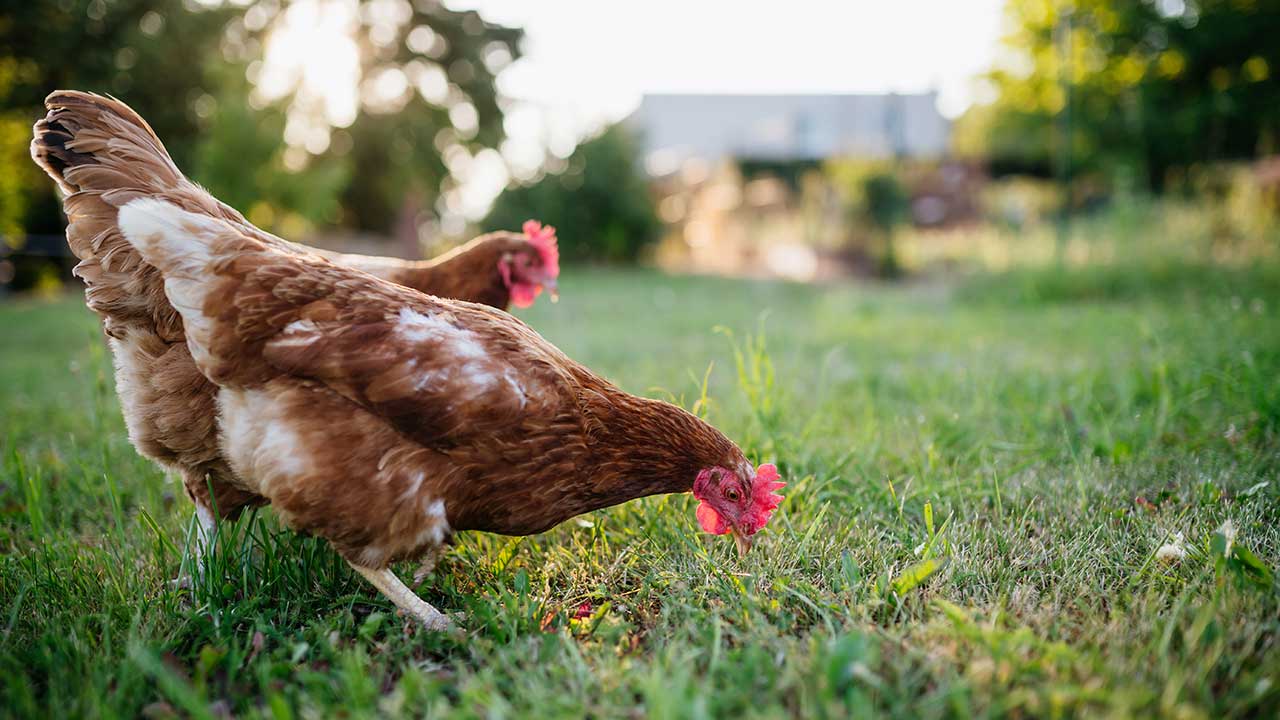
Before purchasing equipment or livestock, prospective owners must carefully examine municipal codes, which vary widely and undergo frequent revisions. Urban and suburban flock caps typically restrict property owners to between four and eight hens, often scaling allowances to total lot size. Roosters are almost universally prohibited in residential zones due to noise concerns.
Furthermore, zoning laws dictate strict coop setbacks—frequently mandating that structures sit 10 to 25 feet from property lines and up to 50 feet from neighboring dwellings. Permits, annual registration fees, rear-yard placement mandates, and absolute prohibitions on on-site slaughter or commercial egg sales are standard across most jurisdictions. Homeowners associations (HOAs) often enforce even stricter covenants independently of municipal law. However, several states have recently enacted legislation preempting outright municipal bans on small hen flocks, creating a shifting legal landscape that requires ongoing verification.
Economic Breakdown of a Small Backyard Flock
Evaluating the financial viability of a six-hen backyard flock requires weighing startup capital against continuous operational expenses. Mid-2026 USDA Agricultural Marketing Service data placed average advertised retail prices at $1.02 per dozen for conventional caged eggs and $2.65 for UEP-certified cage-free options, with organic varieties commanding a substantial premium.
For a typical six-hen setup:
- Annual flock output ranges from 90 to 125 dozen eggs during peak years.
- At June 2026 average retail values ($2.14/dozen), output is valued between $190 and $270.
- At cage-free feature prices ($2.65/dozen), output value reaches $240 to $330.
- At the March 2025 price peak (~$6.22/dozen), output value temporarily surged to between $560 and $780.
- Ongoing operational costs—including feed, bedding, grit, and supplies—range from $250 to $600 annually.
- Initial capital expenditures for coops, runs, fencing, feeders, and livestock span $500 to $2,000.
These figures illustrate that a small backyard flock generally covers its own feed costs in a favorable year but rarely recoups the initial capital investment of coop construction. When compared against conventional commodity eggs, the financial return is minimal; when compared against premium cage-free or organic selections, the gap narrows. Consequently, agricultural economists conclude that backyard flocks serve poorly as a financial hedge against grocery inflation, but can function effectively as a localized hedge against broader supply chain disruptions.
The Escalating Public Health Risks: Avian Influenza and Salmonella
While economic considerations often dominate initial planning, the risk side of the ledger has grown increasingly severe due to biological hazards. Wild birds remain the primary vector for HPAI, shedding the virus in droppings that contaminate shared water sources, particularly along major flyways during spring and autumn migrations. Humans can inadvertently spread the pathogen via unwashed boots, clothing, equipment, and vehicles.
Since March 2024, federal health authorities have documented 71 human cases of influenza A(H5) in the United States. Notably, three of these infections occurred in backyard flock owners, resulting in two fatalities—one in Louisiana in early 2025 and another in Washington in November 2025. While the Centers for Disease Control and Prevention (CDC) maintains that the risk to the general public remains low, that assessment changes significantly for individuals handling symptomatic or deceased birds without proper personal protective equipment (PPE).
A comprehensive CDC survey of 638 backyard flock owners across 48 states, conducted between July and December 2025 and published in May 2026, revealed that while 94% of respondents were aware of avian influenza, significant knowledge gaps persisted regarding transmission vectors and biosecurity protocols. Crucially, data indicated that owners with a higher understanding of the disease were significantly more likely to utilize appropriate protective equipment, highlighting the critical need for proactive education.
Compounding the biological risks are persistent outbreaks of Salmonella. As of mid-2026, the CDC has investigated numerous multistate outbreaks tied directly to backyard poultry contact, resulting in hundreds of human illnesses, widespread hospitalizations, and fatalities. Epidemiological investigations frequently trace these strains directly to commercial hatcheries and agricultural retail boxes used to ship chicks, with several isolated strains exhibiting resistance to standard clinical antibiotics such as ampicillin, ciprofloxacin, and ceftriaxone. Because healthy-looking birds frequently shed bacteria asymptomatically, visual cleanliness offers no guarantee of safety, necessitating strict domestic hygiene rules, such as prohibiting poultry inside human living spaces and enforcing rigorous handwashing after every interaction.
Environmental Realities and Sustainable Practices
Discussions surrounding backyard farming often invoke environmental benefits, though life-cycle analyses require careful nuance. Feed production accounts for the vast majority of total greenhouse gas emissions associated with egg production. Because backyard flocks consume commercially formulated feed without industrial scale efficiencies—and ultimately lay fewer eggs per pound of feed consumed—their emissions per individual egg can actually exceed those of commercial operations. No peer-reviewed U.S. life-cycle assessment demonstrates a lower carbon footprint for backyard eggs compared to industrial counterparts.
Nevertheless, backyard flocks offer tangible localized environmental benefits, including organic pest control, kitchen scrap diversion from municipal landfills, and natural garden fertilization. For most modern keepers, these ecological contributions, combined with the personal satisfaction of animal husbandry and food production, outweigh strict economic or environmental calculations. For those committed to establishing a flock, adherence to rigorous biosecurity measures, municipal compliance, and realistic financial planning remains essential for a safe and sustainable experience.