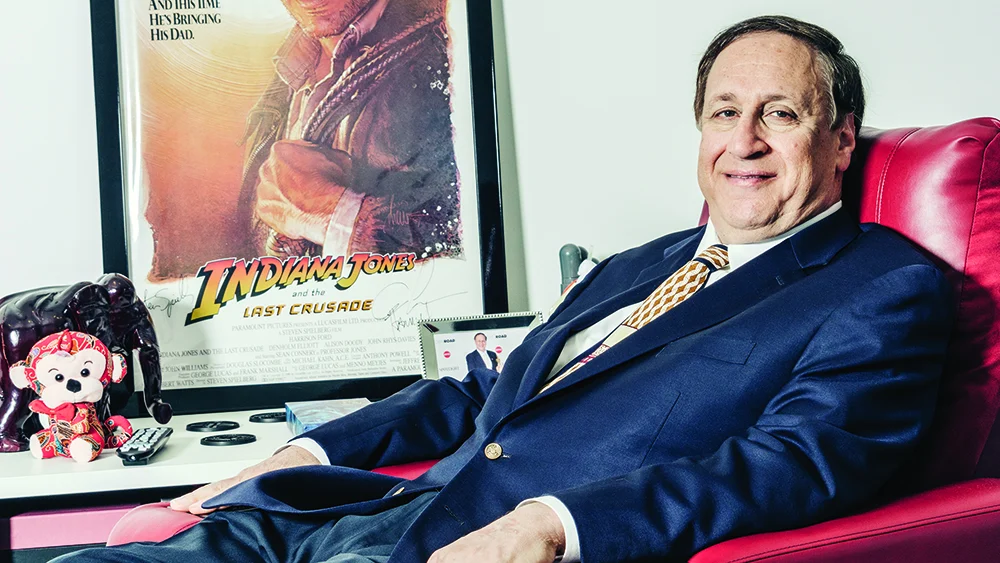
The proposed acquisition of Warner Bros. by Paramount, spearheaded by Skydance founder David Ellison, has ignited a firestorm of debate within the film industry, with many theater owners voicing strong concerns about potential consolidation leading to a reduction in film output. This sentiment was powerfully articulated at CinemaCon, the annual convention where Hollywood’s exhibition sector gathers to strategize and showcase upcoming releases. A petition signed by prominent figures such as Ben Stiller, Javier Bardem, and Kristen Stewart decries the potential deal, warning of "fewer opportunities for creators, fewer jobs across the production ecosystem, higher costs, and less choice for audiences." However, Adam Aron, the CEO of AMC Theatres, the world’s largest cinema chain, stands apart from this chorus of apprehension, instead offering a remarkably optimistic outlook on the burgeoning consolidation and its implications for the theatrical experience.
Aron’s contrarian stance is rooted in his belief that David Ellison, a producer behind critically acclaimed and commercially successful films like "Top Gun: Maverick," will be a staunch advocate for the theatrical distribution model. This conviction has led AMC to publicly endorse Paramount’s pursuit of Warner Bros., a move that directly contrasts with the anxieties of many of his industry peers. In a statement released to the press, Aron declared, "It is time for AMC to make known our favorable view about Paramount’s desire to acquire Warner." He elaborated, "I greatly appreciate David Ellison’s track record of success and his passion to make movies that will dazzle audiences the world over. In just the short time he has owned Paramount Pictures, he already has begun to assemble a superb team around him and already has been increasing the number of movies being greenlit at Paramount."
This divergence in perspective highlights a critical juncture for the film industry, one shaped by evolving distribution models, the resurgence of theatrical attendance post-pandemic, and the strategic ambitions of major industry players. While some foresee a contraction driven by consolidation, Aron appears to be betting on a future where increased studio investment and a commitment to theatrical releases will fuel industry growth.
A Rebounding Box Office and Shifting Studio Strategies
Aron’s optimism is not without its grounding in recent industry performance. He expressed a level of confidence in the film business that he hasn’t felt in six years, pointing to tangible signs of recovery and growth. "That’s because finally we’re going to see some real growth year-over-year," Aron stated in a recent interview. He recalled the devastating impact of the COVID-19 pandemic, which saw the domestic box office plummet from $11.5 billion in 2019 to a mere $2 billion in 2020. While a rebound to $4.5 billion in 2021 offered a glimmer of hope, it remained a fraction of pre-pandemic levels. The subsequent three years, marked by Hollywood strikes and studio cutbacks, resulted in a plateaued box office hovering between $8.7 billion and $9 billion.
However, the current year, according to Aron, is poised for a "dramatic growth," with the first quarter already demonstrating significant momentum. The success of films like Amazon’s "Project Hail Mary," which achieved an $80 million opening weekend – a remarkable feat for a company that was not a significant player in the movie business just four years prior – is cited as a positive indicator. Aron anticipates an even stronger performance in 2026, projecting a continued upward trajectory for the industry.
This projected growth, Aron argues, is driven by a dual strategy of "more movies and better movies." He notes a significant increase in the number of wide-release films coming from Hollywood, which had previously seen a decline of approximately 30%. While attendance levels per movie have largely mirrored pre-COVID figures, the scarcity of releases had impacted overall revenue. Now, studios are signaling a renewed commitment to theatrical distribution. Warner Bros., for instance, plans to increase its annual releases from 11 to 15 or 16 films, while Paramount is set to nearly double its output from seven to 15. Amazon, further solidifying its presence, has committed to at least a dozen films this year and 15 in 2027.
"I’ve always said that when Hollywood makes movies that people want to see, they come out to theaters in droves," Aron asserted. He anticipates a "floodgate of titles" that will deliver a consistent stream of hits, encompassing both established franchise sequels and original stories, citing Steven Spielberg’s "Disclosure Day" as an example of the latter. This diverse slate, he believes, is crucial for reigniting audience enthusiasm for the theatrical experience.
Navigating the Window Debate and Embracing New Partnerships
The conversation around theatrical windows – the exclusive period a film plays in cinemas before becoming available on other platforms – remains a contentious issue. Aron expressed "euphoria" over Universal’s recent decision to embrace a 45-day window for its theatrical releases, a significant shift from its previous practice of releasing films to home entertainment platforms in as little as 17 days. He views this as a crucial step in re-establishing consumer expectations and combating the trend of audiences delaying their viewing habits.
"Prior to COVID, the window was 74 days for PVOD (premium video-on-demand), and much longer than that for SVOD (streaming video-on-demand)," Aron explained. He acknowledged that the industry had theoretically coalesced around a 45-day window, with Universal being the primary outlier. However, he revealed that many studios, with the exception of Disney, were already releasing films to home viewing between 25 and 35 days. This practice, he contends, "had to have some effect, because we were collectively training the consumer to stay at home and wait." He expressed gratitude and admiration for Universal’s stance, noting that he had been briefed on their strategic thinking by Universal Entertainment chief Donna Langley.
Looking ahead, Aron indicated that AMC is exploring various methods to re-educate consumers about the value and duration of theatrical windows. The increasing use of "only in theaters" messaging in trailers is one such initiative, and he anticipates this trend to become more prevalent throughout 2026.
Beyond traditional studio partnerships, Aron also touched upon the evolving relationship between AMC and streaming giants like Netflix. He revealed that AMC has been working more cooperatively with Netflix over the past four months than in the preceding eight years. This collaboration includes showcasing Netflix content in theaters, such as the "KPop Demon Hunters" screening during Halloween, the series finale of "Stranger Things" on New Year’s Day, and the initial episodes of "One Piece." AMC played a significant role in driving ticket sales for these events, and both companies have expressed their intention to expand their collaboration in the future. Aron even hinted at AMC’s potential involvement in screening Greta Gerwig’s upcoming "Narnia" film in cooperation with IMAX, while emphasizing a desire to increase immediate collaboration with Netflix.
The David Ellison Factor: A Producer’s Commitment to Cinema
Aron’s particular optimism regarding the potential Paramount-Warner Bros. merger is intrinsically linked to his perception of David Ellison as a dedicated filmmaker and a champion of the theatrical experience. When questioned about his admiration for Ellison, Aron didn’t hesitate to point to the massive success of "Top Gun: Maverick" and the "Mission: Impossible" franchise, both Skydance productions. He credited Ellison, alongside Tom Cruise, for spearheading the resurgence of the movie industry in the post-COVID era, particularly with the monumental success of "Top Gun: Maverick" in theaters.
"They both get some credit," Aron stated when pressed about attributing credit. "I’m not alone in telling Tom Cruise that post-COVID, he’s the man who saved the entire movie industry with the release of ‘Top Gun: Maverick’ in theaters. But David also gets a lot of credit for that as well. They were Skydance movies." This highlights Aron’s belief that Ellison’s hands-on experience as a producer of blockbuster theatrical releases instills in him a deep understanding and appreciation for the value of the cinema experience.
This perspective underpins Aron’s willingness to look beyond the potential challenges of industry consolidation. While other exhibitors fear that a merged entity might prioritize its own streaming services or reduce the number of films released theatrically, Aron sees the potential for a strengthened Paramount under Ellison’s leadership to become a more robust engine for theatrical content. He noted that under previous ownership, Paramount was releasing only about seven movies a year, a number Ellison has publicly committed to increasing to 15.
Implications and Future Outlook
The debate surrounding the potential Paramount-Warner Bros. merger is multifaceted. On one hand, concerns about market concentration and potential reductions in film diversity are valid. A consolidated studio could wield significant power, potentially influencing release strategies and exhibition terms to its advantage. The historical skepticism towards companies like Netflix, which were not traditionally aligned with theatrical exhibition, also casts a shadow, with many fearing that a merged entity might further prioritize direct-to-consumer streaming over theatrical releases.
However, Adam Aron’s perspective offers a counter-narrative. His emphasis on the increased number of films being greenlit at Paramount under Ellison, coupled with his belief in Ellison’s producer-driven vision, suggests a potential for the opposite outcome. The growing collaboration with Netflix, a company that has historically been perceived as a rival to traditional theaters, further illustrates the dynamic shifts occurring within the industry. Aron’s willingness to engage with and find common ground with these evolving players underscores a strategic approach focused on maximizing theatrical opportunities, regardless of the corporate structure behind them.
The eventual approval of any merger by regulatory bodies, such as the U.S. government, will be a critical factor. However, AMC’s stance, as articulated by its CEO, is clear: the company favors any development that leads to "more movies, better movies, and well-marketed movies to theaters." Whether the proposed Paramount-Warner Bros. deal ultimately aligns with this vision remains to be seen, but Aron’s optimistic outlook and proactive engagement with emerging industry trends suggest a forward-looking strategy for the exhibition sector. The coming months will undoubtedly bring further clarity as these complex industry dynamics continue to unfold, with CinemaCon serving as a pivotal barometer for the evolving sentiment within Hollywood.