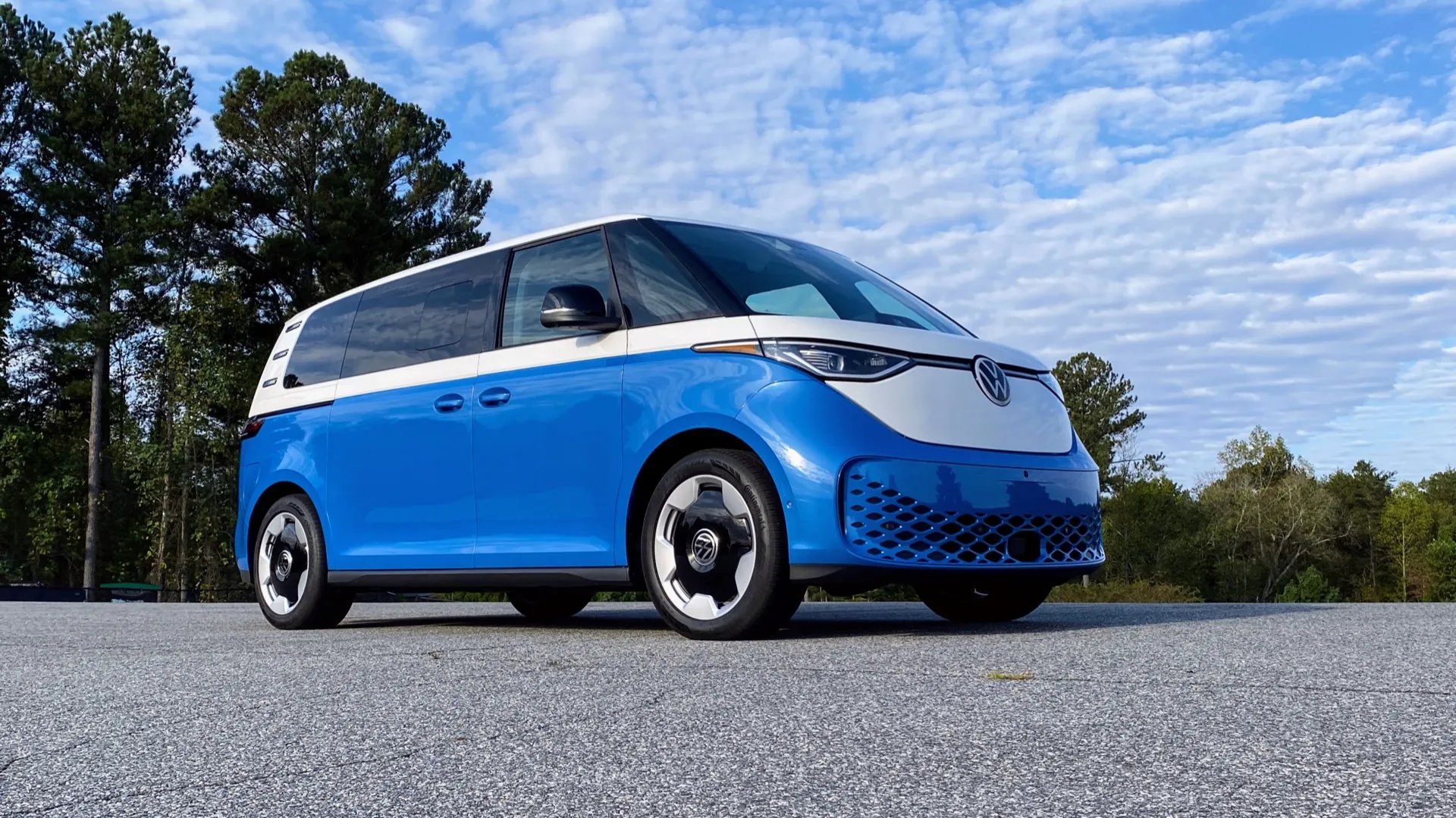
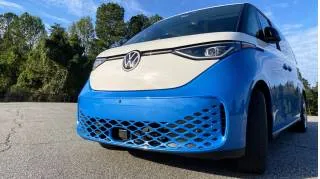
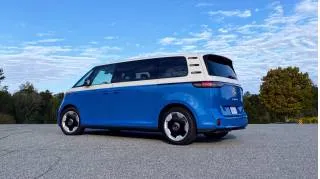
The arrival of the 2025 Volkswagen ID.Buzz in the United States marks the culmination of more than two decades of anticipation, concept reveals, and strategic delays. Volkswagen’s electric reboot of the iconic Type 2 Microbus has finally transitioned from a nostalgic dream into a tangible, road-going reality for American consumers. Positioned as both a tribute to the brand’s storied past and a cornerstone of its electrified future, the ID.Buzz attempts to capture the cultural zeitgeist while navigating the complexities of the modern electric vehicle (EV) market. By design, the vehicle bridges the gap between the counterculture legacy of the 1960s and the technological demands of the 2020s, offering a unique proposition in a market increasingly dominated by homogenized SUVs and crossovers.

A Legacy Decades in the Making: The Chronology of the Electric Bus
The path to the 2025 ID.Buzz was far from direct. Volkswagen has teased a revival of the Microbus for nearly a quarter of a century. The journey began in earnest at the 2001 North American International Auto Show with the unveiling of the Microbus Concept. Despite overwhelming public interest, that project was eventually shelved in favor of more traditional offerings. A decade later, the 2011 Bulli concept hinted at a smaller, more modern interpretation, followed by the 2016 BUDD-e concept, which showcased the potential of the Modular Electric Drive Matrix (MEB) platform.
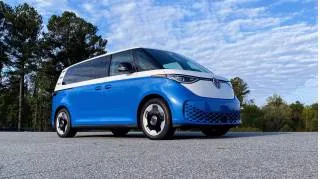
It was not until the 2017 Detroit Auto Show that the ID.Buzz concept was revealed, signaling a firm commitment to an electric future. While a short-wheelbase version of the van launched in Europe in 2022, Volkswagen executives made the strategic decision to delay the U.S. launch to ensure the vehicle met American requirements for space and power. This resulted in a two-year wait for the long-wheelbase (LWB) variant, which features a stretched chassis, a larger battery pack, and a more powerful drivetrain tailored specifically for North American roads.
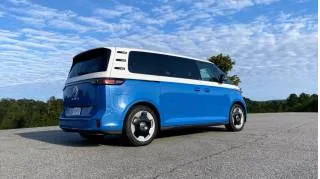
Technical Specifications and Performance Dynamics
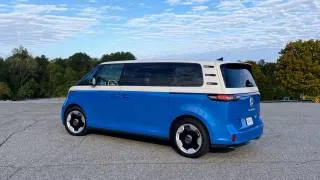
The North American iteration of the ID.Buzz is a significantly enhanced version of the global model. Built on the MEB platform, it features an overall length of 195.4 inches and a substantial 127.5-inch wheelbase—roughly 10 inches longer than the European version. This extra length accommodates a third row of seating and a larger 91-kWh (gross) lithium-ion battery.

The base powertrain consists of a rear-mounted "AP550" synchronous motor, producing 282 horsepower and 413 lb-ft of torque. For consumers requiring more capability, an 4Motion all-wheel-drive (AWD) version adds an inductive motor to the front axle, bringing total system output to 335 horsepower. In testing, the rear-wheel-drive (RWD) variant achieves a 0-60 mph sprint in approximately 7.5 seconds, while the AWD model reduces that time to 6.0 seconds.
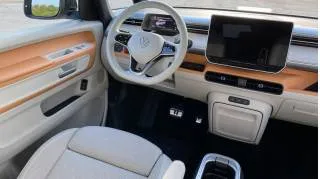
On the road, the ID.Buzz exhibits a driving character that emphasizes comfort and stability over athletic handling. Weighing in at nearly 6,000 pounds (5,968 lbs for RWD; 6,197 lbs for AWD), the vehicle feels substantial. The suspension is softly sprung to provide a compliant ride, though the low center of gravity—afforded by the floor-mounted battery—keeps body roll in check. One of the vehicle’s most notable attributes is its maneuverability; the RWD version boasts a turning circle of just 37.4 feet, making it surprisingly agile in urban environments and tight parking lots.
Efficiency, Range, and Charging Infrastructure
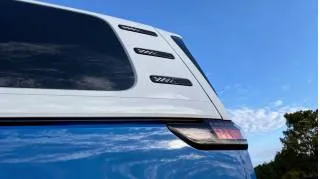
Efficiency for a vehicle with such a blunt aerodynamic profile is a challenge. Despite its boxy appearance, the ID.Buzz achieves a coefficient of drag of 0.29, aided by its smooth underbody and active cooling flaps. The Environmental Protection Agency (EPA) has rated the RWD ID.Buzz at 234 miles of range, while the AWD version sits slightly lower at 231 miles. In real-world testing across varied terrain in north Georgia, including highway stretches and rural backroads, the vehicle averaged between 2.4 and 2.6 miles per kWh, aligning closely with its official ratings.
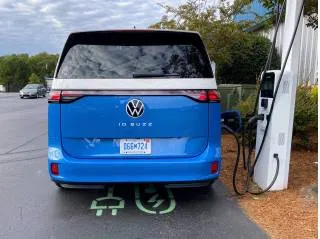
Charging performance is competitive with other mainstream EVs. The ID.Buzz supports DC fast charging at rates of up to 200 kW. Under optimal conditions, the battery can charge from 10% to 80% in approximately 26 minutes. For home charging, an 11-kW onboard charger allows the battery to be fully replenished in roughly nine hours using a Level 2 station. Volkswagen has also integrated battery preconditioning into the native navigation system, ensuring that the pack is at the ideal temperature for maximum intake when arriving at a fast-charging station.

Interior Versatility and Technological Integration
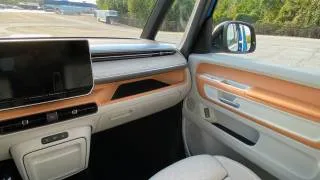
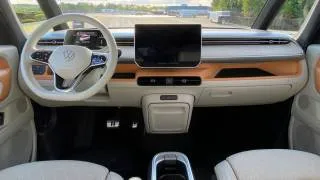
The interior of the ID.Buzz is where Volkswagen has most effectively utilized the advantages of an electric platform. The flat floor allows for a cavernous cabin that can be configured for six or seven passengers. The "Buzz Box," a removable center console, features modular storage and can be taken out entirely to create a walk-through space between the front seats.
Technology is centered around a 12.9-inch infotainment display running Volkswagen’s latest software. This system addresses previous criticisms of the ID.4’s interface by providing faster response times and illuminated sliders for volume and temperature control. The cabin is equipped with eight USB-C ports, including a high-output port near the rearview mirror for dash cams.
One point of contention in the interior design is the window control system. Following the precedent set by the ID.4, the driver’s door features only two window switches and a "Rear" toggle button to control the back windows. This simplified hardware has been widely criticized by early reviewers for being unintuitive and prone to accidental activation. However, the van compensates with excellent outward visibility, a hallmark of the original Microbus design, and an available 67-inch electrochromic panoramic glass roof that can transition from transparent to opaque at the touch of a button.
Pricing Strategy and Market Positioning
Volkswagen has positioned the ID.Buzz as a premium lifestyle vehicle rather than a budget-friendly family hauler. The entry-level Pro S trim starts at $61,545, including destination fees. The Pro S Plus, which adds features like a head-up display and a 14-speaker Harman Kardon audio system, begins at $65,045. The flagship 1st Edition, featuring unique branding and standard two-tone paint, tops out at over $71,000 for the AWD model.
This pricing has sparked debate among industry analysts. When the original Microbus became a cultural icon in the mid-1960s, it was an affordable, utilitarian choice. Adjusted for inflation, a 1965 Microbus would cost roughly $25,000 today. By pricing the ID.Buzz at more than double that figure, Volkswagen is targeting a more affluent demographic, potentially alienating the younger, active buyers who were once the backbone of the "Bus" community. Furthermore, because the ID.Buzz is manufactured in Hanover, Germany, it does not currently qualify for the $7,500 federal EV tax credit for purchases, though it may be eligible for tax-incentivized lease programs.
Broader Impact and Industry Implications
The release of the ID.Buzz comes at a critical time for Volkswagen as it seeks to stabilize its EV sales in North America. The vehicle serves as a "halo" car, designed to draw foot traffic into showrooms and improve brand perception following the "Dieselgate" scandal and the mixed reception of the ID.4.

The ID.Buzz currently occupies a unique niche in the market. While the Kia EV9 offers three-row electric seating at a similar price point, it follows a traditional SUV form factor. The ID.Buzz is effectively the only all-electric minivan-style vehicle in the U.S. market, giving it a temporary monopoly on consumers who prioritize maximum interior volume and sliding-door convenience without a gasoline engine.

However, the success of the ID.Buzz will likely depend on dealer behavior and production volume. Given the high level of interest, industry observers are wary of potential dealer markups that could push the price even further out of reach for average consumers. If Volkswagen can manage supply and maintain its premium positioning without alienating its fan base, the ID.Buzz could prove that retro-futurism is a viable path for the transition to electric mobility.

Ultimately, the 2025 Volkswagen ID.Buzz is a triumph of design and packaging that suffers from the economic realities of modern EV production. It is a vehicle that elicits smiles and nostalgia across generational and political divides—a rare feat in the current automotive landscape. While its high entry price and minor ergonomic flaws may prevent it from becoming the "people’s car" its ancestor once was, it stands as a bold statement of what is possible when a manufacturer leans into its heritage to define its future.