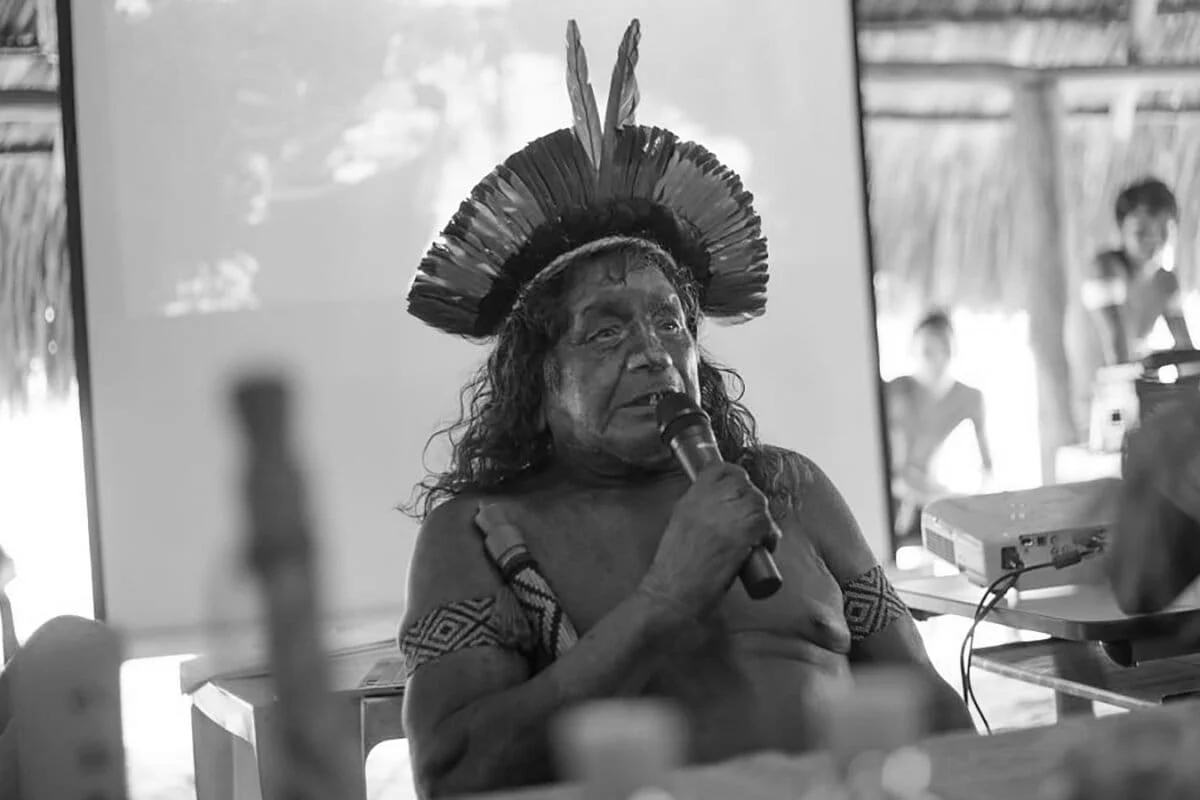
The death of Khuiusi Khisêtjê on July 3 in Goiânia, Brazil, at the age of approximately 80, marks the passing of one of the most pivotal figures in the history of the Xingu Indigenous Territory. A leader who navigated the transition from the brink of tribal extinction to a period of cultural and demographic resurgence, Khuiusi leaves behind a legacy defined by territorial recovery, the preservation of ancestral knowledge, and a sophisticated strategy for indigenous self-determination in the face of an encroaching agricultural frontier. His life story is inextricably linked to the survival of the Khisêtjê people, who today stand as a testament to the resilience of Brazil’s indigenous nations against the dual pressures of modernization and environmental degradation.
A Childhood Forged in the Shadow of Extinction
Khuiusi Khisêtjê was born during a period of profound upheaval for the indigenous peoples of central Brazil. At the time of his birth, the Khisêtjê (formerly known by the exonym Suyá) lived in the transitional forests and savannas of Mato Grosso, a region that had not yet been fully integrated into the Brazilian state’s economic projects. However, the mid-20th century brought rapid "integration" efforts that proved catastrophic for indigenous communities.
Contact with non-indigenous settlers, miners, and government agents introduced a series of infectious diseases—including influenza, measles, and smallpox—for which the Khisêtjê had no immunity. These epidemics decimated the population, specifically targeting the elderly. In indigenous societies where history, law, and spirituality are transmitted orally, the loss of elders was not just a demographic disaster but a cultural one. Khuiusi lost his father and most of the male mentors who were responsible for his initiation into adulthood. By the mid-1960s, the Khisêtjê population had plummeted to roughly 50 individuals.
This demographic collapse forced a young Khuiusi to assume leadership responsibilities decades earlier than traditional customs would have dictated. He became a primary custodian of his people’s identity at a time when many observers believed the Khisêtjê would simply disappear into the annals of history or be absorbed into larger ethnic groups within the newly formed Xingu Indigenous Park (PIX), created in 1961 by the Villas-Bôas brothers.
The Long Struggle for Wawi: Territorial Recovery
One of Khuiusi’s most significant political achievements was the recovery of the Wawi Indigenous Territory. When the Xingu Indigenous Park was originally demarcated, a significant portion of ancestral Khisêtjê land—containing old village sites, sacred burial grounds, and vital hunting territories—was left outside the official boundaries. This "forgotten" land became a target for the expanding cattle and soy industries of Mato Grosso.
For decades, Khuiusi led a relentless campaign to have these lands recognized. Unlike the more confrontational tactics used by some groups, Khuiusi’s approach was one of strategic persistence. He understood that to the Brazilian state, land was a matter of maps and legal titles. He worked with anthropologists, such as Anthony Seeger, and organizations like the Instituto Socioambiental (ISA) to document the historical presence of his people in Wawi. He pointed to the graves of ancestors and the specific names of streams as evidence of ownership that predated the arrival of the Brazilian state.
The struggle bore fruit in the 1990s when the Wawi territory was officially demarcated and annexed to the Xingu Park. This victory was more than a legal win; it provided the Khisêtjê with the geographic space necessary for their population to grow. By returning to Wawi, the community could re-establish traditional resource management practices, which led to a dramatic population recovery. From the low of 50 individuals in the 1960s, the Khisêtjê population has grown to over 700 people living in 11 different villages today.
Strategic Leadership and the "True Songs"
Khuiusi Khisêtjê was a leader who functioned effectively in two vastly different worlds. Although he never achieved fluency in Portuguese and remained illiterate in the Western sense, he possessed a profound "political literacy." He was a shrewd judge of character, evaluating researchers, government officials, and NGO workers not by their rhetoric but by their actions and their respect for Khisêtjê autonomy.
He recognized that the survival of his people required a dual strategy: the mastery of modern tools and the rigorous preservation of traditional knowledge. He encouraged the use of video cameras, radios, and GPS technology to monitor their borders, and he supported the formal education of Khisêtjê youth. However, he insisted that Western schooling must not replace indigenous learning.

Khuiusi was particularly concerned with the "true songs." In Khisêtjê culture, songs are not merely aesthetic expressions; they are repositories of history, social structure, and ecological data. He spent years working with linguists and anthropologists to record, transcribe, and translate these oral histories, ensuring they would be available for future generations. He famously argued that Khisêtjê teachers must be the ones to teach these songs to children, as only they understood the deep cultural nuances and obligations embedded in the lyrics.
The Frontline of the Soy Frontier
In his later years, Khuiusi faced a new and invisible threat: the intensification of industrial agriculture surrounding the Xingu. Mato Grosso has become the heart of Brazil’s soy and corn production, a transition that has transformed the landscape surrounding indigenous territories into a "green desert" of monoculture.
The village of Khikatxi, located near the border of the Wawi territory, found itself on the frontline of this expansion. Residents began reporting that single-engine aircraft spraying pesticides on adjacent soy fields would frequently pass over indigenous land. The consequences were immediate and distressing. Community members reported chronic itching, respiratory issues, and diarrhea. The local environment began to show signs of chemical stress; streams became cloudy, and the meat of game animals reportedly took on the scent of agricultural chemicals.
In 2018, Khuiusi made the difficult decision to move the entire village of Khikatxi ten kilometers deeper into the forest. This was not a retreat of defeat, but a strategic relocation to protect the health of the community and its food security. The move required the monumental task of clearing new forest, building new homes, and establishing new gardens, but Khuiusi viewed it as a necessary step for the survival of the next generation. This event highlighted the limitations of land demarcation; while the Khisêtjê owned the land, they could not easily protect their air and water from the externalities of global commodity markets.
The Impact of Pesticides and Deforestation in Mato Grosso
The challenges Khuiusi fought against are supported by sobering environmental data. According to reports from the MapBiomas project, Mato Grosso has seen some of the highest rates of native vegetation loss in Brazil over the last three decades. The Xingu River headwaters, which are essential for the health of the entire Xingu Indigenous Territory, are located largely outside the protected park boundaries in areas dominated by agribusiness.
Studies by the Fiocruz Institute and various Brazilian universities have documented the "pesticide rain" phenomenon in the region. Research indicates that up to 25% of aerially sprayed pesticides can drift far beyond their intended targets, settling on indigenous crops and water sources. Khuiusi’s decision to move his village was a direct response to a systemic environmental crisis that continues to threaten the Xingu basin.
Legacy and the Future of the Xingu
Khuiusi Khisêtjê’s passing is being felt throughout the Xingu and among the global conservation community. His life spanned the most volatile period in the history of Brazil’s indigenous peoples—from the threat of total erasure to the reassertion of constitutional rights.
His legacy is visible in the vibrant Khisêtjê youth who now use digital media to document their culture and defend their land. He helped foster a generation of indigenous filmmakers, teachers, and political leaders who are capable of speaking to the United Nations or the Brazilian Congress while remaining deeply rooted in their ancestral traditions.
Anthropologist Anthony Seeger, reflecting on Khuiusi’s life, noted that his greatest strength was his ability to look far into the future. He understood that the forest was not just a collection of trees, but a living archive of his people’s past and the only viable theater for their future.
As the soy frontier continues to press against the borders of the Xingu, the Khisêtjê people remain a formidable barrier to deforestation, thanks in large part to the territorial and cultural foundations laid by Khuiusi. His life serves as a blueprint for indigenous leadership: a blend of uncompromising cultural pride and pragmatic engagement with the outside world. While the "anchor" of the community has passed, the "true songs" he fought so hard to preserve continue to be sung in the villages of the Wawi, ensuring that the Khisêtjê identity remains as resilient as the forest itself.