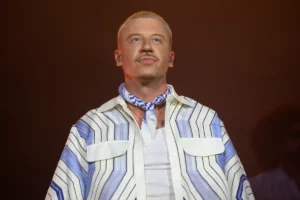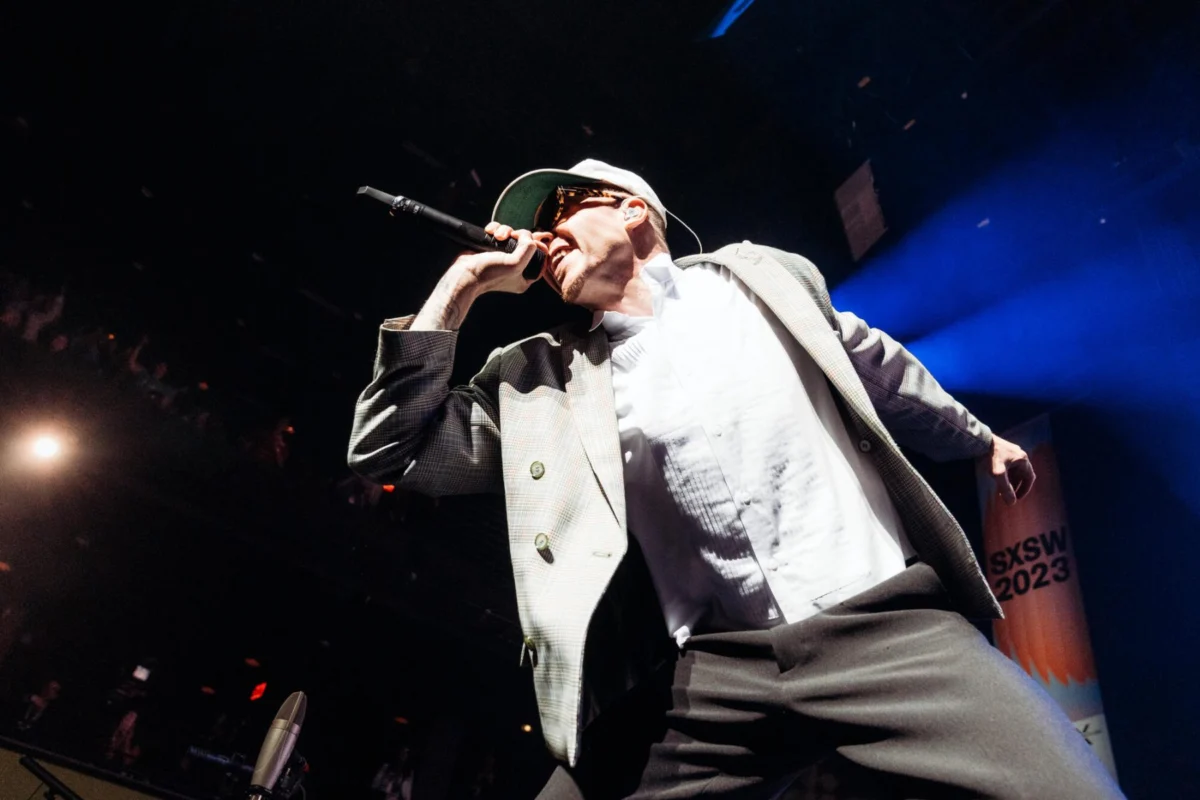
The intersection of global politics and the live music industry has reached a volatile flashpoint, centered on the removal of hip-hop artist Macklemore from Ed Sheeran’s "Loop" tour. Following a rapid series of events that saw the Seattle-based rapper dropped from the bill, Macklemore has pledged his entire $1 million in net earnings from the tour to six humanitarian organizations supporting Palestinians. He has simultaneously issued a public challenge to Robert Kraft, the billionaire owner of the Kraft Group and Gillette Stadium, to match the donation, signaling a deepening rift between artist expression, venue ownership, and the ongoing conflict in Gaza.
The Catalyst: Artistic Expression and Tour Cancellations
The controversy stems from Macklemore’s vocal support for the Palestinian cause, most notably his performance of the protest anthem "Hind’s Hall." During back-to-back shows at MetLife Stadium in New Jersey on September 4 and 5, the rapper integrated visual displays highlighting the humanitarian crisis in Gaza and explicitly labeled Israel’s military actions as genocide. The song, which has become an emblem of student-led protests and pro-Palestinian activism in 2024, directly confronted the geopolitical situation that has seen the death toll in Gaza rise to over 73,000, according to figures released by the Gaza Health Ministry as of July.
While the United Nations has characterized the ongoing conflict as a potential genocide, the United States and Israeli governments vehemently deny these allegations, maintaining that Israel’s military operations are defensive measures against the Hamas-led attacks of October 7, 2023. This fundamental disagreement over the terminology and morality of the conflict has now moved from the political arena into the logistics of international touring.
Chronology of the Disruption
The escalation began in early September when reports surfaced that venue owners, allegedly led by Robert Kraft, exerted pressure on Ed Sheeran’s camp to remove Macklemore from the lineup. The following timeline outlines the rapid collapse of the tour’s support acts:
- September 4–5: Macklemore performs "Hind’s Hall" at MetLife Stadium, sparking public discourse regarding his onstage political commentary.
- September 14: Messina Touring Group, the tour’s promoter, officially announces that Macklemore will no longer perform on remaining support dates, citing ultimatums from venue owners that threatened the cancellation of the entire tour.
- September 15: Ed Sheeran issues a statement clarifying that the decision to drop Macklemore was made by the promoter and not by him personally. He emphasizes his responsibility to his touring crew and the fans who had purchased tickets.
- September 15–16: Following Sheeran’s statement, supporting acts Aaron Rowe, Finneas, and Lukas Graham withdraw from the tour in solidarity with Macklemore and the Palestinian cause.
- September 16: Macklemore formally announces his $1 million donation to humanitarian aid organizations and calls upon Robert Kraft to match the contribution.
The Role of Venue Ownership and Corporate Responsibility
Robert Kraft, a prominent figure in American business and the owner of the New England Patriots, issued a statement on September 15 addressing his role in the decision. Kraft defended the move by asserting that his venue, Gillette Stadium, should not be used as a "platform for hate speech." He acknowledged the suffering of innocent Palestinians but argued that advocacy should not come at the expense of the Jewish community.
"I would welcome the opportunity to sit down with Macklemore and discuss the facts," Kraft noted in his statement. "Ultimately, our goal is the same: peace for all people, an end to suffering, and an end to all hate."
The incident highlights a significant shift in the power dynamics of the live music industry. Traditionally, promoters and venue owners have prioritized ticket sales and public safety over the content of an artist’s performance. However, as artists increasingly use their platforms to address polarizing international conflicts, venue owners are finding themselves in the position of "content gatekeepers." This move by Kraft and other venue owners has sparked a debate regarding the limits of free speech in privately owned spaces.
Financial and Humanitarian Implications
Macklemore’s pledge of $1 million is directed toward organizations that provide essential services to those affected by the conflict. The beneficiaries include the Palestine Children’s Relief Fund, HEAL Palestine, the Gaza Soup Kitchen, Medical Aid for Palestinians, the UNRWA USA National Committee, and Anera.
In his address to the public, Macklemore framed the donation as a necessary, if modest, action in the face of widespread suffering. "Writing a check is one of the least costly forms of solidarity available to me," he wrote. "I am doing it because I can, and because these organizations are doing the work while much of the world debates it."
The financial weight of this decision is substantial. By divesting his earnings from the tour, Macklemore is effectively placing a monetary value on his stance, challenging billionaire stakeholders like Kraft to demonstrate their commitment to "peace" through similar financial contributions. As of this writing, there has been no official response from the Kraft Group regarding whether they intend to meet the challenge.
Broader Industry Impact
The withdrawal of all remaining support acts—Finneas, Aaron Rowe, and Lukas Graham—suggests a growing trend of collective action among contemporary musicians. When an artist is removed due to political speech, their peers are increasingly viewing the move as a systemic issue that threatens the artistic integrity of the entire tour. This solidarity underscores the influence that mid-tier and headline acts hold when they coordinate their touring terms.
Industry analysts suggest that this controversy may set a precedent for future touring contracts. Artists may begin to include "freedom of expression" clauses to prevent promoters from bowing to venue pressure, while venue owners may look to tighten their policies regarding "offensive" content to protect their brands.
Furthermore, the public nature of this dispute forces fans to engage with the political affiliations of both the artists they support and the venues they frequent. For the live music sector, this represents a transition from a purely entertainment-focused business model to one increasingly scrutinized under the lens of corporate and social responsibility.
Conclusion: A Standoff of Values
The impasse between Macklemore and the organizers of the Loop Tour is more than a dispute over a touring lineup; it is a microcosm of the global polarization surrounding the situation in Gaza. As the news cycle shifts, the long-term impact of this event remains to be seen.
Macklemore’s final message to his supporters—"When the news cycle moves on, which it will, don’t move with it"—serves as a call for sustained engagement. Whether Robert Kraft responds to the financial challenge or remains silent, the incident has firmly established that the concert stage is no longer a neutral space, and the economic power of the music industry is becoming an inseparable part of the modern geopolitical landscape. As of now, the touring industry faces a reckoning regarding how it balances the logistics of massive entertainment productions with the volatile and deeply personal nature of political advocacy in the 21st century.