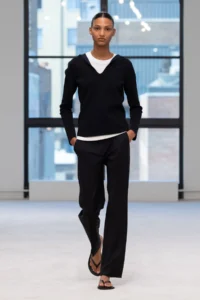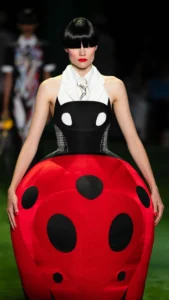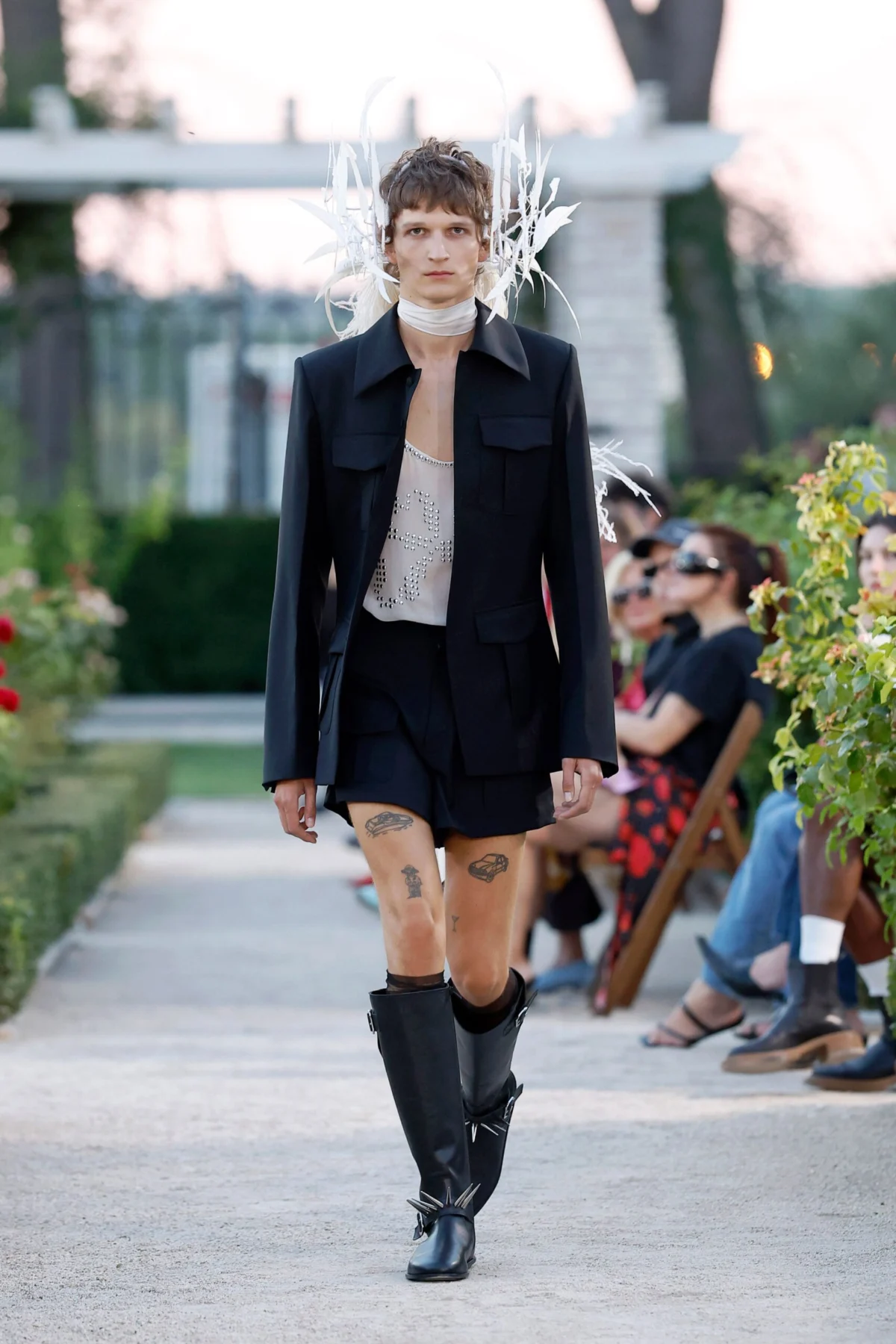
The intersection of literature, socio-cultural commentary, and high fashion reached a distinct pinnacle during the recent presentation of Palomo Spain’s latest collection, titled Arcadia. Held against the backdrop of international fashion week schedules, the runway show encapsulated the evolving vision of designer Alejandro Gómez Palomo, who has steadily built a reputation for dismantling entrenched sartorial norms. The most poignant accessory of the evening was not a leather handbag or a piece of statement jewelry, but a well-worn copy of Virginia Woolf’s landmark 1928 novel, Orlando. The book, celebrated for its exploration of a time-traveling protagonist who navigates centuries while transitioning fluidly from male to female, served as both a thematic blueprint and a literal prop carried by models. This literary touchstone provided a profound metaphor for Palomo’s ongoing mission to challenge and expand the boundaries of traditional menswear and emerging womenswear categories.
The presentation of Arcadia marked a significant milestone for the brand, arriving on the heels of Palomo’s official expansion into womenswear in June 2025. Over the years, the Spanish label has carved out a unique niche within the global fashion ecosystem by recontextualizing historical tailoring through a contemporary, gender-fluid lens. By integrating elements historically coded as strictly feminine—such as voluminous ruffles, delicate lace, intricate feather trims, and hyper-embellished silhouettes—into masculine wardrobes, Palomo Spain has positioned itself at the vanguard of a broader industry-wide movement away from rigid binary categorization. Arcadia sought to solidify this philosophy, offering a unified wardrobe where gender lines are blurred, yet individual garments retain distinct structural integrity.
Conceptual Framework and the Vision of Arcadia
To understand the trajectory of Arcadia, one must examine the foundational ethos established by Alejandro Gómez Palomo since the inception of his eponymous label. Speaking to press and buyers following the show, the designer elaborated on the conceptual architecture of the collection. "You know how I approach my universe and my designs, it’s always about this wonderful, beautiful, ideal society where everyone is glamorous and beautiful and we all live happily ever after in peace and everyone is welcome," Palomo explained. This utopian vision—manifested through shimmering textiles, theatrical silhouettes, and a palpable sense of theatrical joy—translates directly into the designer’s approach to garment construction.
The realization of this egalitarian universe, however, presents distinct commercial and creative hurdles. Balancing a historically menswear-centric core with a newly established womenswear division requires a delicate calibration of scale, proportion, and market positioning. Ready-to-wear categories demand a level of pragmatic wearability that can sometimes clash with the avant-garde tendencies of conceptual design. Yet, within Arcadia, Palomo navigated this tension by eschewing overthought gender divisions. Instead of simply resizing garments for different markets, the designer approached the collection with a gender-agnostic toolkit, utilizing cargos, rhinestones, and feathers as democratic embellishments accessible to all models regardless of presentation.
Chronological Evolution and Brand Trajectory
The journey of Palomo Spain from an underground breakout label to an internationally recognized fashion house mirrors the rapid shifts in the global luxury market over the past decade. Founded in Posadas, Córdoba, before relocating its primary operations to Madrid and showcasing internationally, the brand first gained critical acclaim for its subversive take on Spanish heritage, historical costume, and queer aesthetics.
Initially focusing exclusively on menswear, the brand disrupted traditional runway presentations by subverting historical garments such as Elizabethan ruffs, baroque doublets, and sweeping capes into modern, sensual silhouettes. This early success earned Palomo a spot on prestigious international shortlists, including the LVMH Prize, cementing his status as a designer to watch. The decision to formally introduce a womenswear line in June 2025 represented a calculated evolution. Rather than alienating his core consumer base, Palomo utilized the expansion to test the limits of cross-pollination between masculine and feminine tailoring. Arcadia represents the second major phase of this dual-gender strategy, demonstrating a more mature integration of techniques previously siloed within specific garment categories.
Material Innovation and Collection Highlights
A rigorous commitment to craftsmanship defined the physical execution of Arcadia. The collection’s primary design narrative centered on the elevation of casual classics through luxurious fabrications and meticulous embellishment techniques. Denim, a staple of modern ready-to-wear, received a couture-level intervention. Several key looks featured denim jeans adorned with rhinestone-couched feathers or intricate studs arranged in precise rose patterns, bridging the gap between utilitarian streetwear and high-end evening wear.
Tailoring also formed a cornerstone of the lineup. Palomo expressed particular pride in a trim women’s pantsuit and a sweeping bias-cut slip dress, both rendered in a vibrant, commanding shade of red that served as a visual anchor for the collection. These pieces showcased the designer’s technical proficiency in pattern-making, proving that behind the theatrical flourishes lies a deep understanding of structural fit and drape.
Simultaneously, the collection embraced over-the-top (OTT) aesthetics that have become signature elements of the Palomo Spain identity. One standout ensemble featured a fabric meticulously beaded with rows of fringed scallops, expertly paired with opulent velvet to create a rich textural dialogue. Feathers, long utilized by the designer to evoke avian grace and heightened drama, returned in abundance. While some industry critics noted that feather-heavy looks and accessories are beginning to feel like established house staples, their continued presence underscores Palomo’s refusal to dilute his maximalist aesthetic for the sake of minimalist trends.
Pushing the boundaries of classic silhouettes further, the collection introduced inventive layering techniques. A pink jacquard dress, featuring a strap that fell seductively off the shoulder, was worn layered over a studded white slip sharing the exact same silhouette. This clever double-layering provided a fresh, subversive take on traditional slip-dress styling. True to form, the collection also featured more provocative pieces, including a codpiece crafted from the same pink jacquard fabric—a polarizing accessory that encapsulated the brand’s penchant for theatrical provocation and historical cross-referencing.
Market Analysis and Industry Implications
The broader implications of Palomo Spain’s Arcadia collection extend far beyond the immediate confines of the runway, offering valuable insights into the current state of the global luxury market. As major fashion houses grapple with shifting consumer demographics—particularly the demand from Gen Z and millennial shoppers for transparency, inclusivity, and gender-fluid options—designers who authentically integrate these values are increasingly capturing market share.
Data from recent retail analytics reports indicate a steady upward trend in cross-gender shopping behaviors, with a growing percentage of consumers purchasing outside their traditional gender categories. By erasing the artificial barriers between men’s and women’s ready-to-wear, Palomo is positioning his brand at the forefront of this demographic shift. However, the commercial viability of such avant-garde designs remains a subject of ongoing discussion among fashion buyers and merchandising experts.
While red-carpet placements and viral runway moments—such as carrying Woolf’s Orlando—generate immense digital earned media value (EMV) and brand equity, translating runway pieces into commercially successful retail products requires careful inventory management. The inclusion of more accessible silhouettes, such as the tailored red pantsuit and the embellished denim offerings, suggests a strategic effort to balance high-concept artistry with accessible ready-to-wear sales.
Furthermore, Palomo’s commitment to artisanal techniques, such as hand-applied rhinestones and custom jacquards, highlights an industry-wide resurgence in valuing slow fashion and high-touch craftsmanship amidst an oversaturated fast-fashion landscape. As luxury conglomerates and independent labels alike search for distinct identities in a crowded global market, the distinct point of view offered by Palomo Spain serves as a reminder of the power of storytelling in fashion.
Broader Cultural Context and Literary Resonance
The invocation of Virginia Woolf’s Orlando within the framework of Arcadia connects the collection to a rich tradition of queer literary history and gender subversion. Written as an ode to Woolf’s lover, Vita Sackville-West, the novel tells the story of a poet who lives for over three centuries, mysteriously changing sex from man to woman halfway through the narrative. By embedding this text into the physical presentation of the show, Palomo contextualized his garments not merely as ephemeral items of clothing, but as wearable manifestations of identity, fluidity, and historical continuity.
This literary integration reflects a wider cultural shift wherein fashion increasingly borrows from high-art and academic discourses to validate its cultural standing. In an era where consumers seek authenticity and depth from the brands they support, narrative-driven collections like Arcadia resonate on a psychological level. The utopian society envisioned by Palomo—where glamour, peace, and acceptance are universal—acts as a comforting counter-narrative to contemporary geopolitical anxieties.
Conclusion and Future Outlook
As Palomo Spain continues to chart its course following the successful introduction of its womenswear division and the critical reception of Arcadia, the brand stands at a crucial crossroads. The challenge moving forward will involve scaling production and expanding global retail footprints without losing the distinct handcrafted quality and ideological fearlessness that defined its early years.
With Alejandro Gómez Palomo firmly at the helm, balancing commercial pragmatism with unbridled theatrical creativity, the label has demonstrated its resilience and adaptability. By treating clothing as a fluid medium for self-expression rather than a rigid set of rules dictated by biological binary, Palomo Spain is not only reflecting the cultural zeitgeist but actively helping to shape the future of international fashion. As the industry looks toward upcoming seasons, the blueprint established in Arcadia—one of inclusivity, luxurious detail, and literary depth—will undoubtedly serve as a benchmark for contemporary design.