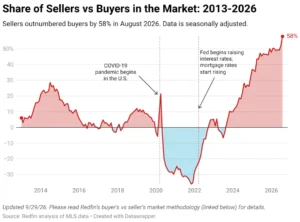
The residential construction sector has spent much of the year grinding through a resilient yet increasingly complicated housing market, forcing industry professionals to adapt their operational models to a landscape defined by cautious buyers and stubborn macroeconomic pressures. As the industry looks toward 2027 planning, homebuilders are discovering that the conventional playbook of relying on broad national benchmarks and high-volume traffic is no longer sufficient. Instead, success in today’s environment requires microscopic precision, leaning on localized data, targeted financial incentives, and a granular understanding of the modern homebuyer’s financial profile.
Market Realities and the Evolution of Builder Incentives
Throughout the late spring and summer months, prospective buyers demonstrated a pronounced tendency to sit on the sidelines, paralyzed by persistent affordability concerns and a broader sense of economic uncertainty. To combat this hesitation and stimulate demand, homebuilders have been forced to sweeten the pot aggressively. Standard sales strategies now heavily incorporate mortgage rate buydowns, direct price discounts, and substantial closing-cost concessions to coax fence-sitters into taking action.
This challenging backdrop has fundamentally altered the math of sales and marketing. During periods of abundant demand, builders could safely rely on high-level metrics such as gross web traffic, preliminary leads, and traditional absorption rates targeting three to five sales per community per week. Today, however, conversion depends entirely on micro-metrics: identifying the specific subset of households possessing both the financial means and the urgent motivation to move, tracking their individual buying journeys, and securing commitments on a single-sale basis.
Exclusive data shared by Audience Town, a specialized marketing platform partnering with residential developers, illuminates the realities of this discounting environment. Analyzing more than 201,000 closed transactions across 25 distinct housing markets during the 12-month period ending in August 2026, the research highlights the widespread nature of price concessions. On average, builders across every analyzed market sold properties below the initial asking price, though the depth and frequency of these discounts varied dramatically by region.

Regional Disparities and the Mechanics of Discounting
The geographical variance in homebuilder discounting underscores how localized economic drivers dictate housing health. At one end of the spectrum, Kansas City demonstrated relative stability, with only 47% of homes selling below asking price. Conversely, Celina, Texas—a booming northern suburb of Dallas—recorded a staggering 92% of homes selling below list price, matching its status as the slowest-moving market analyzed, with a median sales timeline of 105 days.
Celina’s particular struggles highlight the vulnerability of hyper-growth submarkets to sudden regulatory shifts. Having previously established itself as a magnet for high-income immigrant households, the area was disproportionately impacted by federal restrictions on H-1B visas. Builders who had heavily forecasted a continuous stream of H-1B visa buyers suddenly found themselves facing a severely diminished buyer pool and a glut of standing inventory, precipitating widespread price reductions.
Beyond local supply-demand imbalances, market composition plays a pivotal role in pricing pressure. Metropolitan areas with higher concentrations of large, publicly traded homebuilders typically exhibit deeper discounting. Public builders possess the balance sheets and financial flexibility to absorb margin hits via rate buydowns and large-scale incentives, effectively establishing the baseline market price and creating severe headwinds for smaller, private regional builders trying to compete in the same footprint.
Interestingly, Texas markets consistently defied broader national trends regarding builder mix. Even within suburban enclaves where national builders comprised at least 60% of the market footprint, Texas properties were far more likely to experience price cuts. Just 6% of new homes in these Texas submarkets sold at or above asking price, compared to 27% in similar markets outside the state. Furthermore, 80% of Texas inventory saw discounts of 5% or more, contrasting sharply with a 41% discount rate elsewhere, a trend largely attributed to the sheer volume of master-planned development underway north of Dallas and west of Houston.
Demographic Realities: Equity and Savings Empower Buyers

Understanding who is actually buying homes in this environment requires looking past traditional qualification metrics like household income. Comprehensive buyer data compiled by Audience Town, tracking nearly 47,400 recorded transactions across seven markets and thousands of community tours through September 2026, challenges common assumptions about contemporary purchasers.
Contrary to the narrative of first-time buyers stretching their finances to the absolute limit, the modern new-home purchaser is overwhelmingly an established homeowner. More than 90% of buyers analyzed already owned real estate, with 45% having resided in their previous home for a decade or longer. Nearly half of these buyers held previous homes valued between $250,000 and $500,000, representing substantial accumulated equity ranging from $100,000 to $300,000. This built-up equity pool serves as the primary engine for mobility, leaving debt-burdened first-time buyers uniquely strained in the current rate environment.
Income metrics alone proved similarly incomplete when evaluating purchasing power. While nearly half of all buyers reported annual household incomes below $100,000, roughly one-third boasted a net worth exceeding $1 million, and 22% reported a net worth north of $2.5 million. Combined with strong credit profiles—76% of buyers possessed credit scores above 690—accumulated savings and equity meant that approximately one-third of purchasers could comfortably afford homes priced above $1 million, despite only 12% previously owning property in that bracket.
Furthermore, visitor behavior analysis revealed that actual community tour participants possessed significantly higher wealth and income than casual website browsers. Over half of touring households owned property valued at $500,000 or more, compared to only one-third of engaged web traffic. Similarly, 40% of physical tour participants earned over $150,000 annually, underscoring the necessity for builders to filter marketing spend toward high-intent, financially qualified prospects.
Hyper-Local Migration and the Erosion of the Lock-In Effect
Despite sweeping national migration narratives, the transaction data reveals that homebuying remains an intensely local phenomenon. Relocation analysis across multiple markets indicated that the vast majority of buyers originated from within the same state, frequently hailing from neighboring zip codes or the immediate metro area. In Celina, Texas, 91% of buyers originated from adjacent communities within the state. Similarly, 86% of Kansas City buyers remained within their local metro, and even in rapid-growth Florida retirement hubs like Port St. Lucie, 72% of purchasers originated from within Florida.

This localized mobility occurs against the backdrop of the persistent lock-in effect. With 30-year fixed mortgage rates hovering around 7.0%, millions of homeowners who secured historically low rates between 2% and 4% during the pandemic era have been reluctant to list their properties. However, Audience Town’s dataset indicates that this psychological barrier is gradually wearing down under the weight of life changes. Among recent buyers, nearly 25% relinquished a mortgage rate between 2% and 3%, and another 25.8% surrendered a rate between 3% and 4%. Combined, nearly half of recent movers willingly traded a sub-4% mortgage to secure a new home, driven by personal or professional necessity.
Strategic Implications and Marketing Precision for 2027
For homebuilders charting their operational strategies for 2027, the operational imperative is clear: precision marketing and a deep understanding of the buyer’s timeline. Data indicates that prospective buyers spend between 76 and 159 days in the passive research phase before committing to a physical community tour. However, once a tour is completed, transactions typically close within weeks, identifying the site visit as the ultimate conversion milestone.
Digital discovery channels remain vital for initial awareness, with organic search driving nearly 46% of initial website visits. As prospects progress closer to a purchase decision, direct traffic surges significantly, highlighting the importance of sustained brand equity and retargeting efforts. Additionally, the rapid ascent of AI-assisted discovery platforms—which saw monthly user sessions climb drastically over the past year, engaging roughly 95% of builders—signals a technological shift that marketing teams can no longer ignore.
As residential developers confront lingering macroeconomic headwinds, including elevated interest rates, persistent material and labor cost pressures, and broader consumer hesitation, strategic focus remains the ultimate differentiator. By moving away from generalized national assumptions and embracing hyper-local, household-level data analytics, homebuilders can successfully identify motivated buyers, optimize their incentive deployment, and efficiently navigate the housing landscape of 2027.