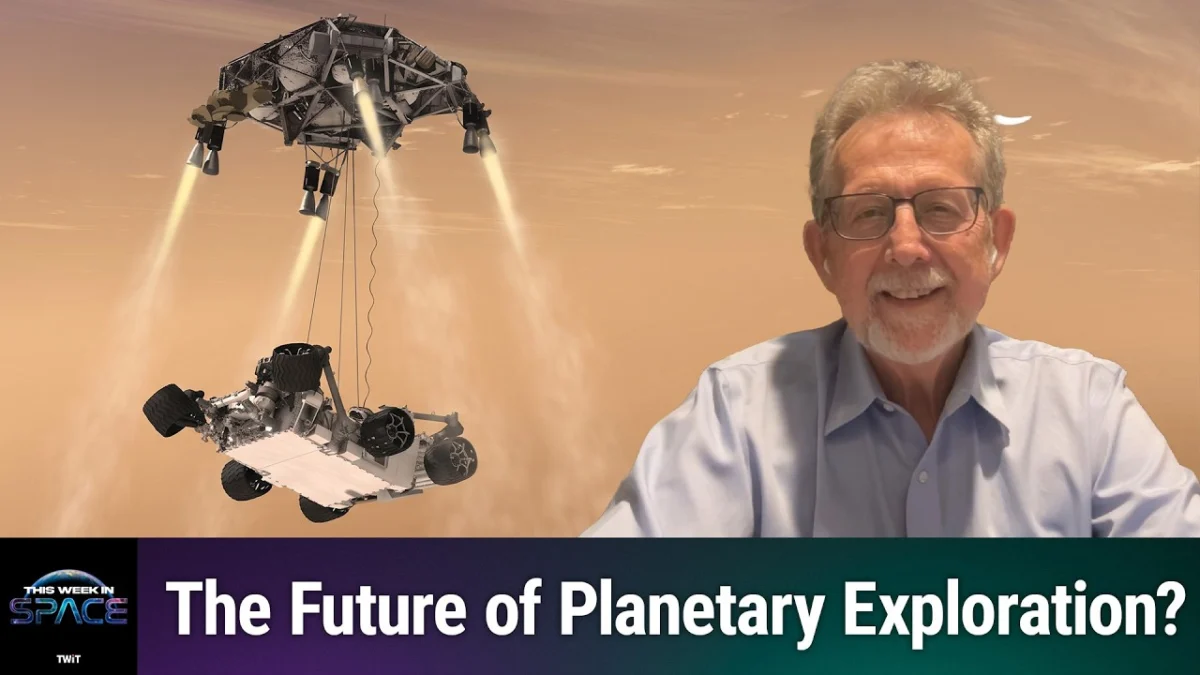
The landscape of planetary exploration has fundamentally shifted over the past several decades, transitioning from brief, fleeting flybys to deeply immersive, robotic campaigns that brave the harshest environments in our solar system. On Episode 235 of the popular podcast This Week in Space, veteran space journalists and hosts Tariq Malik and Rod Pyle welcomed Dr. Jim Green, former Chief Scientist at NASA, to dissect the historical evolution, current operational status, and extraordinary future of deep-space reconnaissance. The episode offers a profound look at how autonomous mechanical emissaries have paved the way for humanity, operating where human physiology simply cannot survive, and brings to light compelling discussions about the imminent possibility of discovering extraterrestrial life.
For decades, robotic spacecraft have served as humanity’s primary vanguard. Whether plunging into the crushing atmospheric pressures of gas giants, withstanding the searing heat profiles of inner planets, or drilling beneath the frozen crusts of distant icy moons, automated systems bear the brunt of cosmic hostility. Dr. Green, who spent a distinguished career at NASA overseeing many of these high-stakes scientific initiatives, brings an insider’s perspective to the dialogue. During his tenure, NASA’s science missions expanded in both ambition and technological sophistication, driven by an unwavering passion to answer fundamental questions about our place in the universe. According to Dr. Green, humanity is now closer than ever to detecting definitive biosignatures beyond Earth, a milestone that could profoundly alter our understanding of biology and existence.
The Evolution of Planetary Robotics: A Historical Chronology
To fully understand the current golden age of interplanetary exploration, one must examine the chronological milestones that transformed rudimentary probes into sophisticated, AI-driven science laboratories.
The era of deep-space robotics effectively began in the early 1960s with the Mariner and Ranger programs. These initial missions were plagued by high failure rates, reflecting the immense technological hurdles of communicating across millions of miles of vacuum and radiation. However, persistence paid off when Mariner 4 successfully flew past Mars in 1965, returning humanity’s first close-up images of another world.
As engineering matured, the 1970s ushered in the Viking landers on Mars and the monumental Voyager 1 and Voyager 2 grand tour of the outer planets. The Voyagers demonstrated the viability of nuclear power sources (Radioisotope Thermoelectric Generators) in deep space, allowing instruments to function far beyond the asteroid belt where solar energy becomes negligible.
By the late 1990s and 2000s, mobility became the primary focus. The deployment of the Mars Pathfinder mission and its tiny Sojourner rover opened the door for increasingly complex mobile laboratories, culminating in Spirit, Opportunity, Curiosity, and Perseverance. Concurrently, robotic orbiters like Cassini-Huygens at Saturn and Juno at Jupiter unlocked the complex dynamics of gas giant magnetospheres and discovered subterranean oceans on moons like Enceladus and Europa.
Key Insights from Dr. Jim Green on Extraterrestrial Life
Dr. Green’s extensive background gives him a unique vantage point on the search for life. During his conversation on This Week in Space, he emphasized that modern astrobiology no longer asks if organic precursors or micro-fossils exist elsewhere in the solar system, but rather where we will find them first.
Mars remains a primary candidate, particularly given the accumulating evidence that the Red Planet once harbored a thick atmosphere, extensive surface water, and hydrothermal systems capable of sustaining primitive organisms. The Perseverance rover’s ongoing mission to cache core samples for a future Mars Sample Return campaign represents the absolute cutting edge of this search.
Beyond Mars, the focus has increasingly shifted toward the ocean worlds of the outer solar system. Moons such as Jupiter’s Europa and Saturn’s Enceladus possess global subsurface oceans containing more liquid water than all of Earth’s oceans combined. Maintained by tidal heating from their parent planets, these dark, pressurized, and chemically rich environments are prime targets for future robotic submersibles designed to melt through miles of ice sheets.
Bringing Space Exploration Home: The Estes Falcon 9 Scale Model
For space enthusiasts eager to connect with the modern aerospace renaissance on a tangible level, the market now offers unprecedented opportunities for hands-on participation. Model rocket manufacturer Estes has recently introduced a meticulously detailed, launchable scale model of SpaceX’s iconic Falcon 9 rocket.
Retailing at $149.99, the model serves as both an educational tool and a tribute to the commercial spaceflight revolution that has drastically reduced the cost of reaching orbit. Designed to mimic the aesthetic and structural proportions of the operational workhorse, the model allows hobbyists to experience a fraction of the thrill associated with modern orbital class launches. Through a partnership with space history platform collectSPACE.com, enthusiasts can acquire the kit with a 10% discount by utilizing the checkout code IN-COLLECTSPACE.
The Broader Impact and Implications of Modern Space Science
The dialogue between Malik, Pyle, and Dr. Green underscores a broader cultural and scientific shift. We are currently living through the "New Space Age," characterized by a hybrid ecosystem of government-led scientific exploration and agile commercial enterprise. Agencies like NASA continue to push the boundaries of pure science and deep-space reconnaissance, while private entities like SpaceX drive down launch costs, enabling a democratized approach to rocketry and payload delivery.
The implications of finding microbial life off-Earth—a prospect Dr. Green considers increasingly probable—cannot be overstated. Philosophically, it would prove that life is not a unique anomaly confined to a single pale blue dot, but a common cosmic occurrence wherever the right chemical and thermal conditions intersect. Economically and technologically, the rigorous engineering required to send resilient robots into dark, cold, and high-radiation environments invariably yields terrestrial spinoff technologies that improve life on Earth, ranging from advanced water purification systems to autonomous navigation algorithms.
About the Hosts and the Podcast
This Week in Space continues to serve as an essential audio destination for those tracking the rapid developments of the contemporary space sector. Recorded weekly on Friday afternoons, the show breaks down complex aerospace achievements into engaging, accessible discussions.
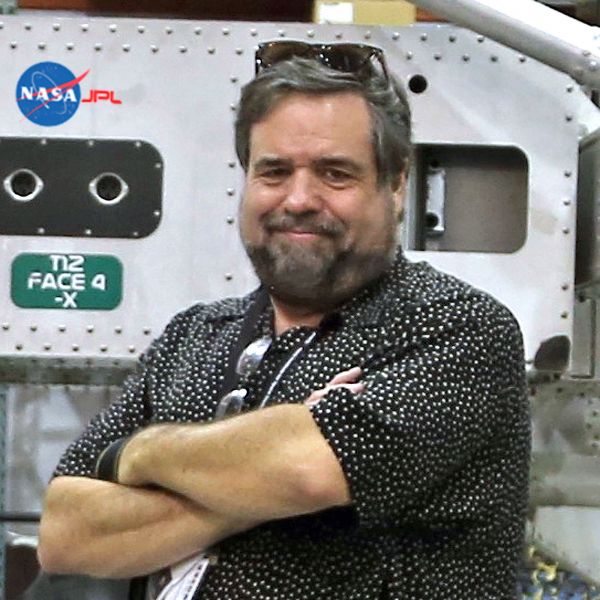
Rod Pyle, Editor-in-Chief of Ad Astra magazine and author of 18 books on space history and technology—including Space 2.0, Innovation the NASA Way, and Interplanetary Robots—brings deep historical context to the program. Alongside him is Tariq Malik, Editor-in-Chief of Space.com, who has spent over two decades chronicling human spaceflight, astronomy, and exploration. Together, they provide listeners with an authoritative, balanced, and deeply enthusiastic view of humanity’s ongoing expansion into the cosmos.
As robotic pathfinders continue to descend into craters, orbit distant icy worlds, and transmit unprecedented data back to Earth, programs like This Week in Space ensure that the public remains closely connected to the unfolding story of our solar system. Whether through launching a model Falcon 9 in a local park or pondering the discovery of subsurface oceans, the human drive to explore the dark and scary places of the universe remains as potent as ever.