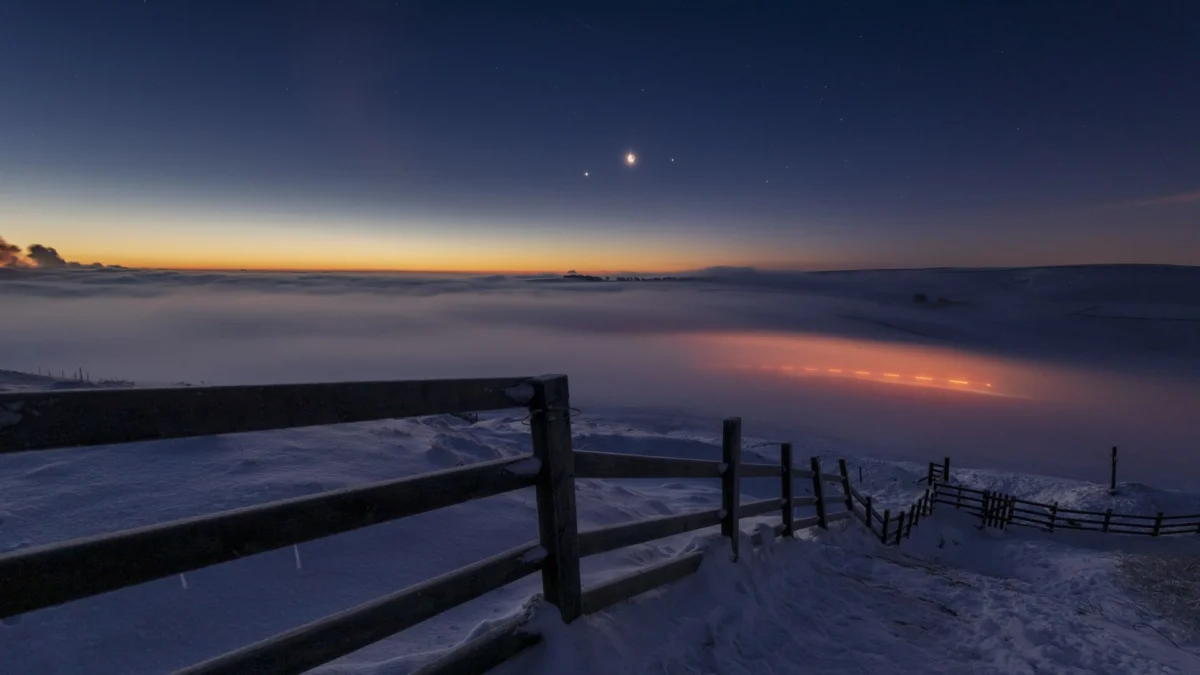
Commuters and early morning risers across the globe have recently been greeted by an unfamiliar yet striking spectacle in the east-southeast predawn sky. Low on the horizon, a brilliant, star-like object has emerged with such intense luminosity that it frequently commands the attention of anyone traveling eastward before sunrise. For those unfamiliar with the celestial calendar, the sudden appearance of this radiant beacon has sparked brief moments of confusion, with some mistaking the phenomenon for a passing aircraft, a satellite, or even an unidentified flying object.
However, astronomers and stargazers quickly identify the brilliant visitor: the planet Venus. Following a recent orbital transition, Earth’s planetary neighbor has embarked on one of its most prominent and dazzling morning displays in recent memory. Far from being a mysterious anomaly, this brilliant morning star is executing a predictable yet breathtaking celestial choreography that will continue to captivate observers through the winter months.
The Orbital Mechanics Behind the Radiance
To understand why Venus has suddenly burst into the morning sky with such overwhelming brilliance, one must examine the mechanics of our solar system. Venus orbits the sun closer to our star than Earth does, completing a full revolution every 225 days. Because of this inner orbit, Venus frequently passes between Earth and the sun, a positioning known as inferior conjunction.
On October 24, Venus reached this precise milestone. During an inferior conjunction, the planet transitions from appearing in our evening sky—where it is often visible as the "evening star" shortly after sunset—to slipping between our planet and the sun, eventually emerging on the opposite side as the "morning star."
During this transition, Venus moves relatively quickly from the perspective of Earth-bound observers. While it was hidden from view in the solar glare during late October and early November, it has rapidly vaulted upward into the predawn sky. Because the planet is currently positioned relatively close to Earth in its orbital path, its sunlit hemisphere faces us more directly with each passing day, amplifying its apparent size and brightness.
A Chronology of the Ascent
The visibility of Venus over the coming weeks follows a well-documented astronomical timeline, offering progressively longer windows for stargazers and casual observers alike.
In the immediate aftermath of its October conjunction, Venus rose virtually simultaneously with the sun, rendering it invisible against the daytime solar glare. By mid-November, however, the planet had widened its angular separation from the sun, rising more than 90 minutes before dawn.
This window of visibility is expanding rapidly. Astronomers note that Venus is currently advancing its rising time by approximately three minutes each morning. This steady progression means that by mid-December, the planet will breach the eastern horizon nearly four hours before sunrise. Crucially, this early emergence allows Venus to shine brightly in a completely dark sky for more than two hours before the first pale traces of morning twilight begin to wash out fainter background stars.
The pinnacle of this morning apparition will occur on November 29, when Venus reaches its peak brilliance. On this date, the planet will shine at an extraordinary magnitude of -4.9. To put this into perspective, stellar magnitude is measured on an inverse logarithmic scale, where lower numbers indicate brighter objects. At magnitude -4.9, Venus will appear roughly 12 times brighter than Jupiter—the next brightest planet in the sky—and a staggering 25 times more dazzling than Sirius, the brightest individual star in the night sky.
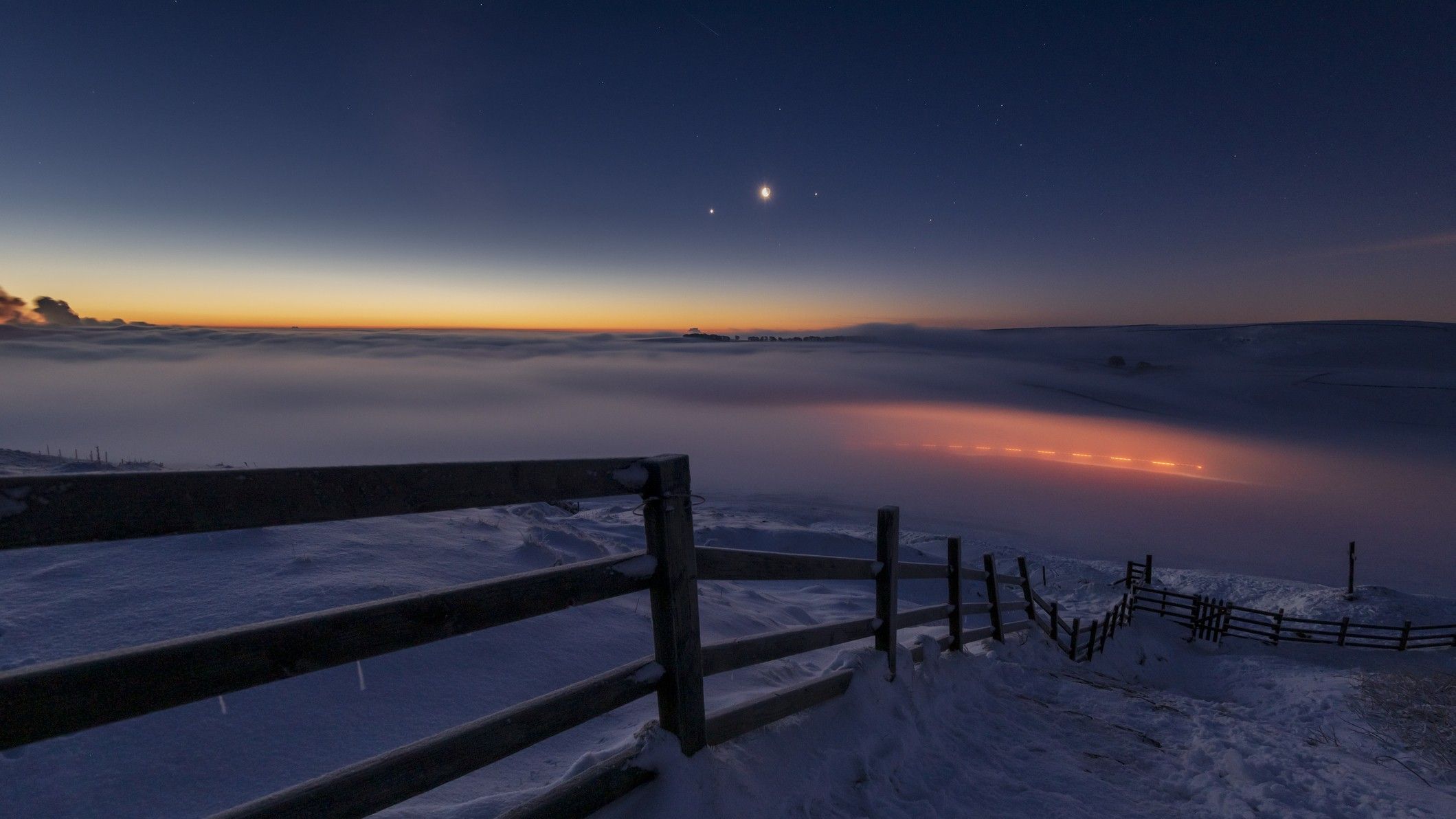
Under pristine dark-sky conditions, far from urban light pollution, the light emitted by Venus during its peak brilliance is strong enough to cast faint, discernible shadows on the ground. Furthermore, observers with sharp eyesight who track the planet past dawn can continue to spot the tiny, brilliant white speck against the bright blue canvas of the daytime sky.
Historical Context and Cultural Significance
The sudden, commanding presence of Venus in the predawn sky has historically inspired awe, mythology, and religious interpretation. Throughout human history, the planet’s dual identity as both the morning star and the evening star led ancient civilizations to believe they were observing two distinct celestial bodies—such as Hesperus in the evening and Phosphorus in the morning among the ancient Greeks, though they eventually realized both referred to the same entity.
In modern times, the timing of Venus reaching high visibility during the late autumn and early winter months frequently draws comparisons to the biblical "Christmas Star" described in the Gospel of Matthew. While the historical identity of the Star of Bethlehem remains a subject of debate among astronomers and historians—with various theories pointing to planetary conjunctions, comets, or supernovae—bright conjunctions and standalone planetary appearances like the current Venus display frequently evoke these ancient narratives for modern observers.
The Inevitable Descent: What Lies Ahead
In astronomy, what ascends must eventually descend. The current morning dominance of Venus is not permanent, and the planet’s trajectory will shift dramatically in the new year.
After reaching its maximum western elongation and peak morning visibility in mid-December, Venus will begin a long, gradual retreat back toward the vicinity of the sun. Beginning around New Year’s Day and continuing through late March, the planet will rise roughly one and a half minutes later each morning.
By the arrival of spring, Venus will no longer enjoy hours of dark-sky prominence; instead, it will break the horizon just as dawn is breaking, approximately 100 minutes before sunrise. This progressive delay will continue through the late spring and summer months. By June, Venus will rise less than an hour before the sun, eventually becoming entirely swallowed by the brilliant solar twilight by July.
Following its disappearance into the glare of the sun next summer, Venus will enter a brief sabbatical from Earth’s evening and morning skies before re-emerging late next year to begin a magnificent new evening apparition.
Implications for Stargazers and Public Engagement
For professional and amateur astronomers alike, bright apparitions of Venus offer an invaluable opportunity to engage the public in observational science. Astronomical societies and planetariums frequently field inquiries from the public regarding unusually bright celestial objects. Events like the current Venus ascent serve as a primary gateway for public interest in astronomy, prompting casual observers to look upward, question what they see, and learn more about orbital mechanics.
For educators such as Joe Rao, a veteran meteorologist, eclipse chaser, and lecturer at New York’s Hayden Planetarium, these celestial alignments provide a practical bridge between theoretical science and everyday experience. Whether dispelling brief rumors of unidentified flying objects or explaining the precise mathematics of planetary phases, the luminous presence of Venus reminds the public of the dynamic, clockwork nature of our solar system.
As the weeks progress toward late November and December, observers are encouraged simply to look to the east-southeast horizon before dawn. No specialized equipment, telescopes, or binoculars are required to appreciate the spectacle; the naked eye is more than sufficient to witness one of the solar system’s most dazzling natural light shows.