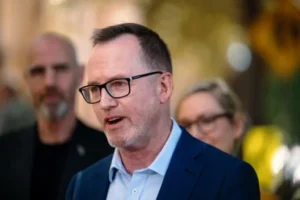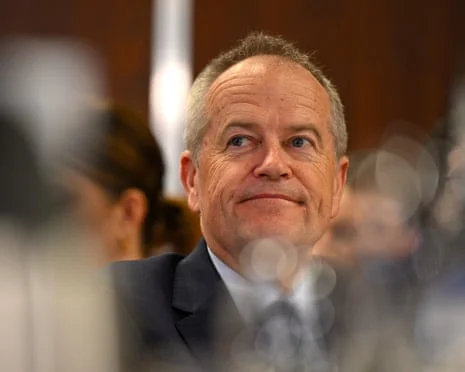
Australia’s diplomatic engagement with China, the rising influence of populist parties, and critical domestic policy debates around taxation, public health, and industry regulation have dominated recent national discourse. Foreign Affairs Minister Penny Wong engaged in significant talks with her Chinese counterpart, Wang Yi, in Manila, while back home, NSW Premier Chris Minns grappled with the electoral challenge posed by One Nation and controversial issues like tobacco excise. Meanwhile, discussions around a gas export tax and intensified scrutiny of gambling industry practices highlighted the government’s pressing economic and social agenda.
Geopolitical Tensions and Australian Diplomacy in the Indo-Pacific
Australia Navigates Complex Sino-Philippine Dynamics Amid Regional Security Concerns
Australia’s Foreign Affairs Minister, Penny Wong, held her twelfth bilateral meeting with Chinese Foreign Minister Wang Yi on the sidelines of the ASEAN foreign ministers’ gathering in Manila. This engagement, confirmed by a statement from her department, underscored the ongoing efforts to stabilise the complex relationship between Australia and its largest trading partner, following a period of strained ties. The discussions centred on crucial ASEAN priorities and the imperative of maintaining peace and stability across the Indo-Pacific region, a vast strategic area vital for global trade and security.
During the extensive dialogue, Minister Wong conveyed Australia’s profound concerns regarding China’s recent test of a nuclear-capable submarine-launched missile earlier this month. This specific test, believed to have occurred in the South Pacific, drew widespread condemnation and highlighted escalating military capabilities in the region. Wong explicitly noted the strong concerns articulated by numerous Pacific island nations, for whom such developments represent a direct challenge to their security and the broader regional equilibrium. These nations, often caught between competing geopolitical interests, view any expansion of military presence or capabilities by major powers with apprehension, fearing the potential for increased instability and militarisation in their backyard.
Beyond the missile test, Minister Wong also addressed a range of pressing consular issues. Prominently featured was the case of Dr. Yang Jun, an Australian writer and academic detained in China since 2019 on espionage charges, whose health has been a significant concern. Australia has consistently advocated for transparent legal processes and access to medical care for Dr. Yang. Wong further stressed the fundamental importance of upholding Australia’s laws, respecting national sovereignty, and safeguarding freedom of expression – principles often at odds with China’s domestic policies. Discussions also covered the need for safe and professional maritime conduct, particularly pertinent given increasing incidents in disputed waters, and broader human rights considerations, reflecting Australia’s commitment to these universal values.
The Manila meeting occurred against a backdrop of heightened regional tensions, particularly in the South China Sea. Just prior to the Wong-Wang talks, Minister Wong sharply criticised China’s "destabilising and dangerous conduct" following a direct confrontation between Chinese and Philippine vessels at the Second Thomas Shoal. This incident, reported by AFP, involved the Philippine military accusing the China Coast Guard of using a baton to club a Filipino sailor during a resupply mission to a grounded Philippine naval vessel, the BRP Sierra Madre, which serves as a long-standing Philippine garrison. The clash prompted both the Philippines and China to summon each other’s ambassadors, with Philippine President Ferdinand Marcos meeting China’s envoy to Manila to register his nation’s strong protest.

The Second Thomas Shoal, a submerged reef claimed by both nations, lies within the Philippines’ exclusive economic zone but is also claimed by China as part of its expansive nine-dash line. Such altercations are increasingly frequent in the heavily patrolled waterway, where multiple nations hold overlapping territorial claims, intensifying calls for adherence to international law, particularly the United Nations Convention on the Law of the Sea (UNCLOS).
The United States, a key ally of both Australia and the Philippines, swiftly condemned Beijing’s "dangerous and aggressive actions." US Secretary of State Marco Rubio, in an opinion piece published in Philippine media outlets, unequivocally heralded Washington’s unwavering commitment "to freedom of navigation in Southeast Asia." Rubio’s commentary served as a powerful reaffirmation of the US defensive umbrella in the region, cautioning against any single power asserting control over these vital maritime routes. He warned that if these waters were to "fall under the control of a power willing to use trade as a geopolitical weapon," both the United States and the ASEAN states would face "serious new threats to their sovereignty, security, and economic future," an apparent allusion to China’s growing regional assertiveness and economic leverage.
This intricate web of diplomatic exchanges and military posturing highlights Australia’s delicate balancing act: maintaining a constructive dialogue with China while firmly asserting its national interests, upholding international law, and supporting regional partners against coercive actions. The Indo-Pacific remains a critical theatre for these geopolitical dynamics, with Australia playing a crucial role in advocating for a stable, rules-based order.
Domestic Political Landscape: One Nation’s Rise and Labor’s Response
NSW Premier Minns Confronts One Nation Threat, Calls for Policy Rethink
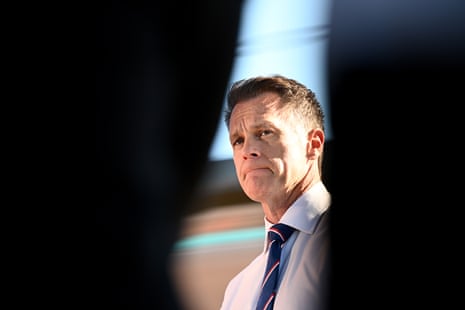
On the domestic front, the political landscape in New South Wales is showing signs of shifting, with Premier Chris Minns voicing significant concerns over the growing influence of the One Nation party. Speaking on ABC Radio National, Minns candidly stated that the state’s Labor party perceives itself "under threat" from One Nation’s surge in popularity, asserting, "we’ve got to fight for those votes."
Minns addressed the sensitive question of whether One Nation constitutes a "racist party," acknowledging a distinction between the party’s leadership and its supporters. He stated that individuals with legitimate concerns about immigration levels are not necessarily racist. However, he did not shy away from directly criticising specific statements made by One Nation leader Pauline Hanson, particularly her infamous comment that "there’s no such thing as a good Muslim." Minns characterised such remarks as "definitely racist," adding, "how else do you characterise that? You’ve got to be straight with people. And that clearly is." Despite this, he reiterated his belief that not "everyone who’s supporting them currently is racist at all," underscoring the complexity of voter motivations.
The Premier outlined Labor’s strategy to counter One Nation’s appeal, emphasising the need to articulate that "there are no easy answers in a difficult economic environment, particularly as a result of geopolitical fights around the world." This approach aims to demonstrate empathy for struggling voters while offering pragmatic solutions rather than simplistic, often divisive, rhetoric. Minns explicitly acknowledged, "I think that we are under threat in a whole bunch of seats as a result of the surge of votes for One Nation," indicating a tangible electoral challenge. In response, he affirmed that NSW Labor is "doing some what we regard as practical commonsense changes to policy in New South Wales" to address voter concerns directly.
The recent increase in One Nation’s support, particularly after events like the Bondi terror attack and amidst global economic uncertainty, signals a broader disaffection among segments of the Australian electorate. This trend presents a significant challenge for mainstream parties like Labor, who must navigate a path that addresses genuine voter anxieties without legitimising or amplifying extremist views.
Political Veterans Cast Doubt on One Nation’s Long-Term Appeal
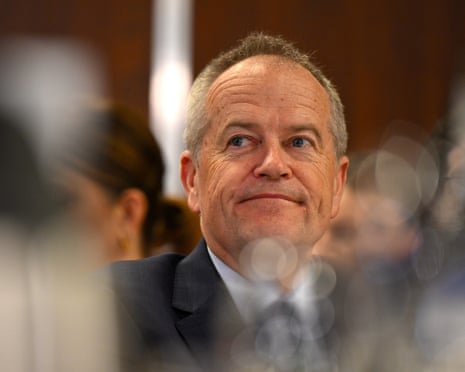
Adding another layer to the discussion on One Nation’s trajectory, political veterans Bill Shorten and Christopher Pyne, despite their historical partisan disagreements, found common ground in questioning the long-term staying power of Pauline Hanson’s party. Appearing on ABC’s 7.30 program, both former leaders expressed skepticism that One Nation would maintain its currently high poll numbers by the next federal election.
Bill Shorten, a former Labor leader and current University of Canberra vice-chancellor, posited that while many voters are "sick of the system" and looking to One Nation, their motivations differ from the party’s core "rusted-on hardline true believer vote of the past." Shorten suggested that the current 30% support indicated in some polls might not translate into actual votes if these voters become "perturbed by dusting off the bones of a White Australia policy" – a reference to Hanson’s controversial comments and her past alignment with figures like the UK extremist Tommy Robinson during a recent trip to Europe.
Christopher Pyne, a former Liberal minister in various Coalition governments, echoed Shorten’s sentiment, agreeing that increased scrutiny on One Nation, driven by its surge in popularity, would likely temper voter enthusiasm. Pyne stated, "I don’t believe by election day [people] will be voting for One Nation in the numbers that are currently being seen in the polls," indicating that public opinion often solidifies closer to an election as voters weigh the full implications of their choices.
The discussion also touched upon the potential for political realignment, particularly concerning former Nationals leader Barnaby Joyce. Pyne speculated on Joyce’s future, noting his "colourful appearance" on the program earlier in the week and the ongoing speculation about how he might reconcile with Hanson’s increasingly controversial stances. Pyne remarked, "Barnaby can do almost anything. Nothing would surprise me – if he went back to the National party, especially now that David Littleproud is not the leader – I don’t have any inside information, but nothing would surprise me if this continues with some of these less mainstream comments being made." This suggests that Hanson’s rhetoric could create divisions even among populist-leaning figures, potentially driving some back to more traditional conservative parties.
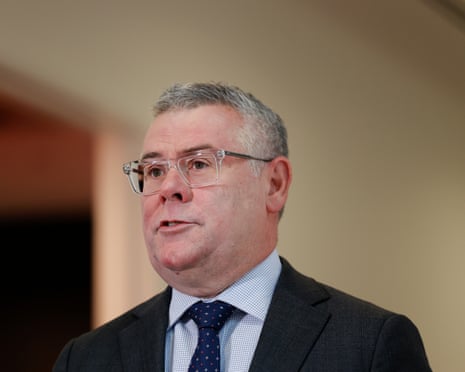
Further criticism of Hanson came from Minister for the Environment and Water, Murray Watt, who questioned the funding of her recent "luxury trip" to Europe and the UK, which included a fashion show with billionaire Gina Rinehart and downtime in Sicily. Watt publicly demanded transparency from Senator Hanson regarding who financed the trip, stating, "I think Senator Hanson does owe it to Australians to come clean about who has funded this luxury trip… It’s almost as if she’s got a guilty conscience about who has paid for this trip." More pointedly, Watt argued that Hanson’s priorities demonstrated she is "not on the side of working people," given that she was "undertaking a luxury trip overseas with a billionaire at the same time that she’s voting to cut the wages and cut cost-of-living relief for the battler she says she cares about." This criticism sought to highlight a perceived hypocrisy between Hanson’s populist image and her actions, potentially eroding her appeal among the very voters she claims to represent.
Economic and Regulatory Debates Shaping Australia
Calls for Gas Export Tax Resurface Amidst Cost-of-Living Pressures
Australia’s economic policy landscape is seeing renewed debate over resource taxation, specifically a potential tax on gas exports. Bill Shorten, leveraging his platform as University of Canberra vice-chancellor and former Labor leader, vocally supported the government enacting such a tax, asserting a "national appetite" for it. The discussion, stemming from "rumours" that Labor might revisit this "once very popular issue," reflects ongoing public concern about the cost of living and the perceived disparity between corporate profits and community benefit.
Shorten argued that "the time had arrived to consider reviewing the taxation on gas," especially given that "the government’s paring back on things like the NDIS." He highlighted a common sentiment: "But I think there’s a lot of people saying, what about the gas companies? And I think the timing for a future gas tax, not one which rips up previous contracts, that would be sovereign risk." This crucial distinction underscores a desire to avoid retrospective policy changes that could deter future investment, while still seeking to increase public revenue from highly profitable industries. Shorten articulated the public’s view: "Aussies are saying, how is it fair that gas companies are making such a big profit and why don’t they share more of it with the people? So I think probably the time is right to have that discussion." This aligns with broader calls from groups like the manufacturing union, which recently declared Australia’s tax system "rigged" in a manifesto ahead of the Labor conference, pushing for reforms that ensure a fairer distribution of wealth generated from national resources.
NSW Premier Flags "Too High" Tobacco Excise Amid Illicit Market Boom
Another significant economic and public health policy debate emerged with NSW Premier Chris Minns challenging the current level of tobacco excise. During his appearance on ABC Radio National, Minns acknowledged the Australian Border Force’s ongoing efforts to disrupt illicit tobacco supply chains, a concern amplified by NSW Labor’s Health Minister Ryan Parks, who on Tuesday noted the issue had "gotten away from authorities" and demanded "more needed to be done."
While affirming that NSW was "doing a lot" and had implemented "massive increases" in fines, Minns contended that the root cause lay with the "too high" tobacco excise. He argued, "It feels sometimes like we’re standing on a beach trying to stop the tide from coming in… The drive to illicit tobacco in Australia is being driven by the massive excise on legal cigarettes and it’s… driving otherwise lawful people into an illicit black market." The Premier highlighted the unintended consequences: "It’s making cheap cigarettes available and plentiful, particularly for young people, and it’s fuelling organised crime in Australia." Minns preemptively addressed potential criticism, clarifying, "Before people jump on me and say, that means that you’re pro-smoking. I’m not. I can’t stand the tobacco companies, but this is just a policy that’s not working."
This statement sheds light on a complex public health dilemma where a policy designed to deter smoking through high taxation might inadvertently empower organised crime and increase access to unregulated, potentially more harmful, products. Recent data supports this concern, with "nicotine use soar[ing] by 40% in eight years as [the] Australian black market explodes," as highlighted in a related report. This situation forces a re-evaluation of how best to achieve public health goals while mitigating the adverse effects of an expanding illicit trade.
Gambling Giant TAB Slapped with Multi-Million Dollar Fine for Marketing Breaches
Regulatory enforcement also made headlines, with Tabcorp Holdings Limited (TAB) facing substantial penalties for widespread breaches of spam and telemarketing laws. The Australian Communications and Media Authority (ACMA) levied over $2.7 million in fines against the gambling giant for conduct spanning from February 2024 to June 2025.
ACMA’s investigation uncovered multiple violations, including 351 telemarketing calls made to numbers listed on the Do Not Call Register without consent, 82 calls conducted outside permitted hours, and nearly 4,000 calls where TAB failed to properly identify itself as the caller. The regulatory action was initiated after TAB itself self-reported in 2025 that it had sent more than 217,000 marketing emails and texts within a mere fortnight to customers who had explicitly unsubscribed from such communications.
Samantha Yorke, an ACMA authority member, unequivocally condemned TAB’s conduct, stating it was "unacceptable." She emphasised the fundamental right of individuals to control unwanted marketing: "When people join the Do Not Call Register or unsubscribe from marketing messages, they are making a clear choice. Those choices must be respected – especially given the heightened risks of financial loss and psychological harm from gambling marketing." Yorke concluded that "the scale and range of these breaches point to serious weaknesses in TAB’s compliance systems," a concern magnified by the fact that this marks ACMA’s second spam enforcement action against TAB in less than two years, indicating a pattern of non-compliance.
This regulatory crackdown occurs amidst broader calls for more stringent gambling reforms in Australia. Minister Murray Watt, while defending the Labor government’s existing "most far reaching" reforms on gambling, acknowledged "disquiet" within the party’s rank and file for further action, such as the establishment of a national gambling regulator. Watt hinted at potential discussions at the upcoming Labor party national conference, stating, "I don’t want to pre-empt the conference. There’ll be people who’ll say a range of things about these sorts of issues, but I do think it needs to be recognised that the government has taken some very serious action already." This suggests an ongoing tension between the government’s current policy and the demands for more comprehensive, perhaps federally driven, regulatory oversight to protect vulnerable individuals from gambling-related harm.
In sum, Australia faces a multi-faceted policy agenda, navigating the complexities of international diplomacy and regional security while simultaneously confronting pressing domestic challenges that range from electoral shifts and public health dilemmas to economic equity and corporate accountability. The coming months will undoubtedly test the government’s ability to address these diverse and often interconnected issues effectively.