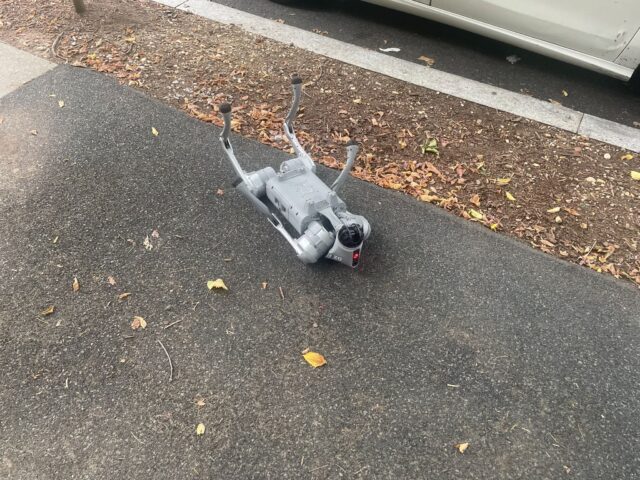
The journey from the suburbs of Mount Pleasant to the vicinity of the White House covered roughly two miles, a distance that the quadruped handled with relative ease during the morning. However, the return trip in 87-degree Fahrenheit weather proved to be the ultimate stress test. By the time the robot approached its destination, it was struggling to maintain its footing. With internal sensors reporting a critical temperature of 183 degrees Fahrenheit and a battery hovering at five percent, the unit experienced a total loss of power, collapsing on the pavement. This failure highlighted the disparity between the high-speed agility showcased in marketing videos and the grueling demands of real-world environmental variables.
The Rise of the Affordable Quadruped
To understand why a company like Unitree has risen to such prominence, one must look at the economics of robotics. For decades, the field of legged locomotion was dominated by high-cost, high-complexity machines like those developed by Boston Dynamics. Their legendary platforms, such as the hydraulic BigDog and the early iterations of Spot, were marvels of engineering but were priced for military or specialized industrial use—often costing upwards of $75,000.
Unitree, founded by Wang Xingxing in 2016, pivoted sharply from this model. By leveraging electric motors and a modular design, the company sought to "democratize" the technology. The release of the Go1 in 2021 signaled a sea change, offering a functional quadruped for under $3,000. The current Go2 line continues this trajectory, with models starting as low as $1,600. For an investment of approximately $4,000, users now have access to a platform capable of complex maneuvers like handstands, leaps, and advanced navigation, which would have been unthinkable for private individuals just ten years ago.
Engineering Philosophy: Simplification and Standardization
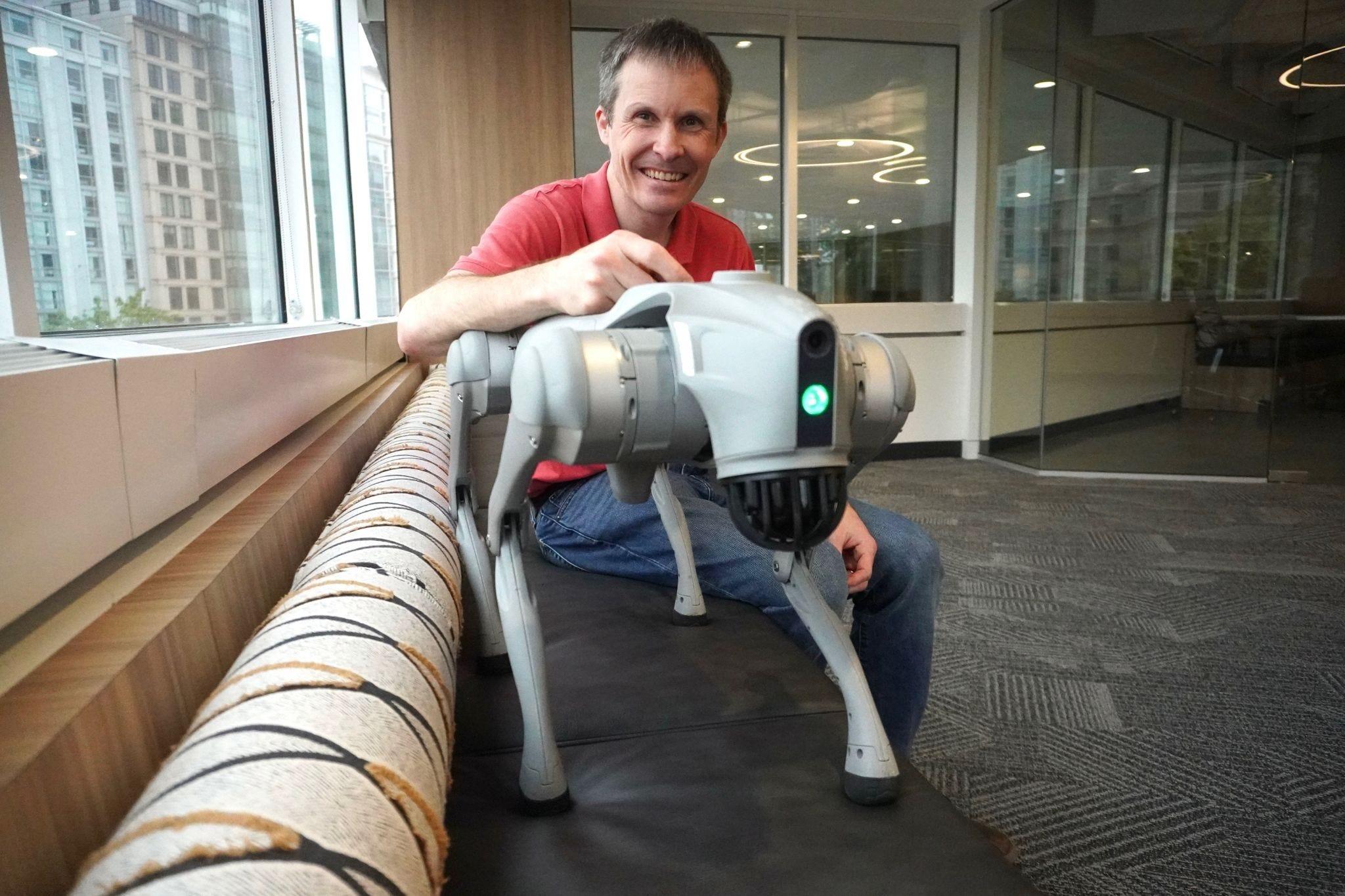
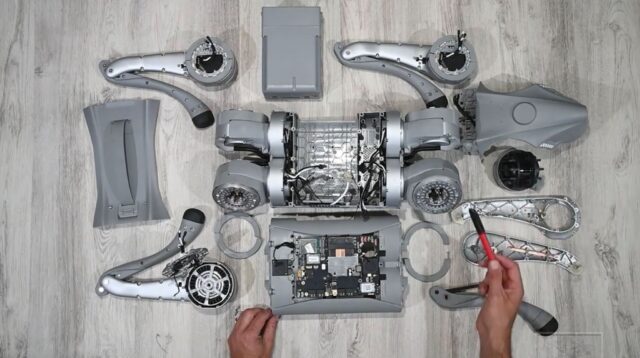
The secret to Unitree’s price point lies in aggressive component standardization. Mechanical engineers who have dismantled the Go2 units, such as those at the firm Simplexity, have noted that the robot utilizes 12 identical motors for its legs. This reuse of parts reduces manufacturing complexity, lowers inventory costs, and simplifies the supply chain.
Furthermore, Unitree’s design philosophy eschews the extreme gear ratios found in traditional industrial robots. While high gear ratios—like the 51:1 ratios seen in some Boston Dynamics joints—provide immense precision, they are expensive and complex. Unitree utilizes a 6.33:1 gearbox, which prioritizes backdriveability and nimbleness over absolute static rigidity. This choice makes the robots more dynamic and easier to train through simulation, allowing the software to compensate for any lack of mechanical precision. This "software-first" approach to hardware is a hallmark of modern tech manufacturing, mirroring the strategies that allowed companies like DJI to dominate the drone market.
From Quadruped to Humanoid
Unitree’s success in the quadruped market has served as a powerful springboard into the humanoid sector. In 2023, the company launched its first humanoid, the H1, followed rapidly by the G1. While a quadruped might rely on 12 motors, a G1 humanoid utilizes 23 or more, requiring a higher degree of complexity and power management.
Financial data underscores the velocity of this shift. In 2024, Unitree’s quadruped revenue sat at roughly $34 million. By 2025, that figure had climbed to $104 million. In that same timeframe, humanoid revenue saw an eightfold increase, jumping from $16 million to $129 million. Humanoid robots now represent the majority of the company’s total revenue, signaling that the industry is moving past the "novelty" phase of robot dogs and toward the serious development of bipedal assistants.
Geopolitical Tensions and Market Restrictions
The rapid growth of Unitree has not gone unnoticed by global policymakers. As the company’s influence expands, so does the scrutiny regarding its ties to Chinese state policy and the potential for dual-use technology. In June 2026, bipartisan legislation was introduced in the U.S. House of Representatives specifically aimed at restricting the importation of Chinese-manufactured robots, explicitly citing Unitree. Subsequently, the Federal Communications Commission (FCC) introduced broad regulations targeting foreign-made robotics, citing national security concerns related to the AI integration and data collection capabilities of these machines.
This regulatory environment creates a fragmented global market. Similar to the trajectory of the electric vehicle industry, where Chinese leaders like BYD face significant barriers in the United States while continuing to dominate in international markets, the robotics sector may see a similar divergence. If the U.S. effectively shuts out low-cost, high-capability Chinese robots, it risks a "robotics gap" where domestic industries are shielded but lose the competitive pressure that drives rapid innovation and cost reduction.
The Future of Autonomous Labor
Despite the technical "rough edges"—the buggy apps, the occasional uncontrolled thrashing, and the heat-induced collapses—the trajectory of the robotics industry seems clear. The "flywheel" effect is in full swing: increased sales volume drives down unit costs, which allows for deeper investment in R&D and automated manufacturing.
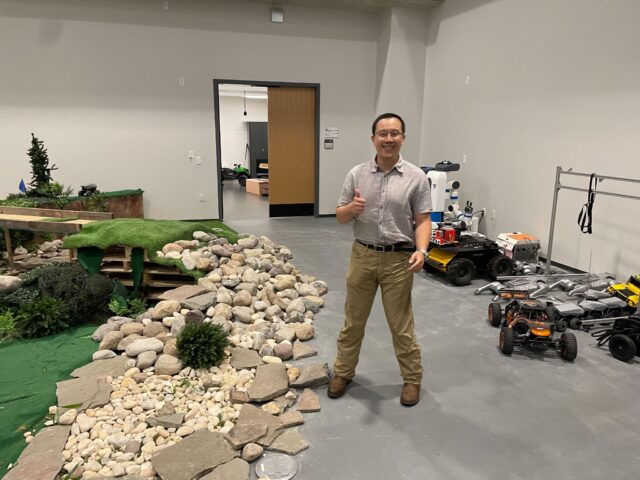
Professor Xuesu Xiao of George Mason University, who maintains a fleet of these robots in his lab, notes that Unitree’s contribution has fundamentally altered the research landscape. "Ten years ago, only a very small set of research groups were working on quadruped locomotion," Xiao observed. By putting hardware into the hands of thousands of researchers and hobbyists, the company is accelerating the collective intelligence of the field.
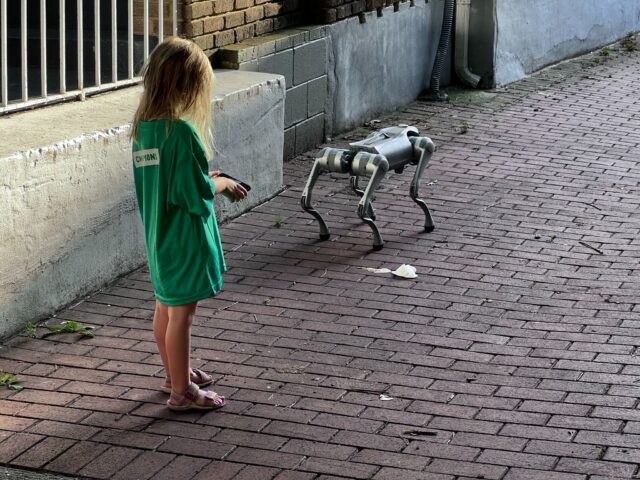
While current robots like the Go2 Pro may not be able to fetch the newspaper or reliably perform chores around the house, they represent the "Phantom 1" era of their industry. Just as the first consumer drones were clunky, limited, and lacked features like GPS stabilization or long battery life, they were the necessary precursor to the modern, ubiquitous drone. Unitree’s current generation of robots serves a similar purpose. They are the testbeds for a future where autonomous machines move freely in our environments. Whether they are eventually permitted to operate in the United States or remain a global phenomenon outside of Western borders, the era of affordable, legged robotics has undeniably arrived.