The 2026 Antarctic ozone hole has expanded to its largest extent in ten years, ranking as the seventh-largest observed in the 48-year satellite record. Despite the dramatic physical scale of the depletion, which at its peak covered more than twice the landmass of the United States, atmospheric scientists from NASA and the National Oceanic and Atmospheric Administration (NOAA) confirm that the global ozone layer remains on a steady, long-term trajectory toward recovery. The significant expansion observed in 2026 was not the result of a sudden spike in ozone-depleting emissions, but rather the consequence of an unusually stable and powerful polar vortex that locked cold air over the Southern Hemisphere, creating the perfect conditions for chemical degradation.
A Chronology of the 2026 Event
The 2026 ozone season began with standard seasonal expectations, but atmospheric dynamics soon diverged from the norm. As spring arrived in the Southern Hemisphere, the ozone hole began to manifest at a slower, more typical pace compared to the rapid, early-season holes of the late 20th century. However, by mid-September, the situation shifted. On September 18, 2026, the hole reached its maximum annual extent, covering 10.5 million square miles (27.1 million square kilometers).
Throughout the peak period, spanning from September 7 to October 13, the average area of the hole remained at a staggering 9.6 million square miles. This duration of sustained depletion highlights the persistence of the polar vortex throughout the 2026 spring season. By mid-October, localized measurements at the South Pole Baseline Atmospheric Observatory recorded the season’s lowest ozone concentration at 105 Dobson units—a stark reminder of the fragile state of the stratosphere over the Antarctic continent.
The Mechanism of Destruction: Understanding the Polar Vortex
To understand why the 2026 hole reached such proportions, one must look to the stratospheric polar vortex. This large-scale circulation of winds acts as a containment vessel for the Antarctic atmosphere. During a typical year, planetary-scale weather systems—large atmospheric waves originating in the lower atmosphere—migrate upward and break against the vortex, effectively "heating" the stratosphere and breaking up the circulation.
In 2026, these wave actions were notably weak throughout August and September. The resulting lack of disruption allowed the polar vortex to remain unusually cold, expansive, and stable. Inside this "cold trap," temperatures dropped low enough to facilitate the formation of polar stratospheric clouds (PSCs). These clouds provide the physical surface necessary for chemical reactions that convert inactive, human-made chlorine and bromine compounds into highly reactive, ozone-destroying forms. Without the typical atmospheric "mixing" to warm the region, these destructive reactions were able to persist across a much larger geographic area than is common in the current decade.
Data Analysis: The Role of International Regulation
While the physical size of the 2026 hole is alarming, scientific analysis suggests the situation would be significantly more dire without the intervention of the 1987 Montreal Protocol. This landmark international treaty has successfully phased out the production and consumption of ozone-depleting substances (ODS), such as chlorofluorocarbons (CFCs) and halons.
According to data provided by Paul Newman, chief scientist for Earth Sciences at NASA’s Goddard Space Flight Center, the 2026 ozone hole would have been approximately 1 to 2 million square miles larger had the concentration of chlorine and bromine in the atmosphere remained at year 2000 levels. By comparing current atmospheric samples with historical data, NOAA scientists have confirmed that the total concentration of ozone-depleting chlorine in the stratosphere has declined by roughly one-third compared to the peak levels observed in the 1980s. This reduction is the cornerstone of the recovery process, proving that global environmental policy can have a measurable, positive impact on planetary health.
Methodology and Measurement: How Scientists Track the Hole
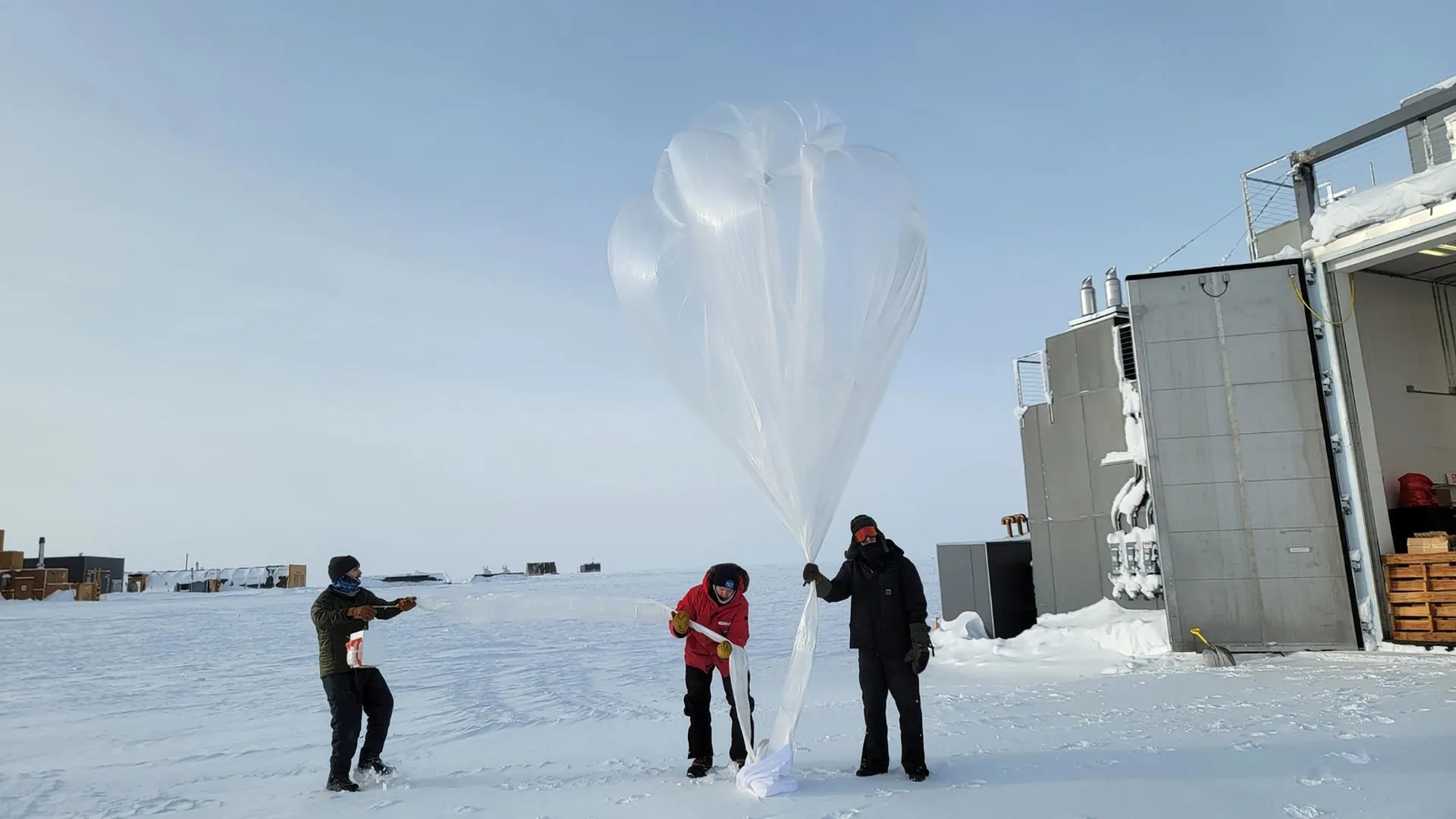
The monitoring of the ozone layer is a high-precision, multi-layered scientific effort. NOAA researchers utilize a combination of ground-based and aerial technology to maintain a continuous data stream. Instruments attached to weather balloons launched from the South Pole provide vertical profiles of ozone concentrations, while the Dobson Ozone Spectrophotometer remains the "gold standard" for measuring the total column amount of ozone.
The Dobson unit, named after Gordon Dobson, a pioneer in ozone research, quantifies how much ozone exists in a column of air from the ground to the top of the atmosphere. A reading of 100 Dobson units, if compressed to sea-level pressure, would result in a layer only 1 millimeter thick. When the hole forms, these values drop precipitously. While the 2026 low of 105 Dobson units is well above the historic record low of 92 Dobson units recorded in 2006, it serves as a critical data point for calibrating global climate models.
Furthermore, the data is augmented by a fleet of satellites, including NASA’s Aura, NOAA-20, NOAA-21, and the Suomi National Polar-orbiting Partnership. These orbital sensors provide the expansive "top-down" view necessary to track the total area of the hole on a daily basis, allowing for a comprehensive understanding of how ozone depletion correlates with satellite-observed changes in temperature and wind patterns.
Implications for the Future
The 2026 event serves as a reminder that the recovery of the ozone layer is not a linear process. It is subject to the inherent variability of Earth’s complex weather systems. Scientists emphasize that the formation of a large ozone hole in any given year does not signal a failure of environmental protections, but rather highlights the long residence time of ozone-depleting substances. Many of the chemicals released in the late 20th century remain trapped in the atmosphere and will take decades to fully degrade.
The "sunscreen" function of the ozone layer is critical to life on Earth. By absorbing the majority of the sun’s harmful ultraviolet (UV) radiation, the ozone layer prevents widespread DNA damage in plants, animals, and humans. The increase in UV exposure associated with the 2026 expansion was primarily contained within the Antarctic region, but the global significance of the event remains a subject of intense study.
Looking ahead, the consensus among atmospheric researchers is one of cautious optimism. The Montreal Protocol remains one of the most successful environmental agreements in history. Projections from the Scientific Assessment Panel of the Montreal Protocol indicate that, barring any major volcanic eruptions or unforeseen atmospheric anomalies, the Antarctic ozone layer is on track to return to 1980 levels by approximately 2070.
A Global Commitment to Atmospheric Health
The 2026 ozone hole episode underscores the importance of continued, vigilant monitoring. The collaboration between NASA and NOAA represents a global commitment to environmental stewardship. By integrating observational data with rigorous scientific analysis, these agencies provide the objective evidence required for policymakers to continue the phase-out of remaining ozone-harming chemicals.
The resilience of the stratosphere, while challenged by natural atmospheric variability, is slowly being restored. The fact that the 2026 hole did not reach the extreme depletion levels of the early 2000s—despite having a comparable geographic size—is a testament to the success of international environmental law. As the world continues to move away from legacy chemicals and toward sustainable industrial practices, the periodic, weather-driven expansions of the ozone hole are expected to become less frequent and less intense, ultimately leading to the full healing of the Earth’s protective shield later this century. The event serves as both a warning of the lingering impacts of past human activity and a hopeful sign that coordinated global action remains the most effective tool in managing the planet’s future.