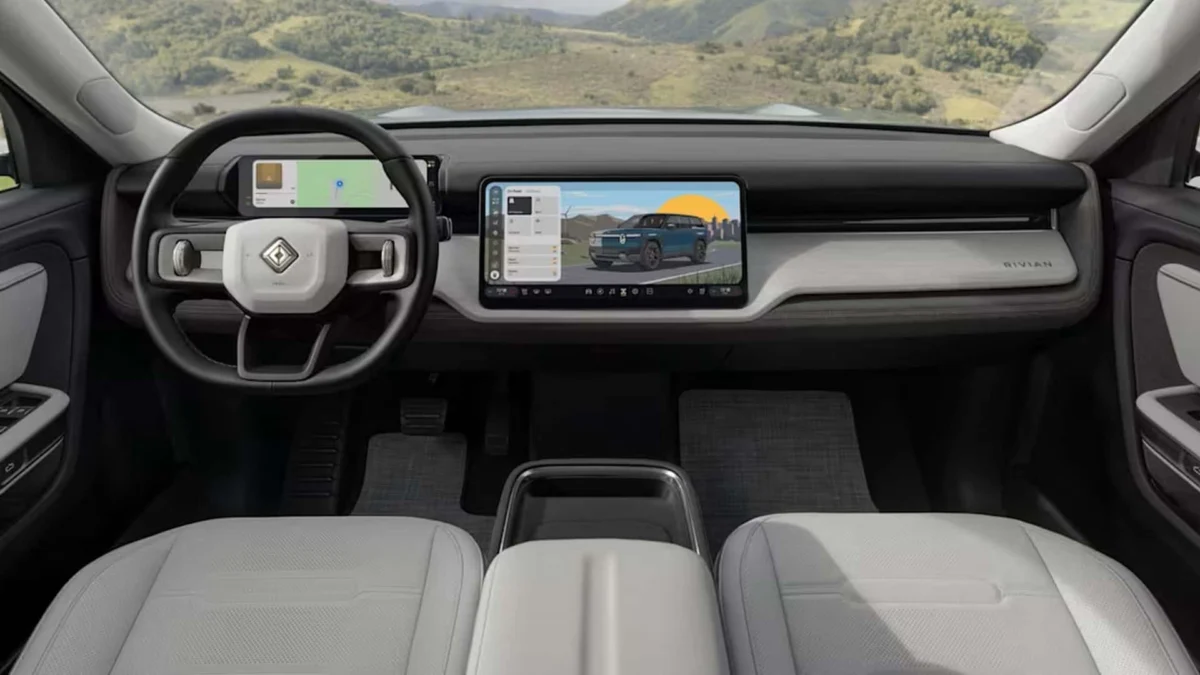
The rapid ascent of artificial intelligence is fundamentally reshaping the global technology landscape, triggering a massive surge in demand for high-performance computing hardware. While this shift promises a new era of generative AI and automated systems, it has created an unexpected and costly ripple effect for the automotive sector. Rivian, the Irvine-based electric vehicle startup, finds itself at the center of this transformation, struggling to balance its ambitious production goals for the upcoming R2 platform against a tightening market for essential electronic components.
As the industry pivots toward software-defined vehicles, the reliance on advanced semiconductors and passive components has reached unprecedented levels. Rivian’s leadership has acknowledged that the insatiable appetite for data center infrastructure—driven by tech giants like Microsoft, Google, and Amazon—is absorbing a disproportionate share of the global supply of memory chips and circuit-board materials. This market dynamic has forced the EV maker to rethink its procurement strategies, shifting from viewing hardware components as simple commodities to treating them as critical, high-stakes strategic assets.
The Anatomy of a Modern Supply Chain Crisis
In a recent dialogue with venture capital firm Kleiner Perkins, Rivian CEO RJ Scaringe and Chief Hardware Officer Vidya Rajagopalan offered a candid look at the complexities of scaling automotive production in an era of technological scarcity. For many years, components such as DRAM (Dynamic Random Access Memory) and multi-layer ceramic capacitors (MLCCs) were considered low-cost, readily available parts that required little oversight. Today, these components represent a significant vulnerability.
“Hardware is hard in ways that I think people don’t fully appreciate until you’re in it,” Scaringe remarked during the interview. The complexity of a modern vehicle, which requires thousands of suppliers working in tandem, means that a shortage of even the smallest component can bring a production line to a standstill.
The issue is not merely one of manufacturing capacity, but of allocation. Semiconductor manufacturers are currently prioritizing high-margin orders from AI data center operators over the automotive industry. Because AI servers require massive amounts of high-bandwidth memory (HBM) and standard DRAM to process large datasets, chipmakers have redirected their production lines to maximize profits. This strategic pivot has created a vacuum for automotive manufacturers, who are now competing against the world’s most capitalized tech firms for the same silicon real estate.
A Chronology of Industry-Wide Disruption
The current friction between the AI boom and the automotive sector did not happen overnight. The timeline of this supply chain evolution can be traced back to the post-pandemic recovery, where chip shortages initially crippled global vehicle output.
- 2021–2022: The automotive industry suffered from a severe shortage of legacy microcontrollers, leading to millions of lost vehicle production units globally.
- 2023: As the generative AI boom took hold, investment in massive GPU clusters and data centers surged. This triggered a new phase of the shortage, focusing specifically on memory and advanced logic chips.
- Early 2024: Companies such as Li Auto, General Motors, and Ford began reporting significant supply tightness regarding DRAM and NAND flash memory.
- Mid-2024: Major automotive players, including Ford and GM, formalized long-term supply agreements with manufacturers like Micron to secure future capacity, signaling that these shortages are expected to persist for the foreseeable future.
- Present: Rivian is actively re-engineering its procurement workflows to protect the profitability of its upcoming R2 vehicle, which carries a critical $45,000 base price target.
Broad-Scale Impact: Beyond the EV Startup
Rivian is far from the only company feeling the pressure. The trend of rising hardware costs has permeated the consumer electronics and automotive sectors alike. Apple, in its most recent quarterly reports, noted that memory costs were a primary factor in pricing adjustments for its computing hardware. Similarly, Chinese automaker Li Auto officially disclosed in regulatory filings that the volatility in memory prices posed a direct risk to their smart cockpit and autonomous driving development schedules.
For the automotive industry, the transition to "Software-Defined Vehicles" (SDVs) means that cars now require computing power comparable to small servers. As vehicles become more autonomous and feature-rich, the amount of memory and the number of passive components required for circuit boards increase exponentially. When the price of these "commodity" parts rises, the margin on every vehicle sold is compressed.
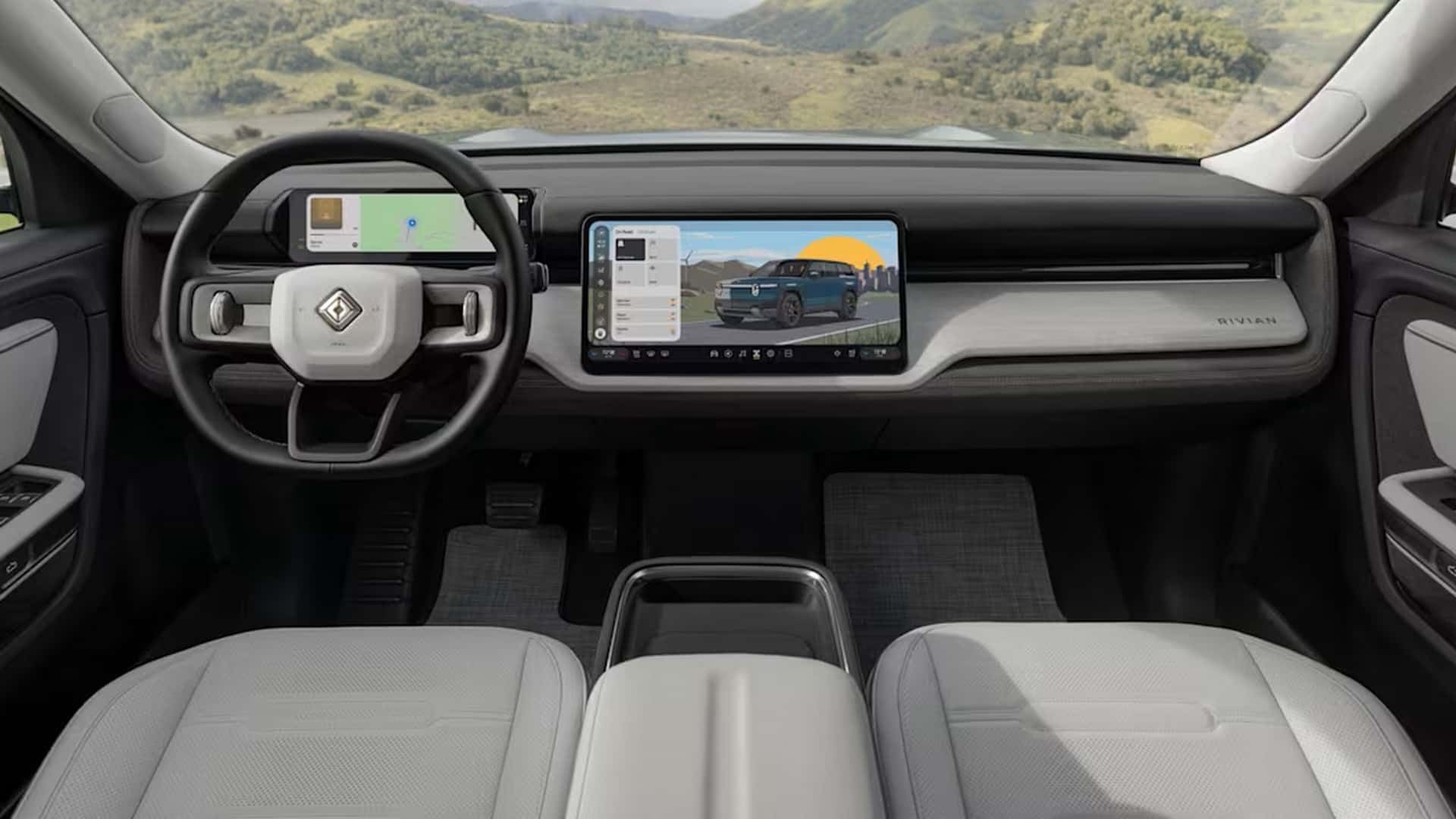
For Rivian, the stakes are particularly high. The company is currently preparing for the launch of the R2, a mid-size SUV intended to bring the brand to a broader market segment. Keeping the price at $45,000 is central to their strategy to scale, yet the rising cost of electronics threatens that mission.
Technological Response: In-House Innovation
In response to these supply chain pressures, Rivian is doubling down on vertical integration. Rather than remaining entirely dependent on third-party hardware, the company is developing its own proprietary computing solutions. Central to this effort is the Rivian Autonomy Processor (RAP1), which is designed to power the R2’s advanced driver-assistance systems.
By designing its own silicon and compute modules, such as the Autonomy Compute Module 3, Rivian aims to optimize its hardware footprint. According to Vidya Rajagopalan, this approach allows for more efficient use of board space and component integration, potentially reducing the total count of capacitors and other sensitive parts needed for the vehicle’s central nervous system.
"We deal with this all the time, supply chain shortages, it’s a bane of our existence," Rajagopalan said. She highlighted that even secondary materials, such as the e-glass used in printed circuit boards, have become points of failure. The strategy now involves not just buying parts, but understanding the raw material dependencies of every board-level component.
The Road Ahead: Balancing Ambition and Reality
The challenge for Rivian is twofold: it must advance its AI capabilities to remain competitive with incumbents like Tesla and legacy OEMs, while simultaneously managing the inflationary pressures caused by the very tech sector it seeks to emulate.
The integration of advanced lidar sensors and the RAP1 chip represents a leap forward in automotive intelligence. However, the success of these features depends on the consistent, cost-effective delivery of the hardware that powers them. As the industry moves into 2025, analysts expect that successful automakers will be those who can best navigate the "hardware-software" divide—securing supply lines while simultaneously designing products that are less reliant on volatile, high-demand commodity chips.
Rivian’s current predicament serves as a microcosm for the broader industrial challenge of the mid-2020s. As the world becomes increasingly digital, the "physical" costs of that digital infrastructure—the chips, the glass, the capacitors—will continue to influence the price and availability of everything from consumer smartphones to electric vehicles. For now, the leadership at Rivian remains focused on strategic planning, long-term procurement, and in-house innovation as the primary tools to survive a market defined by an insatiable hunger for compute.
The outcome of this struggle will not only define the launch trajectory of the R2 but will also set a benchmark for how automotive startups can thrive in an economy where the boundary between a car company and a technology firm has effectively disappeared. Whether the company can maintain its price targets while simultaneously pushing the boundaries of autonomous performance will be the defining test for Scaringe and his team in the coming fiscal year.