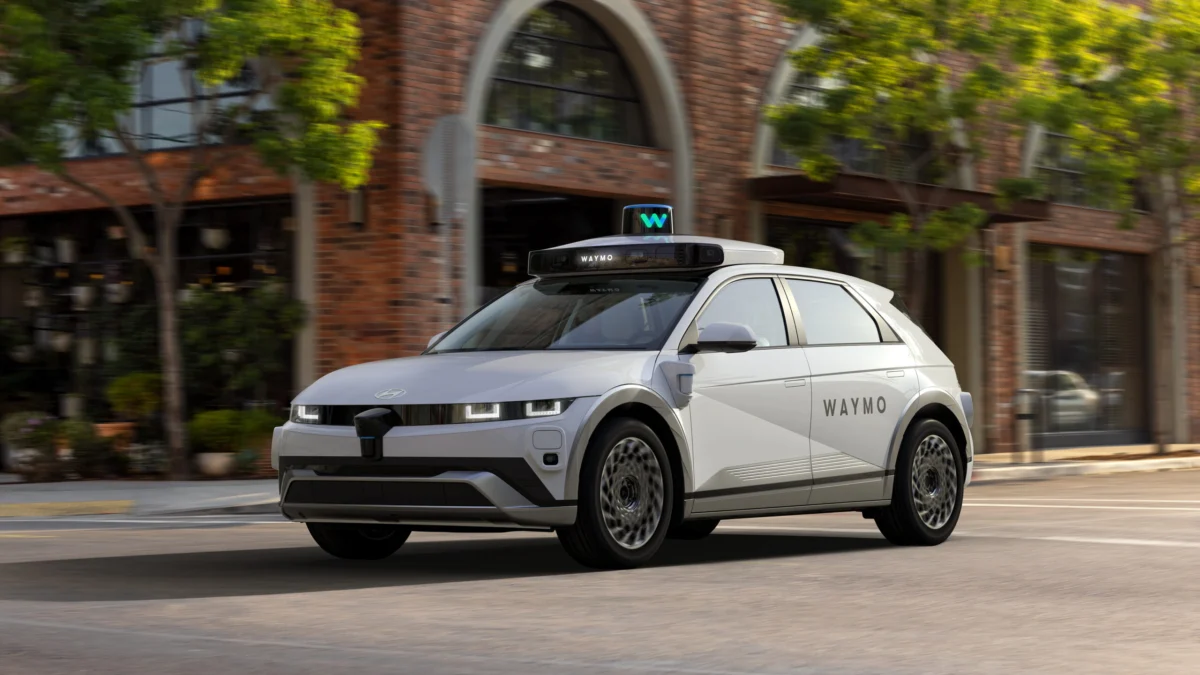
As the automotive industry pivots toward an era of full autonomy, the British public remains distinctly wary of the technology that promises to redefine urban mobility. A recent comprehensive study conducted by the global polling firm YouGov reveals that the United Kingdom stands as the most sceptical nation among eight major economies regarding the adoption of self-driving vehicles. While the global conversation surrounding autonomous transport has largely shifted from "if" to "when," the data suggests that in the UK, the "why" remains a point of significant contention.
The Current Landscape: A Frosty Reception in London
The deployment of autonomous taxi services in the UK began in earnest in August 2026, when Transport for London (TfL) granted operating licenses to firms such as Wayve and Uber. These services, which utilize high-level artificial intelligence to navigate complex city streets, were intended to be a flagship development in the nation’s smart-city infrastructure. However, the reality on the ground has been marked by deep-seated public apprehension.
According to the YouGov data, 73 per cent of British respondents express discomfort with the presence of driverless cars on domestic roads. This figure is the highest across all nations surveyed, which included France, Germany, Italy, Poland, Singapore, Spain, and the United States. This "frosty reception" serves as a critical indicator for policymakers who are attempting to balance innovation with public sentiment. While global skepticism is a common theme, the intensity of the British reaction suggests that the cultural and economic integration of autonomous vehicles (AVs) will face a longer, more difficult road in the UK than in more optimistic territories like Singapore.
Chronology of Autonomous Integration
The path to this moment has been paved with years of testing and legislative maneuvering. A brief timeline illustrates how rapidly the sector has moved:
- 2022–2024: The UK government invests heavily in research and development, aiming to position Britain as a global leader in AV technology. Legislative frameworks are drafted to define liability in the event of accidents.
- August 2026: TfL officially issues the first wave of commercial licenses for driverless taxis. Early operations begin in controlled zones of London, sparking immediate public discourse.
- September 2026: The Labour Party conference becomes a focal point for labor unions, most notably the GMB, which publicly demands protection for traditional taxi drivers.
- November 2026: YouGov releases its findings, quantifying the gap between industry ambition and public trust.
Economic Anxiety and the Labor Market
While safety concerns are often cited as the primary barrier to AV adoption, the YouGov data highlights a more nuanced driver of discomfort in the UK: economic insecurity. More than 60 per cent of British respondents believe that the widespread adoption of driverless vehicles will have a detrimental impact on the workforce.
This anxiety is not unfounded. The transition to automation threatens the livelihoods of thousands of professional drivers, including taxi operators, delivery personnel, and freight logistics workers. The GMB union has been vocal in its opposition to a transition without safeguards. Justin Madders, representing the GMB at the September 2026 Labour Party conference, articulated a demand that has become a rallying cry for the industry: the need for a comprehensive transition plan. This includes the possibility of a "transition fund" designed to provide financial cushioning and retraining opportunities for those whose roles are rendered obsolete by algorithmic drivers.
Comparative Attitudes: The Singaporean Exception
To understand the uniqueness of the British stance, it is helpful to look at the global context. Singapore stands as a stark outlier in the study. Unlike the UK, where 47 per cent of respondents report being "very uncomfortable," only 14 per cent of Singaporeans share that sentiment. Furthermore, 43 per cent of Singaporean respondents view the technology positively.

This disparity can be attributed to several factors, including the high density of Singapore’s urban environment, which makes the efficiency of autonomous transport more immediately tangible, and a more proactive government-led public awareness campaign. Additionally, 62 per cent of Singaporean respondents expressed faith that autonomous technology would eventually surpass the proficiency of human drivers. In contrast, countries like Italy maintain a deep-seated cultural attachment to human-operated vehicles, with a majority of respondents asserting that human intuition remains the safest possible safeguard on the road.
The Corporate Push: The Race to Autonomy
Despite the public’s apprehension, the private sector is accelerating its investment in autonomous infrastructure. The market is not merely theorizing; it is actively reconfiguring its supply chains to accommodate an automated future.
Tesla has made headlines by announcing the cessation of Cybertruck production in 2027, a move explicitly designed to pivot resources toward its "Cybercab" project. This signals a fundamental shift in the company’s business model—moving from selling hardware to individual consumers toward building a fleet-based robotaxi network. Simultaneously, Stellantis, the automotive giant behind brands like Vauxhall and Peugeot, has formed a strategic alliance with Wayve and Uber. By pooling resources, these companies are attempting to manufacture bespoke vehicles optimized specifically for passenger transport without the need for a human pilot.
Government Strategy and Economic Promises
The UK government remains committed to its vision of a fully integrated autonomous transport system. Simon Lightwood MP, the Minister for Buses and Local Transport, has framed the technology as a social and economic imperative. In a statement issued in June 2026, Lightwood emphasized that autonomous vehicles are not merely about convenience; they are a tool for accessibility.

"Self-driving vehicles will offer new opportunities for Britain, helping to support independent travel for some disabled people and older adults," Lightwood stated. Beyond social inclusion, the government’s economic projections are ambitious, suggesting that the industry could unlock billions of pounds in value by 2035. The official narrative is that while traditional roles may diminish, the sector will simultaneously foster "highly-skilled jobs" in software engineering, fleet maintenance, and remote oversight.
The Bridge Technology: Consumer-Facing Autonomy
While the "Robotaxi" vision represents the end goal, the path toward full automation is currently being paved through advanced driver-assistance systems (ADAS). Technologies such as Ford’s BlueCruise are already appearing in consumer vehicles, allowing for hands-off driving under specific, monitored conditions.
These systems serve as a critical bridge. They allow the public to interact with autonomous logic in a controlled, supervised environment. By keeping the driver in the loop—mandating that they remain alert and ready to intervene—manufacturers are attempting to build a foundation of trust. However, the data suggests that these intermediary technologies have not yet succeeded in assuaging the deeper fears of the British public. The leap from "assisted driving" to "unsupervised autonomy" remains a psychological chasm that current marketing efforts have yet to bridge.
Analysis of Implications
The data provided by YouGov suggests that the UK is at a crossroads. The government’s goal of economic stimulation via AVs is currently colliding with a high-friction environment of public skepticism. For the automotive industry, the challenge is twofold: they must prove that their technology is statistically safer than a human driver, and they must participate in a social contract that addresses the economic displacement of the workforce.

If the UK government and industry leaders fail to address the 60 per cent who fear job losses, they risk a scenario of prolonged industrial unrest and regulatory hurdles that could stifle the very innovation they seek to foster. The success of autonomous transit in the UK will likely not be decided by the sophistication of the AI, but by the effectiveness of the policy frameworks that manage the transition. Whether through the GMB’s proposed transition funds or through government-sponsored retraining programs, the human element of the autonomous revolution will be the final arbiter of its success in Britain.
As the industry moves into 2027, the focus will likely shift from pure technological capability to public relations and social policy. The "Cybercab" era may be looming on the horizon, but unless the public is convinced of both its safety and its economic fairness, the road to total autonomy will remain heavily congested with doubt.